How does gaming table quality affect table revenue?
Selecting the right BA10 RFID Baccarat Table is one of the highest-ROI decisions a casino operator makes, yet it is also one of the most frequently underestimated. Poor table equipment quality and layout design reduce hands-per-hour in high-traffic venues, directly reducing daily table win. For a mid-sized casino floor running 15 baccarat tables at an average HK$300,000 per table per day, that efficiency loss translates to approximately HK$36–54 million in annual revenue leakage.
The gaming table is not merely furniture. It is the central operational platform where chip tracking, card dealing, surveillance integration, and player experience converge. In this guide, we examine the technical specifications, material standards, RFID integration options, and procurement criteria that B2B casino operators, procurement managers, and project consultants must evaluate when specifying gaming tables for new openings or floor upgrades.
What are the parts of a professional casino gaming table?
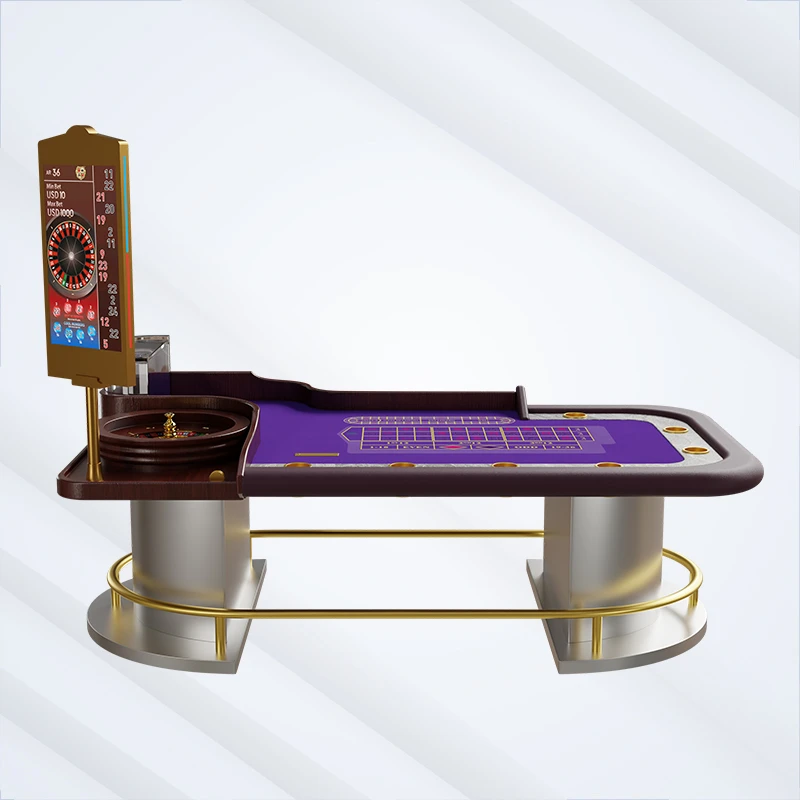
A production-grade casino gaming table consists of far more than a wooden frame and felt layout. For baccarat, the industry’s highest-volume table game globally, the table must integrate structural woodworking, fire-retardant upholstery, precision-printed layout cloth, embedded RFID antenna mats (for RFID-enabled operations), dealer positioning ergonomics, chip tray integration, and (increasingly) wiring channels for electronic roadmap displays and AI camera systems.
The core table frame is typically constructed from solid hardwood (beech, birch, or oak) with moisture-content control to prevent warping in air-conditioned casino environments. The playing surface uses multi-layer plywood substrate with high-density foam underlayment beneath the layout cloth to provide the specific card-sliding resistance that professional dealers require. Too fast, and cards overshoot the betting zones; too slow, and dealing rhythm suffers; both reduce hands-per-hour.
For operators evaluating table specifications, the critical dimensions are: table width (standard 185–195 cm for baccarat), player seating positions (typically 7–14 positions), dealer cutout dimensions, and chip tray/RFID reader mounting points. For a broader perspective on how equipment choices affect revenue, see our article on casino table game profitability. Customization for VIP rooms often requires narrower profiles or bespoke wood finishes; our Niu Niu Gaming Table product page details the customization scope available for solid-wood semicircular tables.
What does an RFID-embedded gaming table do?
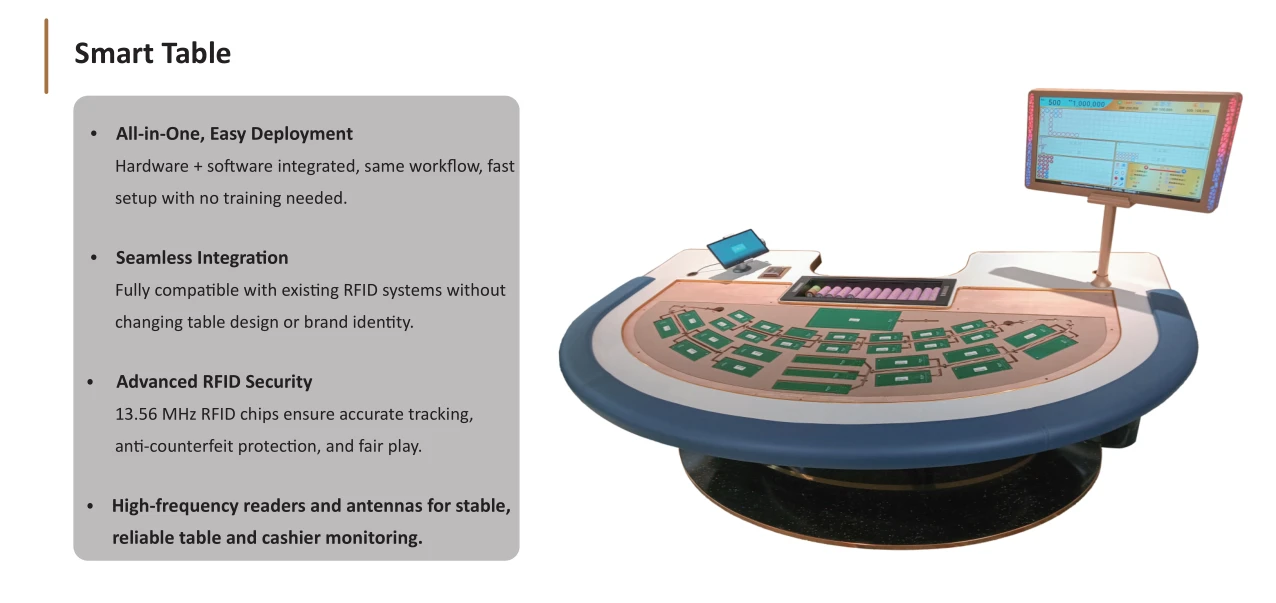
The most significant technological advancement in casino gaming tables over the past decade is the integration of RFID antenna mats directly into the table surface, enabling real-time chip denomination recognition and automated bet calculation. An RFID-enabled table (such as our RFID Dragon Tiger Gaming Table) embeds high-sensitivity RFID reader coils beneath the layout cloth, calibrated to detect chips across 5–8 betting zones simultaneously.
The operational benefits are substantial. First, RFID integration enables automatic payout calculation: the system reads the total bet amount by zone and calculates the correct payout without manual dealer computation, reducing overpayment errors. Second, it provides real-time surveillance integration: abnormal chip operations (such as introducing unregistered chips mid-game) trigger immediate alerts on the pit manager dashboard. Third, it enables automated table accounting, chip-in, chip-out, and drop amounts are recorded per hand, eliminating end-of-shift manual counting.
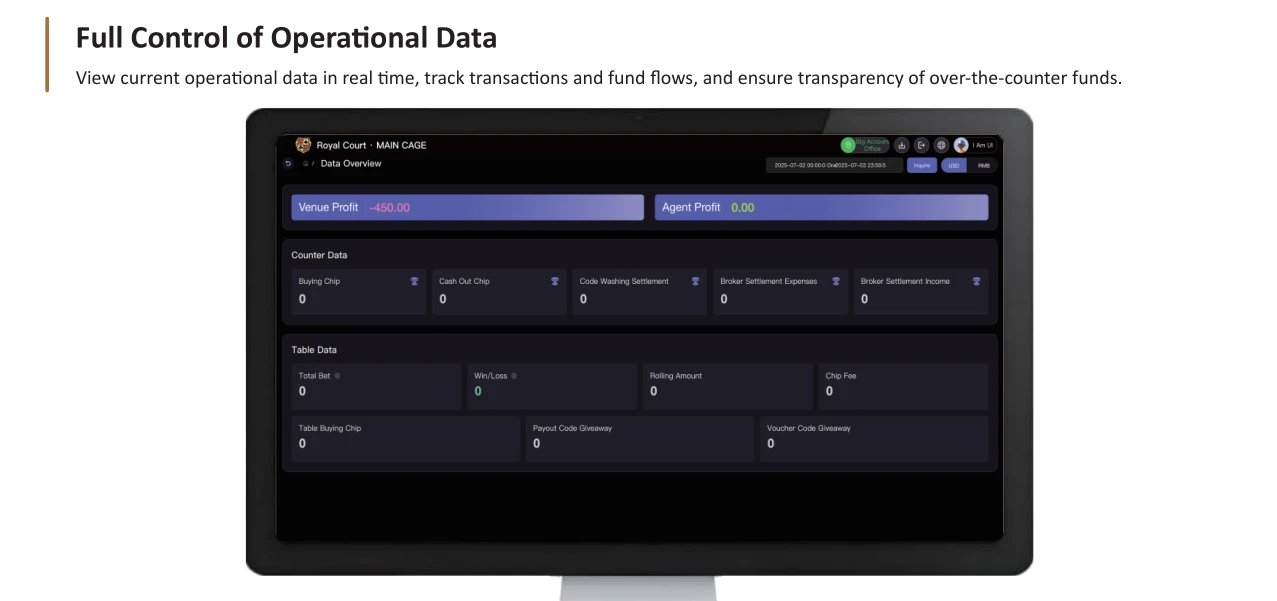
Deploying RFID gaming tables across a baccarat room sharply reduces dealer overpayment incidents within the first 90 days, while raising hands-per-hour by removing manual counting delays. The surveillance integration also identified three instances of counterfeit chip introduction that would have gone undetected with manual oversight alone.
For procurement managers, the key specification differentiators in RFID tables are: antenna mat sensitivity (ability to read stacked chips, not just single chips), zone configuration flexibility (configurable betting zones for different minimum/maximum table tiers), and integration APIs (ability to feed data to third-party casino management systems such as Table Trac or Bally systems).
What layout and material specifications should you choose?
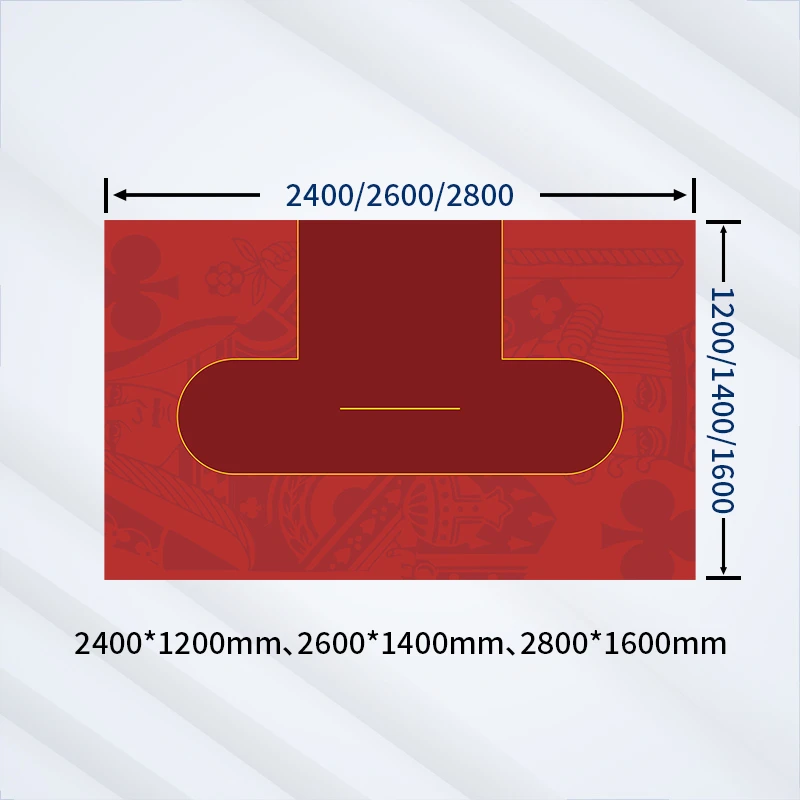
The table layout (the printed felt or synthetic cloth that defines player betting zones) is both a functional operational element and a branding surface. Layout quality directly affects dealer dealing speed and player comprehension of betting options. Professional-grade layouts use heat-transfer sublimation printing on polyester or wool-blend felt, providing colourfast, wear-resistant markings that survive daily 24-hour operations for 18–24 months before requiring replacement.
Our Baccarat Dragon Tiger Gaming Table Layout product page illustrates the specification range: layouts are available in beige, yellow, green, red, blue, and purple colour options, with custom logo sublimation available for operator branding. Waterproof and dustproof treatments extend layout service life in high-humidity markets such as Southeast Asia and coastal resort locations.

For operators specifying new tables, layout customization lead time is typically 10–15 working days including design proofing. Stock layouts (standard Player/Banker/Tie zone markings without custom logos) can be dispatched within 48 hours. When planning a floor refurbishment, layout replacement should be scheduled in parallel with any table structural work to avoid sequential delays.
Beyond aesthetics, layout material selection affects maintenance costs. Wool-blend felt offers superior card sliding characteristics preferred by experienced dealers but requires more frequent replacement (12–18 months). Synthetic polyester layouts last 24+ months and are easier to clean but have slightly higher surface friction. The optimal choice depends on dealer preference and replacement budget cycles.
Which electronics integrate into a casino gaming table?
Modern casino gaming tables are rarely standalone furniture. They are increasingly integrated systems combining the physical table with electronic dealing equipment and real-time result displays. The three most common electronic integrations are automatic card shufflers, electronic dealing shoes, and baccarat roadmap display systems.
Automatic card shufflers (such as our 8-Deck Automatic Card Shuffler) are essential for maintaining dealing speed in high-limit baccarat rooms. A continuous shuffling machine (CSM) eliminates the downtime of manual shuffling between shoes, increasing hands-per-hour. For procurement, the key specifications are shuffle cycle time (target < 40 seconds for 8 decks), jam frequency (MTBF > 50,000 shuffle cycles), and compatibility with different card stock thicknesses (plastic vs. paper cards).
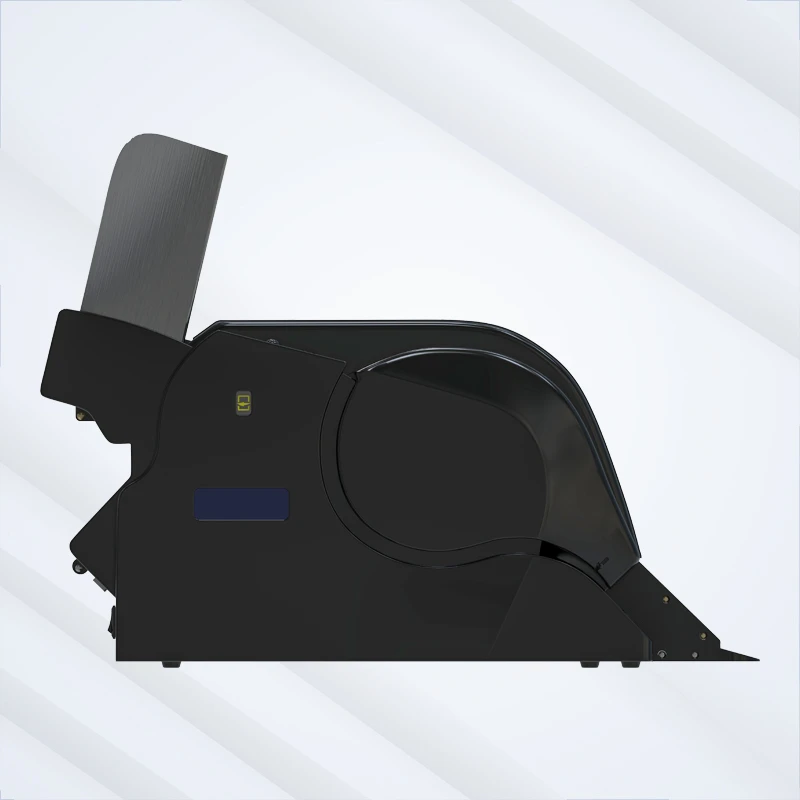
Electronic dealing shoes with card-reading capability represent the next level of integration. For detailed technical specifications, see our guide to casino electronic card shoes. These devices read each card as it is dealt and automatically transmit the result to the overhead roadmap display, eliminating dealer manual result entry, a known source of both honest error and potential collusion. When specifying tables for new installations, provisioning for electronic shoe mounting and cabling should be included in the initial table design rather than retrofitted later.
Roadmap display systems (such as our EC07-V3 Baccarat Scoreboard System) mount above or beside the table and display Big Road, Bead Road, and other roadmap patterns in real time. These displays are now expected by Asian players as a standard table feature; their absence can negatively affect player perception of table quality. The baccarat display system collection covers the range of single-table to multi-table display configurations available.
How do you evaluate a gaming table supplier?
Procurement managers evaluating gaming table suppliers should apply a structured assessment framework covering manufacturing quality, customization capability, compliance certification, after-sales support, and total cost of ownership. The following checklist reflects the criteria used by several Asian and European casino groups in recent floor refurbishment tenders.
Manufacturing quality: Request factory audit reports or video tours. Key indicators include wood moisture control (target 8–12% moisture content), RFID antenna mat production in-house vs. outsourced, and layout printing method (sublimation printing is superior to screen printing for colourfastness). Ask for references from operators who have used the tables for > 24 months, layout cloth and foam underlayment durability only become apparent after extended use.
Customization scope: For new casino openings, the ability to customize table dimensions, wood finish, layout design, and RFID zone configuration from a single production order is a significant advantage. Suppliers with in-house CNC woodworking and layout printing (rather than subcontracted) offer shorter lead times and better quality consistency. Our gaming table collection overview page shows the range of standard and custom configurations we support.
Compliance and certification: Gaming tables installed in regulated jurisdictions must comply with local gaming regulator requirements. In many markets, this includes fire-retardant certification for layout materials, electrical safety certification for RFID/electronic integration, and (increasingly) GLI or equivalent certification for electronic components. Verify that the supplier can provide the necessary compliance documentation for your jurisdiction before finalizing the purchase order.
Compliance is market-specific. Macau’s DICJ and the Philippine Amusement and Gaming Corporation publish equipment and licensing requirements for their jurisdictions, so the certification pack a supplier is asked to provide should be matched to the market the table is destined for.
After-sales support: Layout cloth replacement, RFID antenna mat repair, and electronic component servicing require supplier responsiveness. For regional operators, confirm that the supplier maintains local or regional service capability, or can provide remote diagnostics with guaranteed spare parts shipping timelines. The total cost of ownership over a 5-year period is often dominated by maintenance and layout replacement costs rather than initial purchase price.
Case Study: RFID Table Deployment in a 30-Table Baccarat Room
To illustrate the practical impact of gaming table selection, consider a recent deployment at a second-tier Macau-property baccarat room with 30 tables. The operator replaced 20 legacy tables with RFID-enabled baccarat tables and retained 10 non-RFID tables as a control group. The objectives were to measure the impact on dealer efficiency, surveillance detection capability, and table accounting accuracy.
Over a 6-month observation period, the RFID table group showed a 3.1-hand-per-hour increase in average hands-per-hour (from 58.2 to 61.3), attributed to eliminated manual chip counting and payout calculation. Dealer overpayment incidents decreased from an average of 0.8 per table per day to 0.05 per table per day. The surveillance team identified 7 instances of irregular chip introduction through RFID alerts, compared with zero detections in the control group over the same period.
The operator calculated a payback period of 14 months on the RFID table investment, based on reduced labour costs (one fewer floor accountant per shift), eliminated overpayments, and the revenue gain from increased hands-per-hour. While these results are operator-specific and depend on local labour costs and game pace, they illustrate the order-of-magnitude improvements that well-specified gaming tables can deliver.
For operators in earlier stages of table procurement, our Metal Dealer Chip Tray page provides specification details for the complementary chip handling equipment that integrates with gaming tables to complete the table ecosystem.
FAQ: Casino Gaming Tables Procurement and Operation
What is the typical service life of a casino gaming table?
A professionally constructed solid-wood gaming table with proper maintenance typically serves 8–12 years in 24-hour operations. The table frame and wood structure last the full period, while consumable components (layout cloth, foam underlayment, and RFID antenna mats) require replacement every 1–3 years depending on traffic volume and material quality. Operators should budget for layout replacement annually in high-traffic rooms.
Do RFID gaming tables require special maintenance compared to standard tables?
RFID tables require the same routine cleaning as standard tables, with the additional requirement that the layout cloth and underlying antenna mat must not be exposed to liquids that could damage the embedded electronics. Most RFID table layouts use waterproof treated cloth specifically for this reason. Antenna mat functionality should be tested monthly using a test chip set, and any dead zones should be addressed immediately to maintain bet tracking accuracy.
What lead time should operators plan for custom gaming table orders?
Standard non-customized gaming tables typically ship within 15–20 working days. Custom orders (including custom wood finish, bespoke layout design, and RFID zone configuration) require 30–45 working days including design proofing, sample approval, production, and quality testing. For new casino openings, we recommend finalizing gaming table specifications at least 60 days before the targeted soft opening date to accommodate potential design revisions and shipping delays.
Can existing non-RFID gaming tables be retrofitted with RFID functionality?
In many cases, yes. Retrofit is possible by replacing the layout cloth with an RFID antenna mat integrated layout and adding the necessary reader hardware and cabling. However, the feasibility depends on the table’s internal structure: there must be space beneath the playing surface to route antenna cables to a central reader unit, and the table frame must accommodate the reader hardware mounting. Retrofit costs are typically 40–60% of a new RFID table, making full replacement economically preferable when the existing tables are > 5 years old.
Conclusion
Specifying casino gaming tables is a multi-disciplinary procurement decision intersecting woodworking quality, electronic integration, surveillance compliance, and operational efficiency. For B2B casino operators, the highest priority specifications are RFID integration capability, layout durability, and supplier after-sales responsiveness. The initial purchase price is a relatively small component of total cost of ownership; table uptime, dealing efficiency, and fraud prevention capability deliver value over the full service life.
Whether specifying tables for a new opening or upgrading an existing floor, we recommend requesting samples of layout material, verifying RFID integration compatibility with existing casino management systems, and obtaining operator references from the supplier before finalizing the order. For detailed product specifications and customization options, visit our table layout collection or contact our technical team for a tailored recommendation based on your floor layout and budget.
If the specification includes chip tracking at the table, start from the RFID poker chips range and work back to readers and layouts.
The same chip reads feed our RFID poker tables, so table and cage records resolve against one chip identity.
Layout materials, dimensions and antenna placement are covered in the casino table layouts guide.