Description
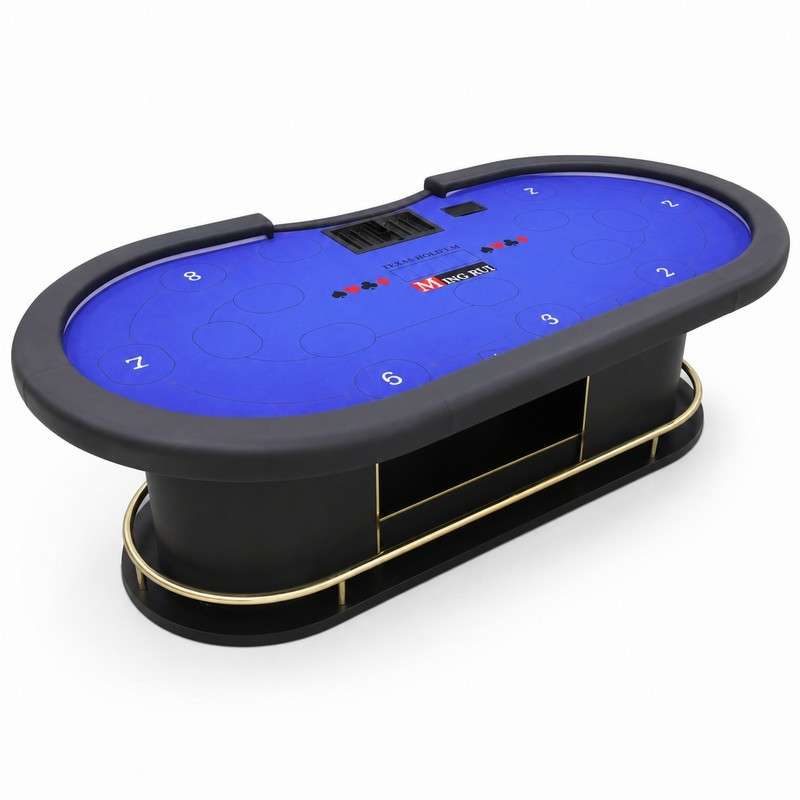
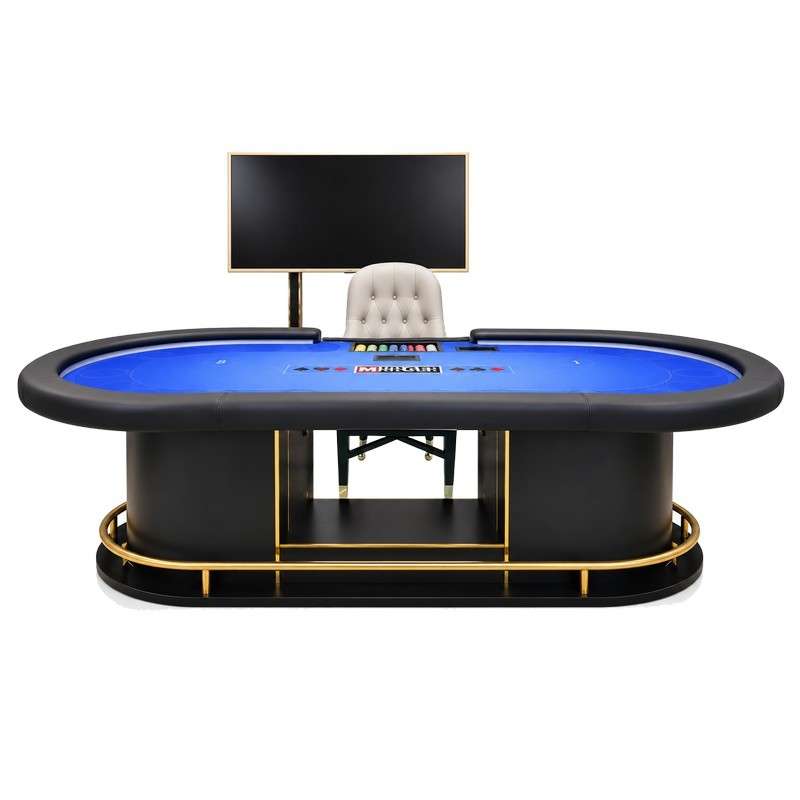
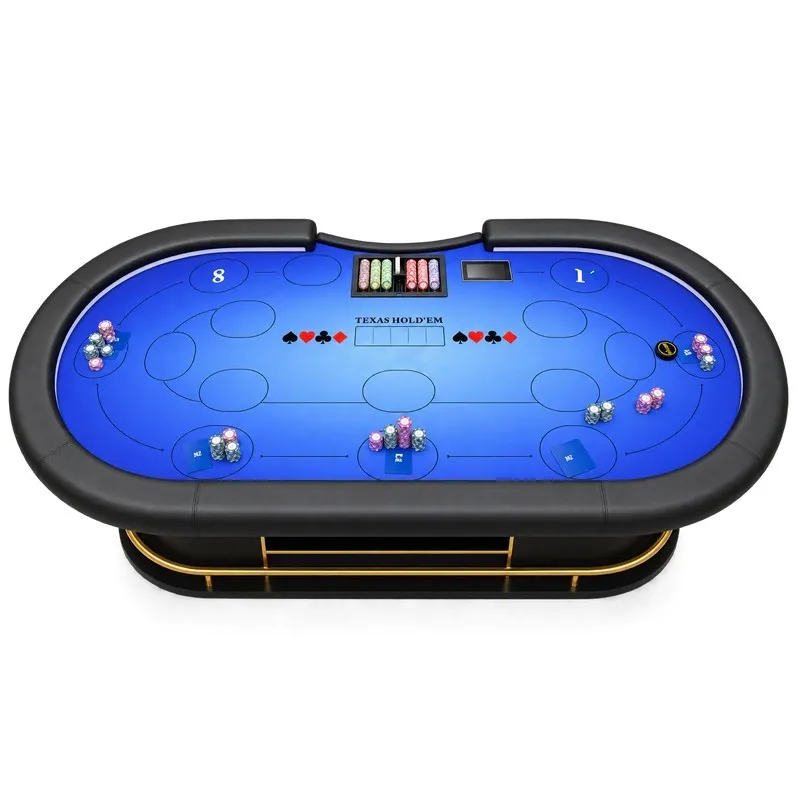
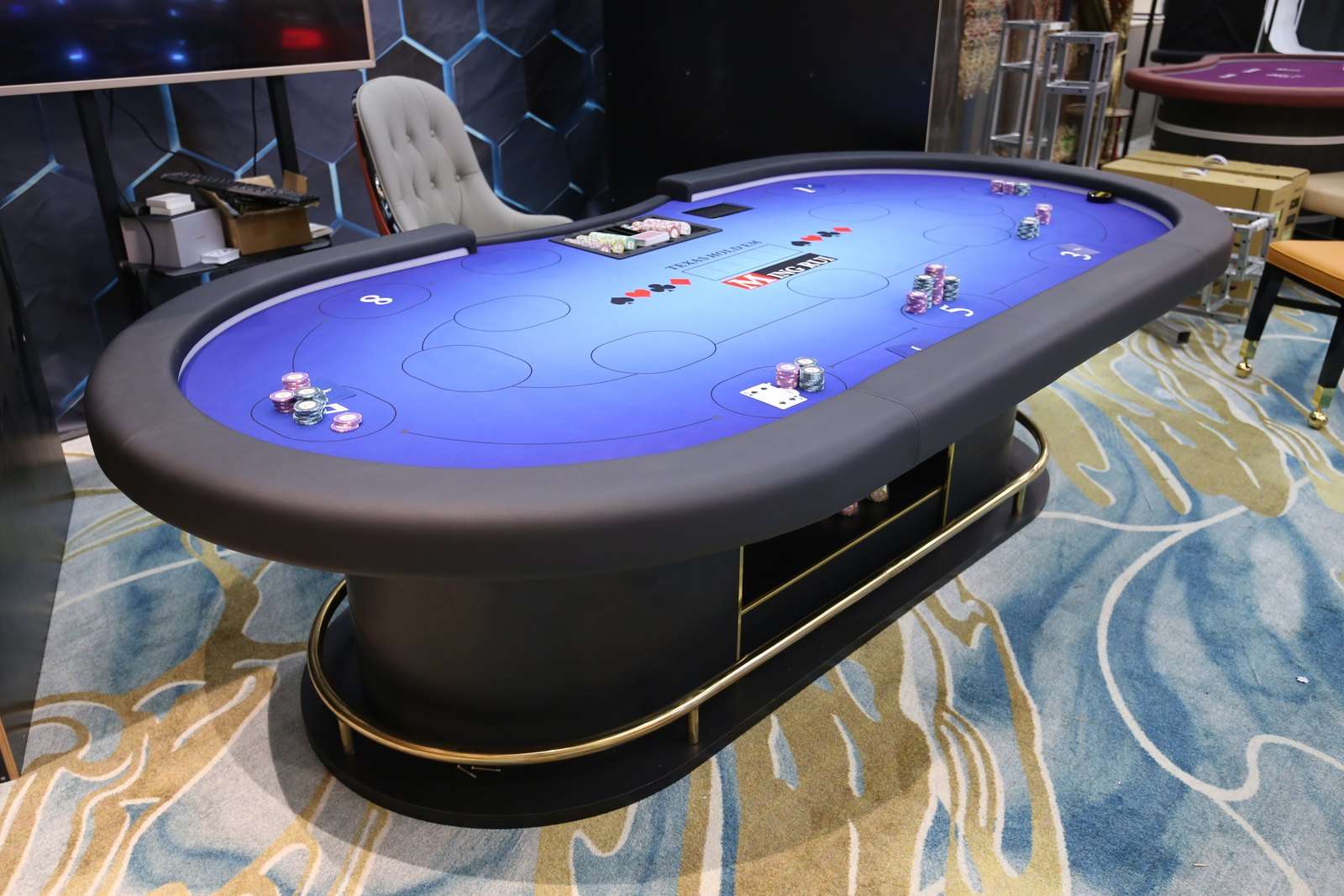
The TB-THRFID-TD-270140 is Macaumr’s RFID Texas Hold’em table, built for tournament broadcast: a 2700 × 1400 mm oval with ten player positions and the card and chip readers built into the body. The hand and the chips in play reach the display over a cable, with no camera pointed at the felt.
What is an RFID Texas Hold’em table and how does it work?
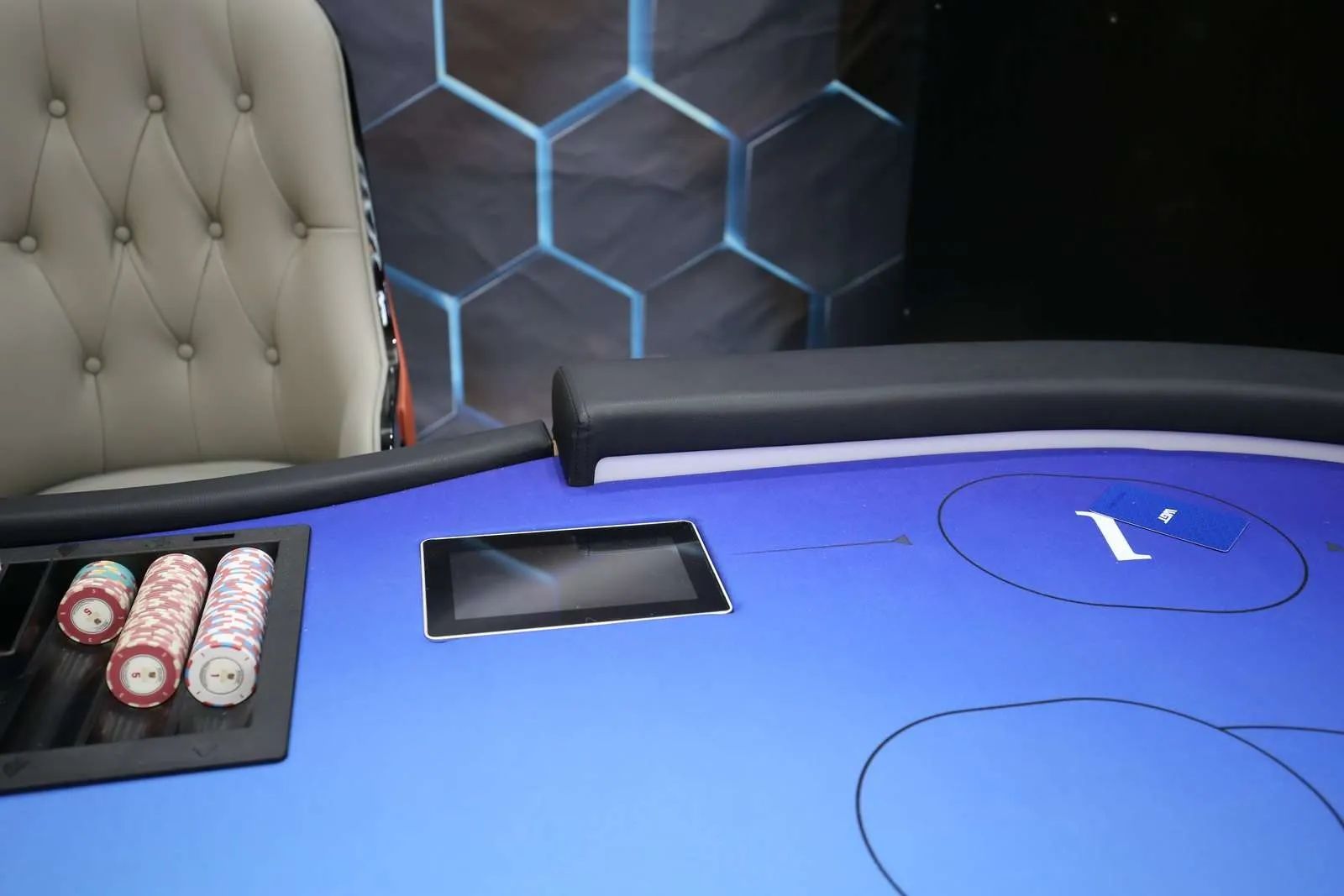
An RFID Texas Hold’em table is a poker table with the readers built into the body rather than in a rig above it. Each of the ten betting positions has its own antenna zone, and the array covers the player positions, the dealer area and the chip tray. The table reads two things: the RFID playing cards, which give the hand, and the chips, which give what each seat has in front of it. The chip layer refreshes the whole table continuously at up to 200 chips per second before passing the chip identity, the position and the value to the pit system.
Reading is specified on three numbers rather than one. A multi-stack read runs at up to 200 chips per second; a full betting-zone scan completes in under one second. A tray scan settles at shift change rather than during play. Read accuracy is verified against your own chip stacks and tray during acceptance.
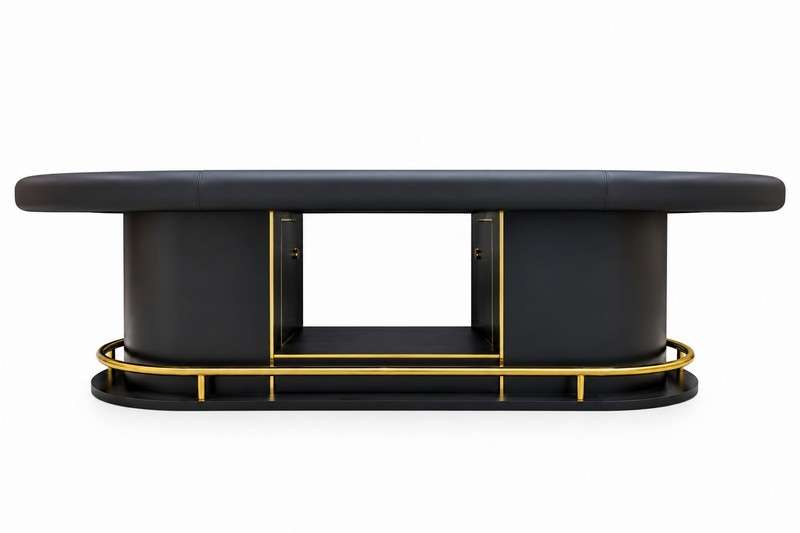
The build is an oval with a 2700 × 1400 mm footprint, ten player positions and a dealer station. The frame is solid wood with metal edging, and the felt, armrest and chip tray are specified per order.
What does the livestream set include?
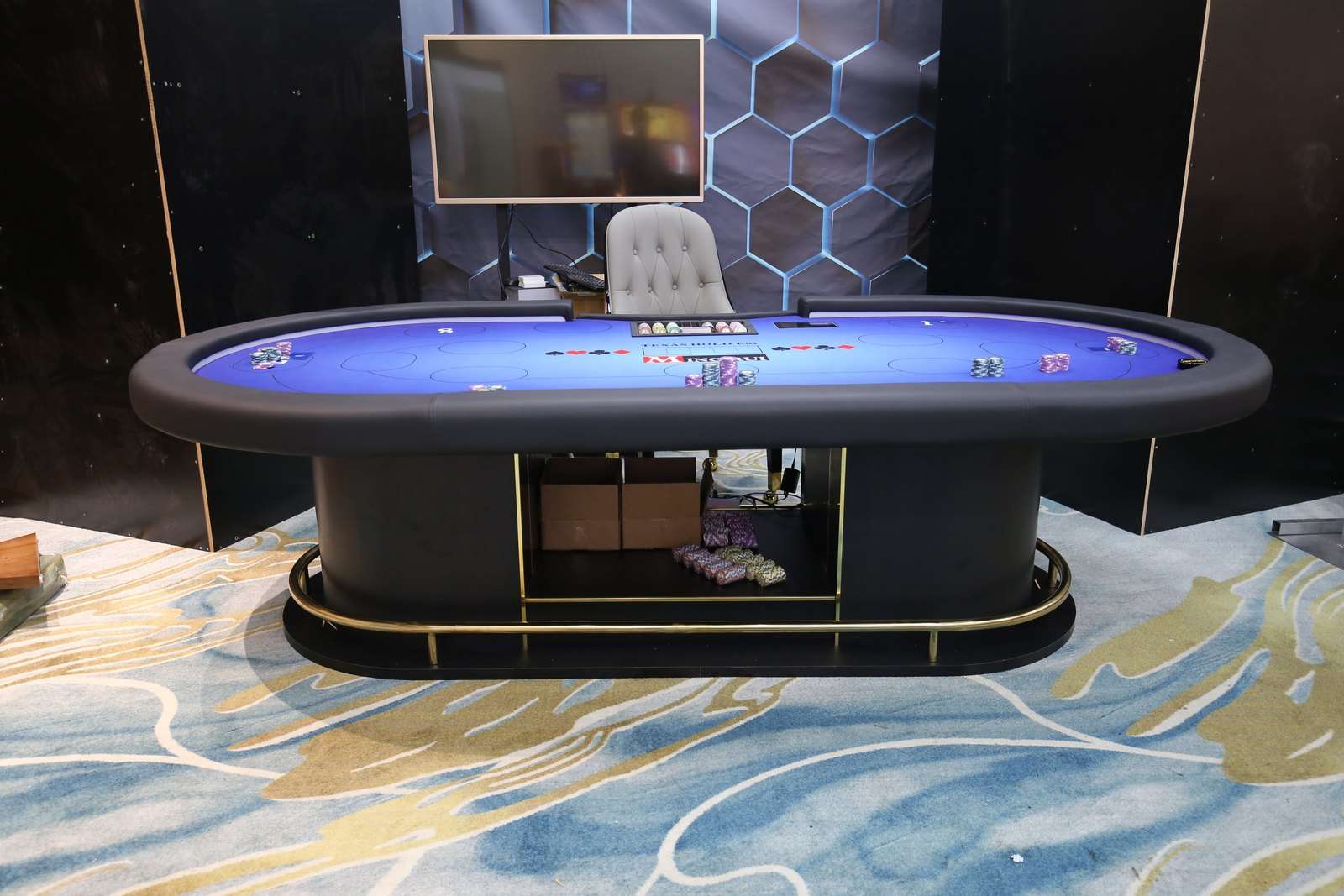
The set ships as a kit rather than a bare table: the RFID table with its readers built into the body, 12 decks of RFID playing cards on 13.56 MHz (NXP MIFARE), 1,200 ceramic chips, and Macaumr’s own software. The software sends the hand to an external display over a cable connection.
Because the readers, the cards, the chips and the software all come from us, a venue deals with one supplier for the whole chain instead of joining a table from one vendor to software from another.
How does the hand reach the display?
Each RFID card carries an identifier. The readers embedded in the table pick those identifiers up, the software matches them to card faces, and the hand is sent down the cable to the display. The chip layer reports what sits in front of each seat independently, so the hand and the chips behind it are read from the same table. The card read range is about 10 cm, which is deliberate: a card has to be on the felt to be read, so it cannot be picked up from outside the table.
What does the software put on the screen?
The display carries the hand, the pot, the chip count behind each seat and the win probability. The software holds that output behind a configurable delay, so the broadcast runs behind the table rather than level with it, and the same feed can be sent to an online platform as well as to a venue screen.
One system serves up to eight tables, so a single featured table and a multi-table room run on the same software.
Why does a live poker broadcast need a delay?
Because the table reads the cards, the hand is known to the system the moment it is dealt. Sent out live, that feed would put the hole cards in front of the audience before the players act. The delay separates the broadcast from the game: the output is held for a configurable interval, set anywhere from 0 to 60 seconds, so the stream trails the table rather than running level with it.
The setting is a venue decision. A recorded or post-produced show does not need it; a live stream to an audience that includes people in the room does, because a viewer holding a phone would otherwise have the hand before the action reached them.
Why read the cards by RFID instead of filming them?
A camera has to see the card face, and in a real game something is usually in the way: the card sits at an angle, the felt throws glare, or a hand covers the corner. A reader inside the table does not have that problem. The card is identified by its tag wherever it lies, face down, stacked or partly covered, and the read does not change with the lighting in the room.
That consistency is why tournament series moved from table cameras to RFID cards for the hands they broadcast: the graphics stay correct when the dealer pitches the cards fast, and nothing has to be re-aimed between hands.
Where does this table fit in a tournament?
Tournaments broadcast one table at a time, usually the final or a featured table, while the rest of the room plays on. That table is where the card reads have to be right, because every hand on it is visible to an audience.
Because the readers sit inside the table rather than in a rig above it, the broadcast table is also the playing table. There is no separate camera setup to install and strike around each event.
What does the RFID layer change on the casino floor?
Pot size is captured position by position instead of estimated, which matters most in tournament play and in high-limit cash games where stacks move quickly. Disputes are resolved from the recorded hand rather than from recollection. Table float and the cage balance agree at close without a manual count, and an unknown chip ID flags a counterfeit the moment it is played.
The layer also checks the chip itself rather than only its presence: an invalid chip, a denomination that does not match the wager, or a payout that breaks the game’s rules is flagged at the table instead of being reconciled later. None of this changes how the game is dealt or how players are seated.
What are the specifications?
| Parameter | Specification |
|---|---|
| Model | TB-THRFID-TD-270140 |
| Table type | RFID Texas Hold’em table, oval |
| Set contents | RFID table, 12 decks of RFID playing cards, 1,200 ceramic chips, and Macaumr software |
| Cards | RFID playing cards, 13.56 MHz NXP MIFARE |
| Card read distance | Up to 10 cm; deliberately short so a card cannot be read from outside the table |
| Display output | Cable connection to an external display; software included |
| Screen content | Hand, pot, chip count behind each seat, win probability |
| Broadcast delay | 0–60 seconds, configurable; RTMP streaming to an online platform |
| Tables per system | Up to 8 |
| Dimensions | 2700 × 1400 × 800 mm, customizable |
| Seats | 10 player positions plus dealer, customizable |
| Frame | Solid wood with metal edging; black body with gold lines, blue felt, black padded armrest |
| RFID frequency | 13.56 MHz HF; UHF on request (ISO/IEC 15693) |
| Air interface | ISO 15693 / ISO 14443 |
| Read performance | Up to 200 chips per second multi-stack; full betting-zone scan under 1 second |
| Chip read distance | 2–20 cm |
| Antenna layout | Array under the felt, covering every betting zone |
| Anti-counterfeit check | Encrypted unique ID; invalid chips and denomination mismatches flagged; payout rules checked |
| Data interface | USB or RS-232 |
| Compatible systems | Macaumr roadmap system (EC-BA series), casino management systems, dashboard displays |
| Software | Self-diagnosis, live chip-flow monitoring, shift settlement, anomaly alerts, report export, roadmap display sync |
| Data security | Encrypted chip ID, role-based permissions, operation log retention |
| System capacity | 20–50 tables per server |
| Power | AC 110–220V 50/60 Hz |
| Operating environment | 0–40 °C, 20–80% RH |
| Weight | Approximately 120 kg in the reference configuration |
| Installation | Floor-standing; transported as a complete table and assembled on site |
| Minimum order | 1–10 pcs, indicative, confirmed in the quote |
| Lead time | 15–45 working days, indicative, confirmed at order |
| Warranty | 12 months from delivery |
| Packing | Wooden case or carton, confirmed at order |
What can be customised?
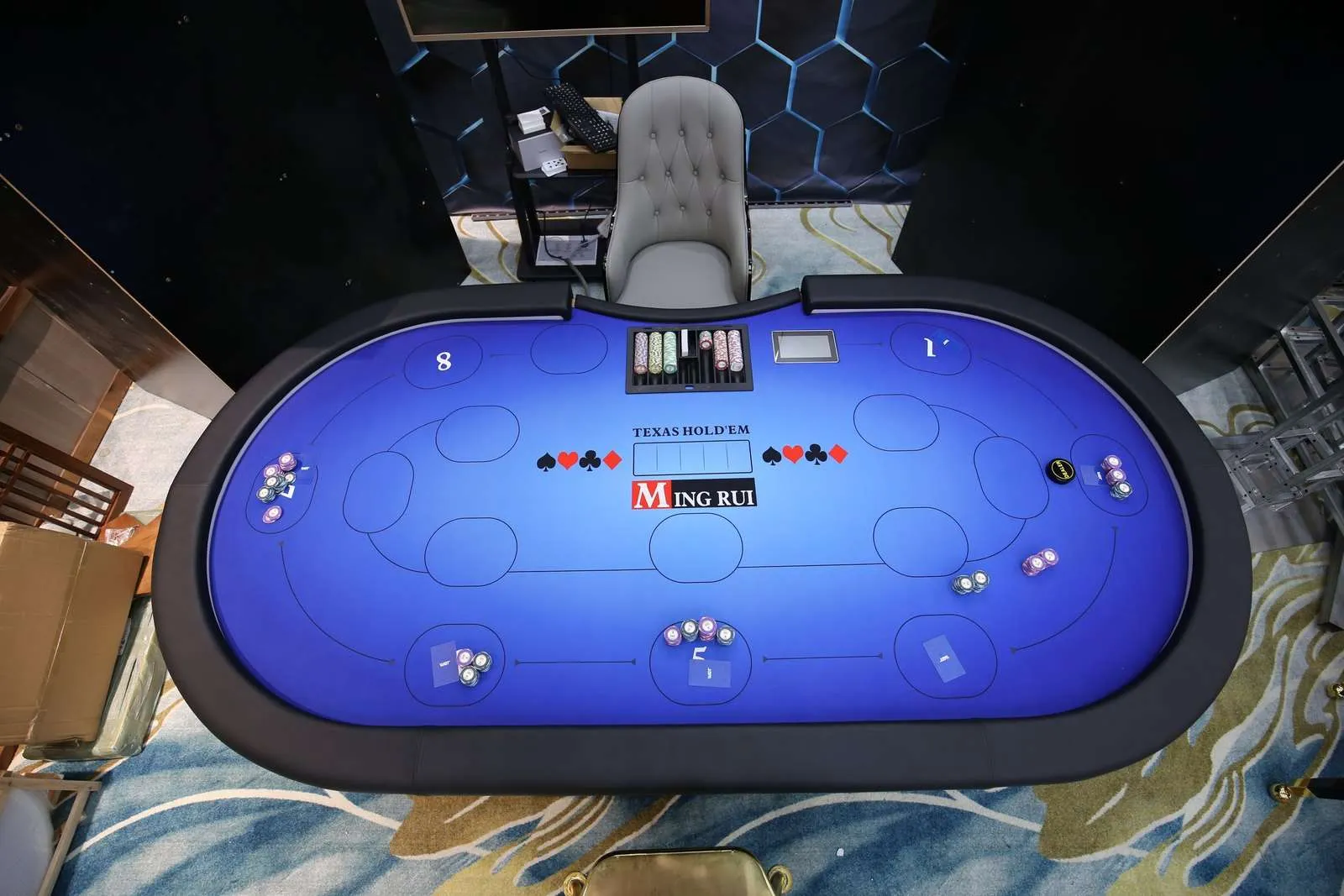
Table size, seat count, felt colour and pattern, layout artwork, logo, armrest finish, chip tray, cup holder, antenna placement and packing are specified from the approved drawing. Antenna placement follows the layout rather than being fixed: a ten-seat oval and a shorter table do not use the same array, so the drawing fixes both at once.
The standard finish is a black body with gold lines and blue felt. Wood finish, felt colour and the printed layout change per project, and the layout artwork has to be approved before the array is placed.
With ten positions, a small change in the layout propagates across the whole array. Antenna cut-outs and chip tray or cup holder positions are set from your table drawing, so the betting positions and the antenna zones move together. The felt is matched to a supplied swatch or Pantone reference with batch colour variation controlled to ΔE ≤ 2, Martindale abrasion data is available, and fire test reports are supplied to the standard your market requires. Felt tops and armrest covers are available as spares, and diagnostics can be run remotely.
Does the table still play as a normal table?
Yes. The RFID layer is additive: if the reader or the network goes offline, betting and settlement continue as a standard poker table, and the pit loses the tracking record for that period rather than the game. The table is not dependent on the software to be dealt.
What happens when a reading zone fails?
The antenna layer is self-diagnosing: when a read zone fails, the system reports which antenna and which zone instead of a generic error, so the pit knows where to look before anyone lifts the felt. Key zones carry a second antenna alongside the first, so a stack at the edge of one field is still read. An antenna layer can also be retrofitted to an existing Texas Hold’em table after a site assessment, which is how most staged floor upgrades start.
How does the table connect to a casino management system?
Hand data leaves the table over USB or RS-232 through a documented interface. Macaumr settles the protocol, the field list and the encryption settings with your platform team before the order is placed, and the table is built to pair with the Macaumr roadmap system (EC-BA series); a third-party casino management system is confirmed per project rather than assumed.
Twenty to fifty tables run from one server, with live chip-flow monitoring, shift settlement, anomaly alerts and report export all on that machine; access is role-based and the operation log is retained, which is what an audit needs. The chip side is covered by the RFID poker chip range, the reading hardware on other stations by the RFID chip sensing device range, and the software side by how an RFID casino management system works.
How do you order and accept a delivery?
The indicative minimum order is 1–10 pcs, confirmed against the layout, the chip set and the reader specification. Production runs 15–45 working days after the drawing and artwork are approved, and the B2B procurement guide covers what to put in that specification.
Crated in wooden cases or cartons, the table arrives as a complete unit and is assembled on site. It carries a 12-month warranty, four-hour remote response and a 24–48 hour site visit where the project requires it.
Who manufactures these tables?
Guangzhou Yangming Entertainment Products Co., Ltd. builds casino equipment under the Macaumr brand and has done so since 2013. Factory address: No. 537 Panyu Avenue North, ABP Headquarters Area Building, Room 603-604, Panyu, Guangzhou 511493, Guangdong, China. Our factory has been audited by SGS-CSTC (Report QIP-ASR2411238, 2024) and assessed by Bureau Veritas (MIC-ASR2011166). Current audit and compliance documents are listed on our compliance page.
Counterfeit and substitution attempts surface because every chip carries an encrypted identifier rather than a printed value; the counterfeiting and collusion guide covers what that changes at the table. Layout conventions for the game are covered in the casino table layouts and RFID integration guide, and the wider table range sits under RFID poker tables.