Casino pit management has entered a data-driven era where RFID table monitoring delivers real-time visibility into every bet, chip movement, and table outcome on the gaming floor. For casino operators seeking tighter control over gross gaming revenue (GGR) and operational efficiency, RFID-enabled pit systems have shifted from optional upgrades to essential infrastructure.
What is RFID casino table monitoring?
RFIDカジノテーブルモニタリングとは、無線周波数識別リーダー、アンテナ、タグ付きチップをゲームテーブルに統合し、賭け金、ゲーム結果、チップ在庫をリアルタイムで追跡することを指します。 RFID対応チップ テーブル表面下に埋め込まれたリーダーでスキャンされると、固有の識別子を送信するマイクロチップが内蔵されています。このシステムは、ディーラーやフロア管理者の手作業を必要とせずに、賭け金、チップの額面、決済金額に関するデータを取得します。
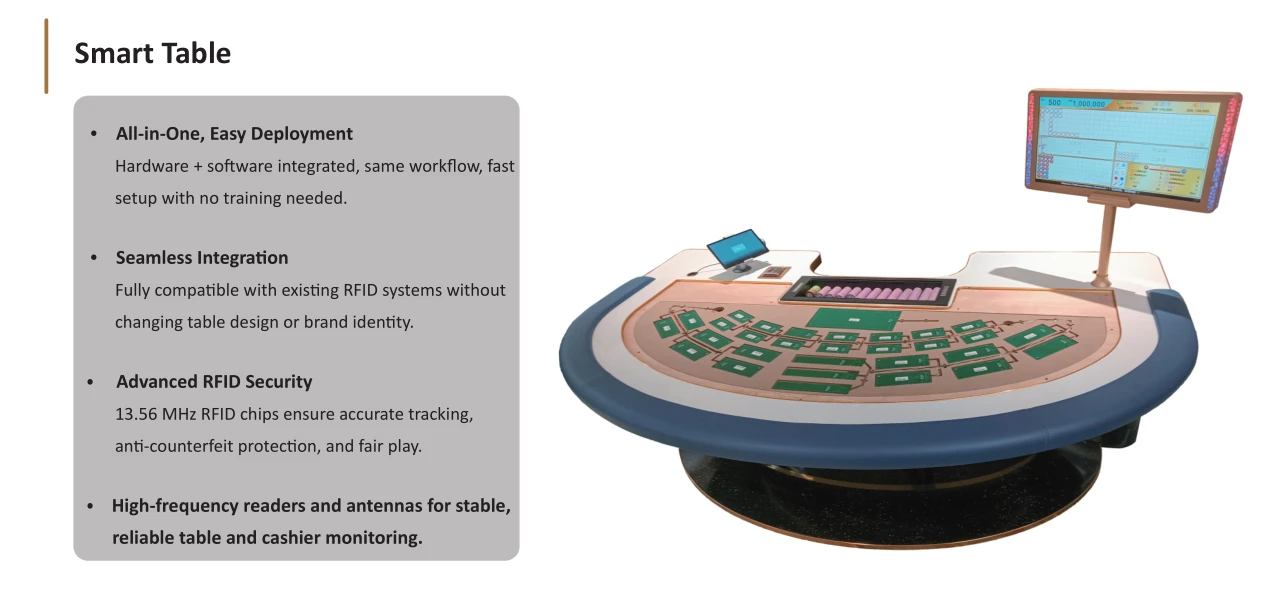
The core components of an RFID table monitoring system include under-table reader arrays, tagged casino chips conforming to ISO 18000-63 (EPC Gen2) standards, a central processing unit that aggregates data from each table, and a dashboard interface accessible to pit managers and surveillance teams. When a player places a bet, the reader detects the chip’s position and value, logs it against the table session, and compares it against table limits and historical patterns. This architecture eliminates the dependency on manual chip counts and dealer memory for reconstructing disputed hands.
How does RFID table monitoring change pit management?
リアルタイム収益追跡とテーブルホールド最適化
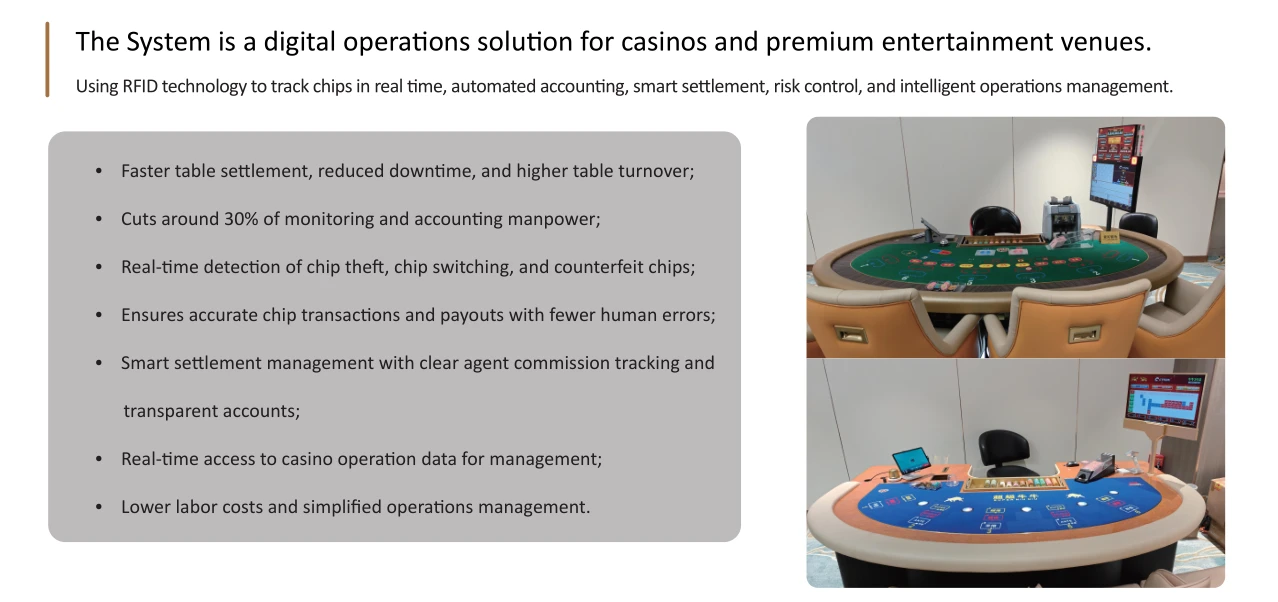
Traditional pit management relies on periodic manual counts and shift-end reconciliations to estimate table hold. RFID monitoring replaces this lagging approach with continuous, bet-level data streams. Pit managers can view live hold percentages, average bet sizes, and drop amounts for every table on the floor from a centralized dashboard. Continuous monitoring shrinks table variance from chip-counting discrepancies, because the count is reconciled throughout the shift rather than reconstructed at the end of it.
The financial impact is measurable. When a table’s hold percentage drifts below expected thresholds, the system triggers alerts that allow floor supervisors to investigate immediately, whether the cause is dealer error, player advantage play, or chip theft. For operators managing high-limit baccarat pits where a single table can generate $50,000 or more in daily drop, even a 1% improvement in hold translates to significant revenue recovery over a fiscal quarter.
ピット全体におけるチップの自動管理
RFID table monitoring integrates directly with cage and chip bank operations to create an unbroken chain of custody for every chip on the floor. When a fill is delivered to a table, the RFID reader logs the incoming chip IDs against the cage’s dispensation record. When chips are returned (whether at session close or during a chip refill) the system verifies that the same chip IDs are being returned. Any discrepancy triggers an immediate alert. This real-time accountability is central to the SiMケージ管理システムこれは、ケージ操作とピットレベルの追跡を連携させ、チップのライフサイクル管理を統一的に行うためのものです。
プレイヤーの行動分析と有利なプレイの検出
RFID monitoring captures the full arc of each player’s session, entry bet, bet progression, win/loss patterns, and duration. This data feeds directly into analytics engines that flag statistical anomalies consistent with advantage play, such as bet sizing that correlates with known card counting strategies or patterns suggesting marking or past-posting. The system does not replace trained surveillance staff, but it provides them with quantified alerts rather than relying on intuition alone. For casinos seeking to build out their analytics infrastructure, RFIDチップセンシングデバイスのコレクションをご覧ください 互換性のあるハードウェアを調べる。
What are the key components of an RFID pit monitoring system?
採掘場全体にRFID監視システムを導入するには、ハードウェアとソフトウェアへの投資を連携して行う必要があります。以下に、導入計画を立てる際に事業者が評価すべき重要な構成要素を示します。
テーブル下設置型RFIDリーダーアレイ
Reader arrays consist of multiple antenna coils embedded beneath the table felt, positioned to cover all betting positions and the dealer’s chip tray. The arrays must distinguish between overlapping chip stacks (where a $100 chip sits atop a $500 chip) without misreading values. Leading reader manufacturers achieve stack-reading accuracy above 99.5% in controlled environments, though performance can degrade in the presence of metallic table frames or liquid spills. Proper installation and calibration are essential to maintaining read reliability in live pit conditions.
タグ:カジノチップとコンプライアンス基準
RFID-enabled chips must meet both gaming regulatory requirements and technical interoperability standards. In Macau, higher-denomination chips are subject to anti-counterfeiting requirements that RFID inlays help satisfy. Chips must conform to ISO 18000-63 air interface protocols and survive repeated handling, stacking, and exposure to liquids without degradation of the inlay. For operators needing handheld verification capabilities at chip banks or cage windows, ポータブルカジノRFIDチップ偽造防止ハンドヘルド端末 現場で持ち運び可能なチップ認証機能を提供する。

中央ダッシュボードおよびレポート作成ソフトウェア
ダッシュボードは、ピット内のすべてのRFID対応テーブルからデータを集約し、ピットマネージャーがシフト中に活用できる視覚化データとして表示します。主な指標には、ライブテーブルホールド率、1時間あたりのベット数、1ハンドあたりの平均ベット額、フィル/クレジット履歴、および差異アラートが含まれます。ソフトウェアは、フロアレベルの概要から個々のテーブルセッションへのドリルダウンをサポートし、コンプライアンスレポートやフォレンジック監査用のデータのエクスポートにも対応する必要があります。テーブルのパフォーマンスとプレイヤーの生涯価値を関連付けたいオペレーターにとって、既存のプロパティマネジメントシステム(PMS)およびプレイヤー追跡データベースとの統合は不可欠です。
ケージレベルのチップ検証の場合、 カジノのキャッシャーRFIDチップ読み取りボード ピット監視データをケージ照合ワークフローに接続し、ケージでのチップカウントが個々のチップIDに至るまでピットのセッション記録と一致することを保証します。
How do casino operators implement RFID table monitoring?
フェーズ1:ハイリミット表でのパイロット展開
運営者は、ROIが最も早く得られる4~6卓のハイリミット・バカラまたはブラックジャックテーブルで、ターゲットを絞ったパイロット運用から始めるべきです。これらのテーブルはドロップ率が最も高く、チップ盗難やアドバンテージプレイに対して最も脆弱です。パイロットフェーズは60~90日間実施し、その間に運用チームはリーダーの精度を調整し、手動カウントとのデータ出力の検証を行い、ピットスタッフにアラート対応プロトコルをトレーニングします。 RFIDカジノテーブルとGGR最適化に関するガイド explains, pilot deployments in Macau VIP rooms have demonstrated hold improvements within the first quarter.
フェーズ2:ピットの全面展開とスタッフ研修
After the pilot validates system accuracy and operational workflows, operators expand to the full pit. This phase requires coordinated staff training for dealers, floor supervisors, and cage personnel. Dealers must understand how the RFID system affects their chip-handling procedures, primarily that the system tracks automatically, reducing the need for manual bet recording. Floor supervisors need proficiency with the dashboard’s alert and drill-down features. Cage staff must learn to use RFID readers for chip verification during fills and credits. For baccarat-focused operators, 当店のバカラテーブルコレクション 工場出荷時にRFIDリーダー用スロットが組み込まれたモデルもあり、設置が容易です。
フェーズ3:分析統合と継続的最適化
ピット全体に計測機器を設置することで、オペレーターは生のRFIDデータの上に高度な分析を重ね合わせることができます。これには、テーブル需要の予測モデル(ディーラーの動的なスケジューリングを可能にする)、時間帯とプレイヤーセグメントごとの勝敗変動分析、リアルタイムのゲーム結果検証のためのRFIDテーブルデータとバカラロードマップ表示システムの相関関係などが含まれます。オペレーターは、 バカラのロードマップ表示システムコレクションをご覧ください RFID監視テーブルと統合できる互換性のあるディスプレイハードウェアを見つける。 カジノピットの効率性指標に関する記事 details, continuous optimization based on RFID data has enabled leading Macau operators to reduce table idle time and improve dealer scheduling accuracy.
What pitfalls should you avoid when deploying RFID table monitoring?
明らかな利点があるにもかかわらず、RFIDピット監視システムの導入には予測可能な故障モードが存在します。これらの落とし穴を理解することで、オペレーターは高額な手戻りや試運転期間の延長を回避できます。
テーブルインフラストラクチャからの読者の干渉
金属製のテーブルフレーム、埋め込み照明、電子靴の配線などは、RFIDリーダーの信号に干渉し、読み取りエラーやチップの検出漏れを引き起こす可能性があります。設置前に現場調査を実施し、リーダーアレイの電磁両立性試験を提供するベンダーと連携する必要があります。古いテーブルを改修する場合は、許容できる読み取り精度を達成するために、フレームの改造やアンテナコイルの位置変更が必要になることがよくあります。
チップインレイの品質が不十分です
Not all RFID inlays are equal. Low-cost inlays may have inconsistent read ranges or fail after months of handling in high-volume pits. Operators should require vendor specifications for inlay durability (measured in read/write cycles and environmental resistance) and demand sample chips for in-pit testing before committing to a full chip order.
訓練不足のスタッフと警戒疲労
An RFID monitoring system is only as effective as the team responding to its alerts. If pit staff receive too many low-priority notifications (false positives from chip stacking, minor variance blips) they begin to ignore the system entirely. Operators must configure alert thresholds carefully during the pilot phase and refine them based on real-world false positive rates. Training should emphasize that RFID alerts are investigative leads, not verdicts.
よくあるご質問
カジノのピットエリアにおけるRFIDテーブル監視システムはどのように機能するのですか?
RFIDテーブルモニタリングシステムは、テーブル表面の下に埋め込まれたリーダーを使用して、タグ付きカジノチップをリアルタイムで検出・追跡します。各チップには固有の識別子を送信するマイクロチップが内蔵されており、ディーラーの手を借りることなく、賭け金、ポジション、結果を自動的に記録できます。
RFIDによる監視は、カジノのテーブルホールド率を向上させることができるか?
Yes. RFID table monitoring enables immediate detection of variance anomalies, reduces chip counting errors, and closes accountability gaps during fills and credits, which together tighten control over table hold. The system enables immediate detection of variance anomalies, reduces chip counting errors, and closes accountability gaps during fills and credits.
RFIDテーブル監視システムを導入するコストはどれくらいですか?
RFIDピットモニタリングシステムのフル導入には、通常、テーブル1台あたり15,000~35,000TP(リーダーハードウェア、タグ付きチップ、ソフトウェアライセンス、設置費用を含む)の費用がかかります。高度なリーダーアレイを備えたハイリミットバカラテーブルは、この範囲の上限に近い金額になる傾向があります。
システムを機能させるには、すべてのカジノチップにRFIDタグが必要ですか?
RFID対応テーブルとやり取りするチップのみにタグを付ける必要がある。ほとんどの導入事例では、オペレーターは$25以上の額面のチップにタグを付ける。これは、低額面のチップは偽造や盗難の標的になりにくく、従来型のトレイカウントで追跡されることが多いためである。
RFIDによるテーブル監視は、マカオのゲーミング規制に準拠していますか?
Yes. In Macau, higher-denomination chips are subject to anti-counterfeiting requirements, and RFID table monitoring systems that conform to the applicable air-interface standards help operators meet those obligations and support audit reporting.