Why is casino chip counterfeiting still a top threat in 2026?
Casino-Chip counterfeiting costs the global gaming industry millions of dollars annually. Counterfeit chip incidents range from a single high-value table to organised operations that circulate convincing fakes across several properties before anyone notices. As chip denominations climb (especially in VIP baccarat rooms where single chips can represent $10,000 or more) the incentive for sophisticated counterfeiting operations only grows.
Modern Prävention von Casinochip-Fälschungen relies on a multi-layered approach: physical security features embedded in the chip itself, RFID authentication at the table and cage, and centralized software that tracks every chip in real time. No single measure is sufficient on its own; the strength lies in the overlap between layers. This article breaks down each layer and explains how operators can deploy them effectively.
Layer 1: What physical security features are built into every chip?
Vor der Einführung von RFID waren Casinos ausschließlich auf physische Markierungen angewiesen, um echte Jetons von Fälschungen zu unterscheiden. Diese Merkmale bilden nach wie vor die erste Verteidigungslinie und werden stetig weiterentwickelt.
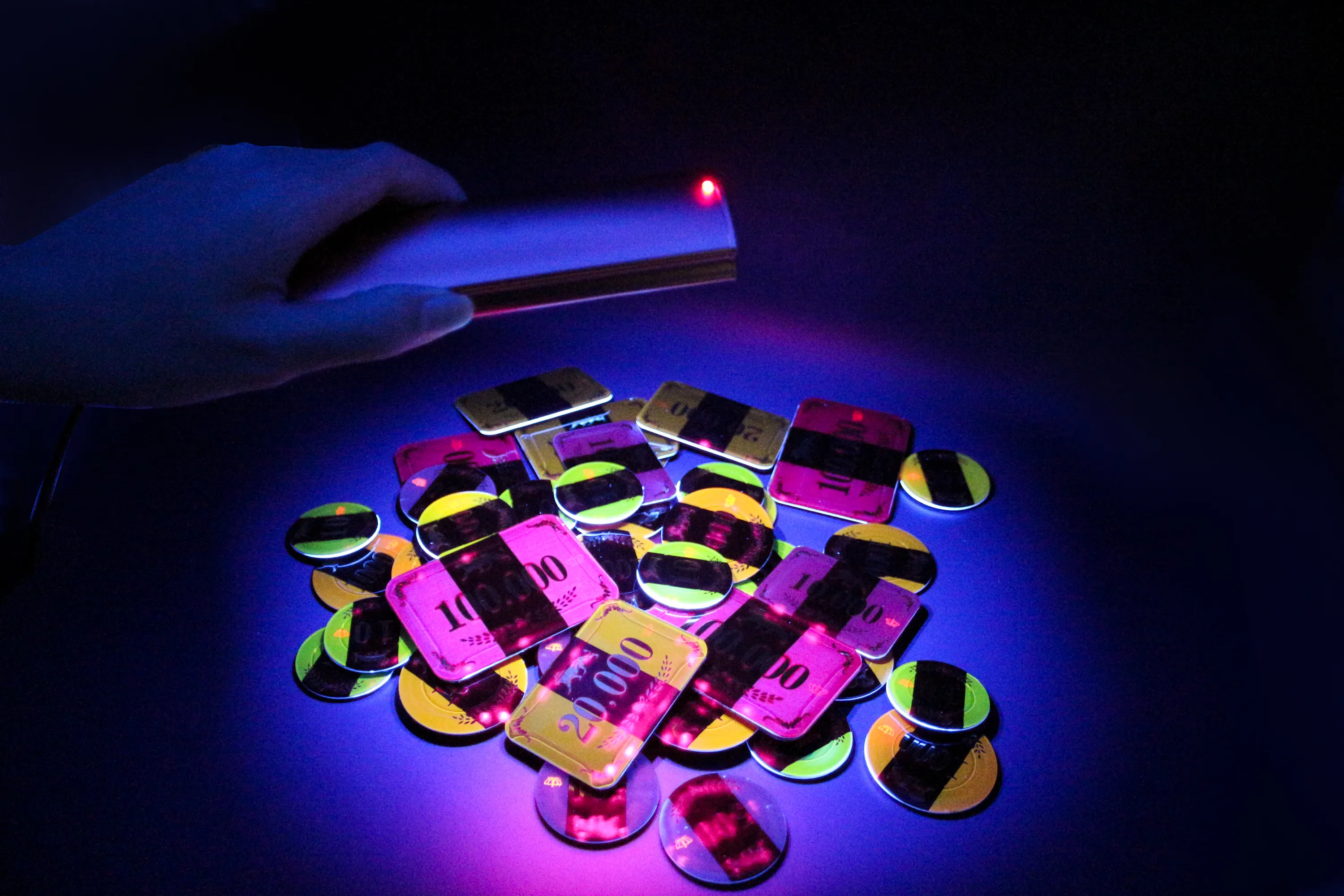
UV-Fluoreszenzmarkierungen
Ultraviolet ink applied during manufacturing is invisible under normal lighting but glows distinctly under blacklight. Floor supervisors can verify a chip’s authenticity in seconds with a handheld UV lamp. This is one of the most cost-effective countermeasures available, a single UV lamp costs under $50, yet it defeats casual counterfeiting attempts that lack access to specialty inks.
Holografische Etiketten und Heißprägung
Holografische Etiketten lassen sich ohne industrielle Anlagen kaum herstellen. Jedes Etikett enthält Mikrotext, farbwechselnde Elemente und fortlaufende Muster, die sich je nach Betrachtungswinkel verändern. Beim Heißprägen wird Metallfolie unter Hitze und Druck aufgebracht und dauerhaft mit der Chipoberfläche verbunden. Jeder Versuch, den Stempel abzulösen oder zu verändern, hinterlässt sichtbare Schäden. Weitere Informationen zur Funktionsweise der Holografietechnologie im großen Maßstab finden Sie hier: Unser Leitfaden zu holografischen Etiketten auf Casinochips und Fälschungsschutztechnologie.
Konstruktion aus Verbundwerkstoffen
Genuine casino chips are not made from a single material. Clay composite chips combine multiple layers (clay, ceramic, metal inserts) with each layer contributing to a distinct weight and sound profile. Acrylic chips use transparent or semi-transparent construction that makes internal structures visible. The unsere Acryl-Pokerchip-Kollektion zeigt, wie die Transparenz des Materials selbst zu einem Sicherheitsmerkmal wird: Fälscher können interne Unstimmigkeiten nicht verbergen, wenn der Chipkörper durchsichtig ist.
Layer 2: How does RFID authenticate chips at the table and the cage?
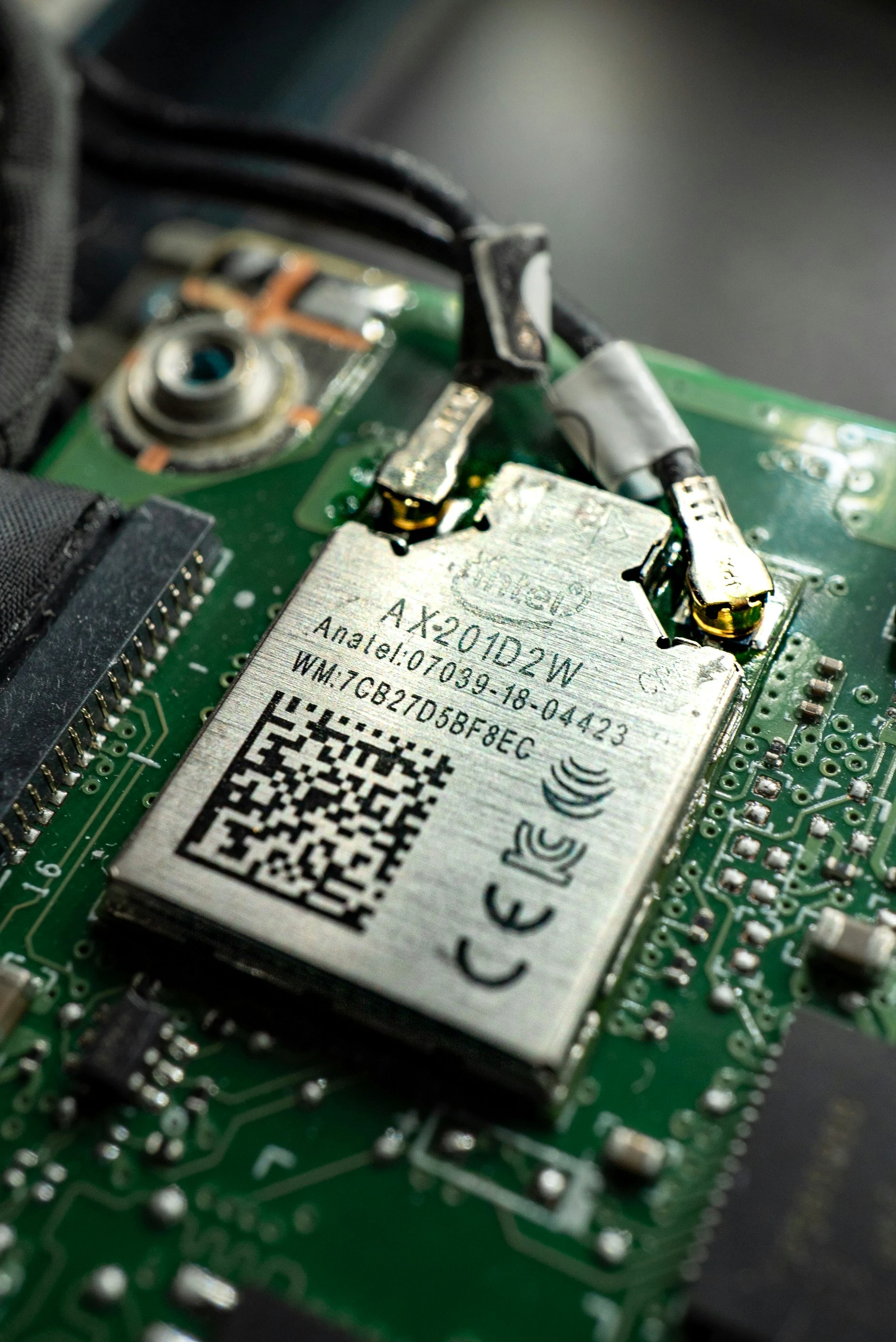
Die RFID-Technologie (Radio-Frequency Identification) macht jeden Chip zu einem digital verifizierbaren Objekt. Ein im Chip integrierter RFID-Tag speichert eine eindeutige Kennung, die drahtlos von integrierten Tischscannern, tragbaren Handlesegeräten und Prüftafeln ausgelesen werden kann.
So funktioniert die RFID-Authentifizierung
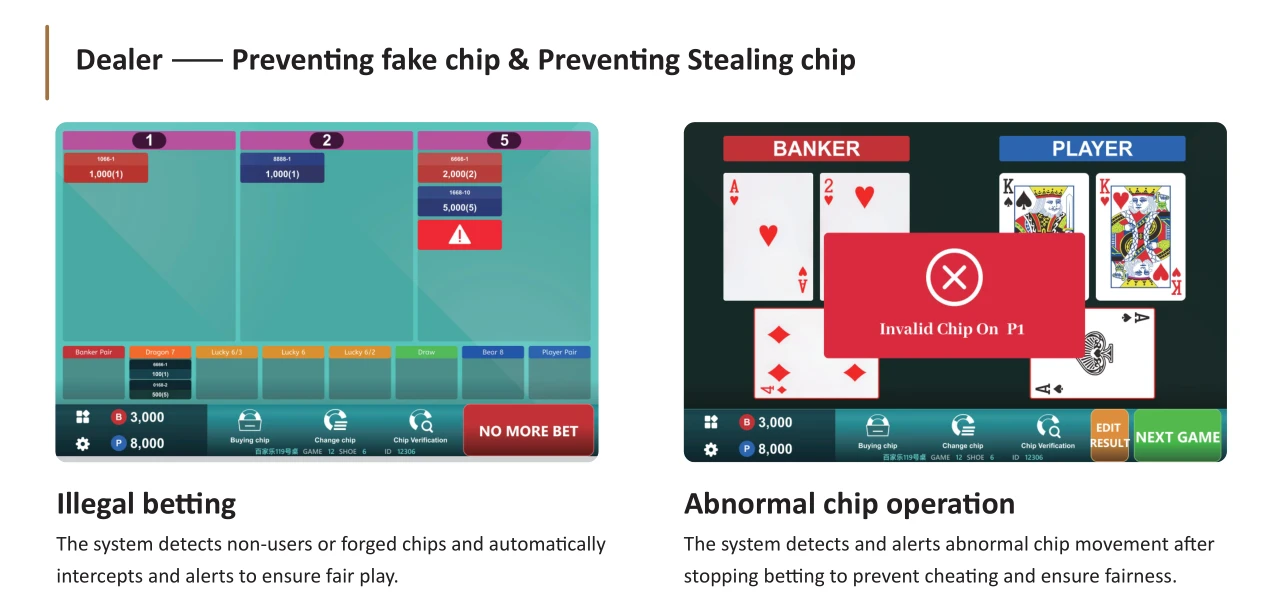
When an RFID-tagged chip passes over a reader (whether embedded in a RFID-Chip-Lesegerät für Casino-Käfige or a cage reader board) the system instantly compares the chip’s unique ID against the casino’s authorized chip database. If the ID does not exist in the database, or if a single ID appears on two chips simultaneously, the system flags an alert in real time.
Deshalb RFID-Chip-Authentifizierung im Casino environments is so powerful: it shifts detection from after-the-fact audits to real-time interception. RFID-enabled chip tracking catches counterfeit and decommissioned chips that visual inspection alone would miss, shifting detection from after-the-fact audits to the point of play.
Eingebaute Tischscanner vs. tragbare Lesegeräte
RFID gaming tables embed reader arrays under the felt, scanning every chip placed in betting areas and the dealer tray. This provides continuous, automatic authentication without any operator action. For areas without embedded readers (such as cashier cages, chip storage rooms, and floor transfers) portable handheld readers offer on-demand verification. The tragbares RFID-Handterminal gegen Fälschungen Ermöglicht es dem Sicherheitspersonal, Chip-Racks, Einwurfboxen oder einzelne Chips an beliebigen Stellen auf dem Gelände zu scannen.
Layer 3: How does centralized tracking software fit in?
Physische Merkmale und RFID-Hardware funktionieren nur, wenn die von ihnen generierten Daten in ein System eingespeist werden, das diese verarbeiten kann. Eine zentrale Tracking-Software verbindet alle Lesegeräte im Produktionsbereich zu einem einheitlichen Lagebild.
Echtzeit-Chip-Lebenszyklusverfolgung
Vom Moment, in dem die Chips den Käfig verlassen, bis zu dem Moment, in dem sie zurückkehren, wird jede Bewegung protokolliert: welcher Tisch welche Chips erhalten hat, wie viele im Spiel sind, wie viele sich im Dealer-Tray befinden und ob Chips die autorisierte Umlaufzone verlassen haben. unsere Käfigchipsystem-Kollektion umfasst Hardware und Software, die dafür entwickelt wurden, diese Nachweiskette an jedem Kontrollpunkt aufrechtzuerhalten.
Automatisierte Anomalieerkennung
Modern tracking software does more than log; it analyzes. Algorithms flag statistical anomalies such as chip counts that do not reconcile between the cage and table, unusual chip velocity (chips moving between tables faster than normal play would allow), or duplicate RFID IDs appearing at different locations simultaneously. These alerts appear on pit manager dashboards in real time, enabling rapid response before losses compound.
How the three layers work together
The layers are not alternatives, and they are not equally strong on their own. A UV marking or a hologram is checked by eye, at the table, by a person. It catches a counterfeit that fails the visual test, and only that.
RFID authentication replaces the visual judgement with a read: the chip either resolves to a valid record or it does not. That is what makes it the layer that catches a good copy, because a good copy looks right.
The tracking software is what turns individual reads into a control. A chip that appears at a table it was never filled to, a denomination that disagrees with the record, or a chip that reads as decommissioned are all visible in the same data, and they are visible while the round is still running.
What to specify when ordering counterfeit-resistant chips
Counterfeit resistance is built in at the specification stage. The decisions that matter are:
- Material and construction, which set the physical difficulty of copying
- Security printing, including UV markings, hot stamping and holograms
- RFID protocol and inlay type, matched to the readers in the room
- Serialisation and batch range, so every chip can be tied to a record
- Denominations and the colour ladder, because a chip that reads correctly but looks wrong is a separate problem
- Reader compatibility, confirmed before the order is released
Send the floor plan, the denomination list and the reader model, and Macaumr confirms the specification before quoting.
How do you choose a chip counterfeiting prevention strategy?
Nicht jedes Lokal benötigt jede Ebene. Die richtige Strategie hängt von der Anzahl der Tische, dem durchschnittlichen Stückelungswert und den gesetzlichen Bestimmungen ab.
What those requirements are depends on the market. The Nevada Gaming Control Board and Singapore’s Gambling Regulatory Authority both publish equipment and reporting rules for their jurisdictions, and the layer mix is worth checking against the rules that apply to the property before it is committed to.
| Immobilientyp | Empfohlene Kleidungsschichten | Geschätzte Investition |
|---|---|---|
| Kleines Casino (≤20 Tische) | UV-Markierungen + holografische Etiketten + tragbarer RFID-Leser | $15.000–$40.000 |
| Mittelgroßes Casino (20–80 Tische) | Alle physischen Merkmale + integrierte RFID-Tische + Käfigleser + Tracking-Software | $80.000–$250.000 |
| Großes Resort (über 80 Tische) | Vollständiger mehrschichtiger Einsatz mit KI-gestützter Anomalieerkennung und integrierter Überwachung | $250.000–$1M+ |
Für Betreiber, die bewerten Wie Casinos gefälschte Chips erkennen in practice, the key insight is that the two methods catch different things. A UV lamp is cheap and immediate, but it only catches chips that fail a visual check. RFID verification reads each chip’s identity electronically, so it also flags counterfeit and decommissioned chips that look correct at the table. The most secure properties run both. Learn more about the hardware side in Unser Leitfaden zu RFID-Casinochip-Lesegeräten und Echtzeit-Erkennung.
Häufig gestellte Fragen
Wie erkennen Casinos gefälschte Jetons?
Casinos erkennen gefälschte Spielchips durch eine Kombination aus UV-Lichtprüfung, Inspektion holografischer Etiketten, RFID-Authentifizierung und einer zentralen Überwachungssoftware, die Anomalien in Echtzeit meldet. Die meisten Casinos nutzen mindestens zwei dieser Methoden gleichzeitig.
Kann RFID die Fälschung von Casinochips vollständig ausmerzen?
RFID raises the cost of counterfeiting sharply, but no single technology eliminates it. The most effective approach layers RFID with physical security features and software-based anomaly detection.
Wie lässt sich Chipfälschung am kostengünstigsten verhindern?
UV-fluoreszierende Markierungen in Kombination mit einer handgeführten Schwarzlichtlampe kosten weniger als 1,45 £ pro Lampe und decken die meisten Gelegenheitsfälschungsversuche auf. Dies ist die empfohlene Mindestsicherheitsmaßnahme für jedes Objekt, unabhängig von seiner Größe.
Sind alle Casino-Chips mit RFID-Technologie ausgestattet?
Nein, nicht alle Chips sind mit RFID-Tags versehen. Kleinere und mittelständische Betriebe verwenden RFID häufig nur für Chips mit hohem Wert ($100 und höher), während für Chips mit niedrigerem Wert physische Sicherheitsmerkmale wie UV-Markierungen und Hologramm-Etiketten zum Einsatz kommen.