Why is casino chip counterfeiting still a top threat in 2026?
casinofiche counterfeiting costs the global gaming industry millions of dollars annually. Counterfeit chip incidents range from a single high-value table to organised operations that circulate convincing fakes across several properties before anyone notices. As chip denominations climb (especially in VIP baccarat rooms where single chips can represent $10,000 or more) the incentive for sophisticated counterfeiting operations only grows.
Modern Preventie van vervalsing van casinofiches relies on a multi-layered approach: physical security features embedded in the chip itself, RFID authentication at the table and cage, and centralized software that tracks every chip in real time. No single measure is sufficient on its own; the strength lies in the overlap between layers. This article breaks down each layer and explains how operators can deploy them effectively.
Layer 1: What physical security features are built into every chip?
Voordat RFID bestond, vertrouwden casino's volledig op fysieke kenmerken om echte fiches van vervalsingen te onderscheiden. Deze kenmerken vormen nog steeds de eerste verdedigingslinie en worden continu verder ontwikkeld.
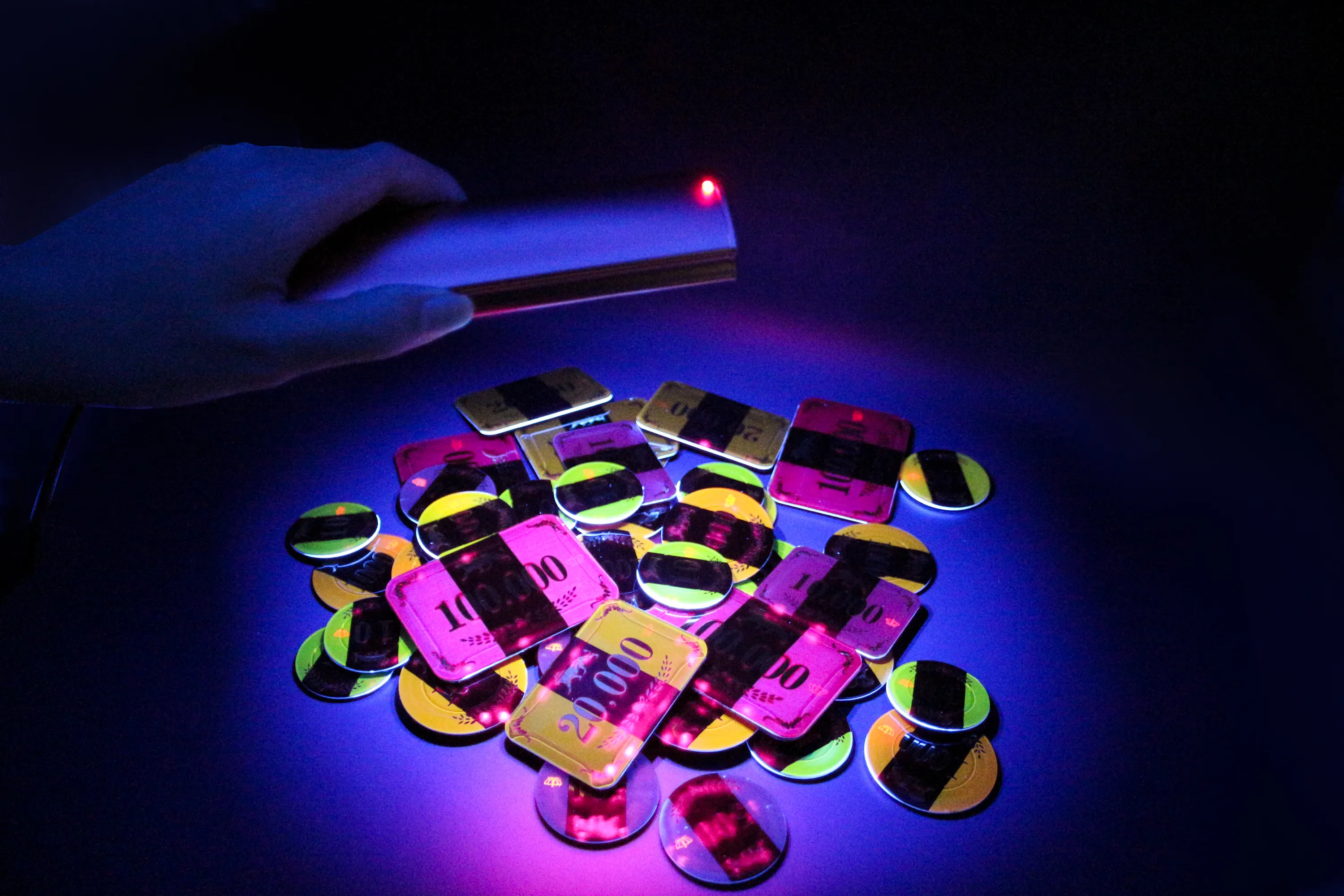
UV-fluorescerende markeringen
Ultraviolet ink applied during manufacturing is invisible under normal lighting but glows distinctly under blacklight. Floor supervisors can verify a chip’s authenticity in seconds with a handheld UV lamp. This is one of the most cost-effective countermeasures available, a single UV lamp costs under $50, yet it defeats casual counterfeiting attempts that lack access to specialty inks.
Holografische etiketten en hot stamping
Holografische labels zijn vrijwel onmogelijk te repliceren zonder industriële apparatuur. Elk label bevat microtekst, kleurveranderende elementen en geserialiseerde patronen die veranderen bij verschillende kijkhoeken. Door middel van hot stamping wordt metaalfolie onder hitte en druk aangebracht en permanent aan het chipoppervlak gehecht. Elke poging om de stempel te verwijderen of te wijzigen, laat zichtbare schade achter. Voor een dieper inzicht in hoe holografische technologie op grote schaal werkt, zie Onze gids voor holografische labels op casinofiches en technologie tegen namaak..
Constructie van composietmateriaal
Genuine casino chips are not made from a single material. Clay composite chips combine multiple layers (clay, ceramic, metal inserts) with each layer contributing to a distinct weight and sound profile. Acrylic chips use transparent or semi-transparent construction that makes internal structures visible. The onze collectie acryl pokerfiches Dit laat zien hoe de transparantie van het materiaal zelf een beveiligingskenmerk wordt: vervalsers kunnen interne inconsistenties niet verbergen wanneer de chip doorzichtig is.
Layer 2: How does RFID authenticate chips at the table and the cage?
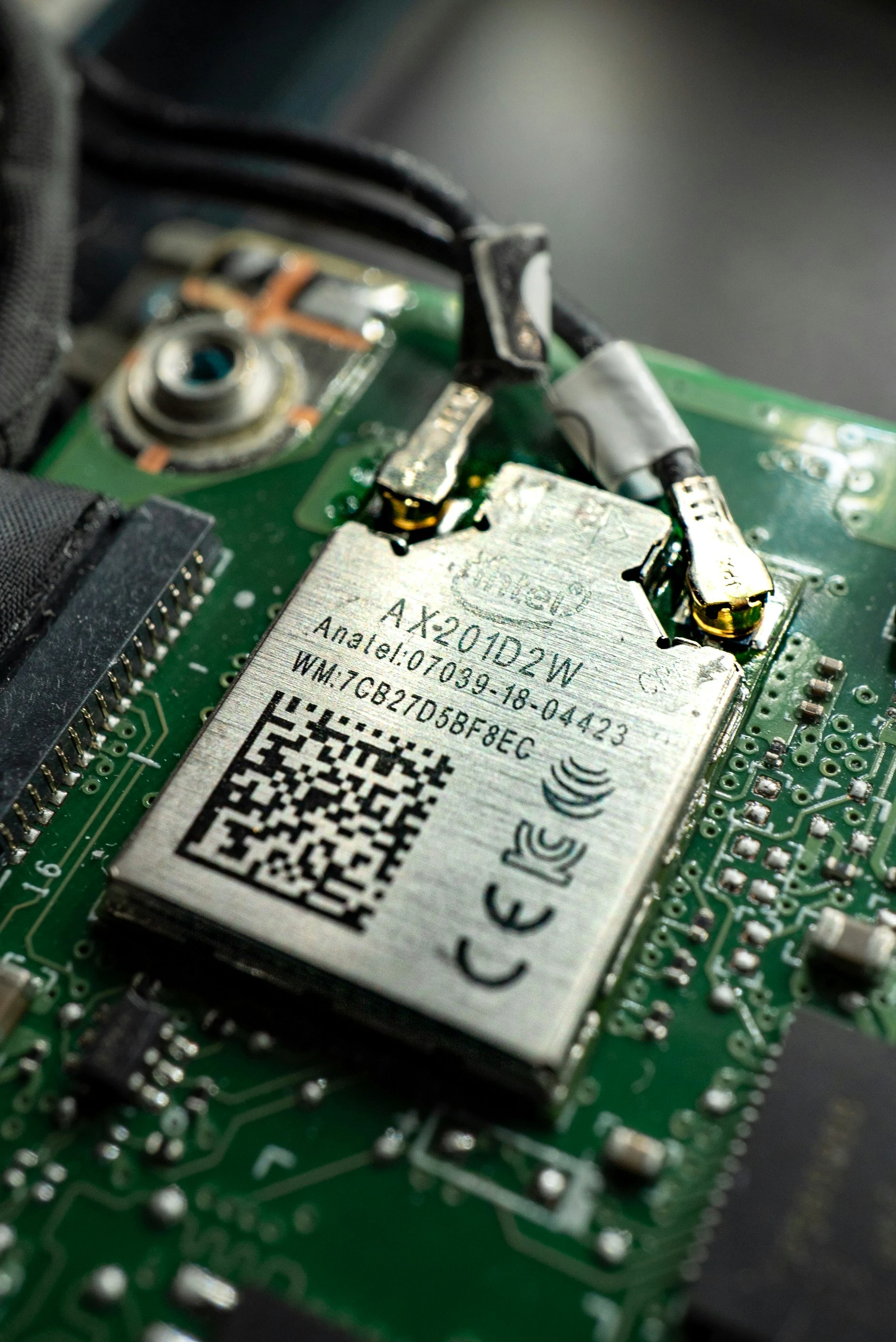
Radiofrequentie-identificatietechnologie (RFID) transformeert elke chip in een digitaal verifieerbaar object. Een RFID-tag in de chip slaat een unieke identificatiecode op die draadloos kan worden uitgelezen door ingebouwde tafelscanners, draagbare handlezers en verificatieboards in kooien.
Hoe werkt RFID-authenticatie?
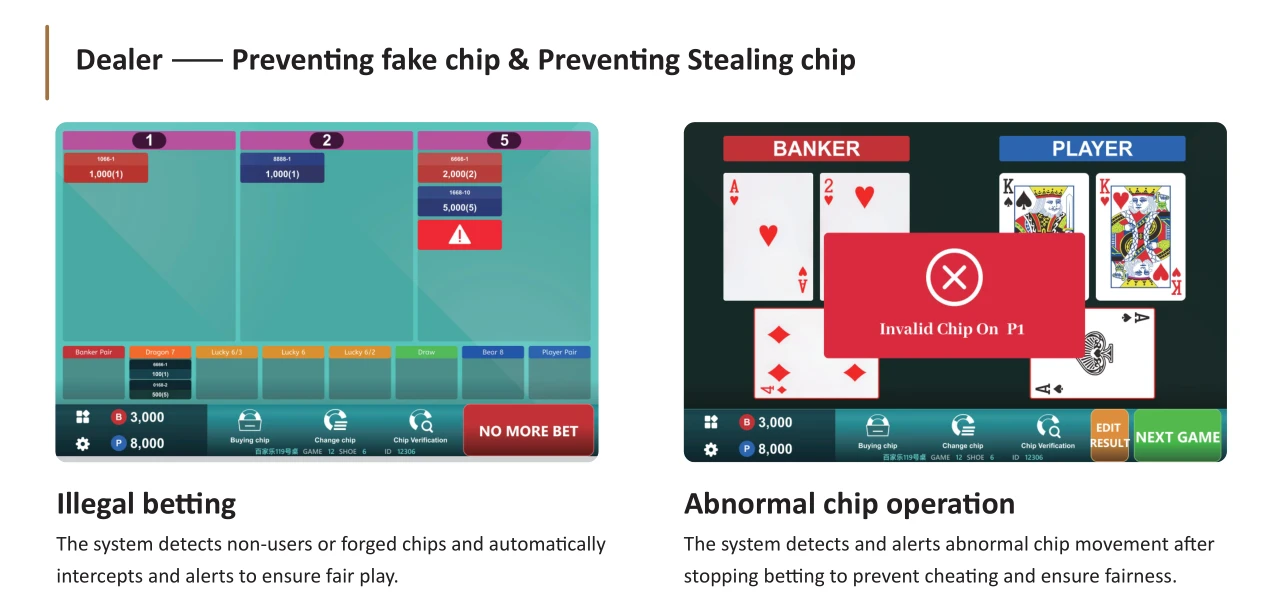
When an RFID-tagged chip passes over a reader (whether embedded in a RFID-chipkaartlezer voor casinokassa or a cage reader board) the system instantly compares the chip’s unique ID against the casino’s authorized chip database. If the ID does not exist in the database, or if a single ID appears on two chips simultaneously, the system flags an alert in real time.
Dit is waarom RFID-chipauthenticatie in het casino environments is so powerful: it shifts detection from after-the-fact audits to real-time interception. RFID-enabled chip tracking catches counterfeit and decommissioned chips that visual inspection alone would miss, shifting detection from after-the-fact audits to the point of play.
Ingebouwde tafelscanners versus draagbare lezers
RFID gaming tables embed reader arrays under the felt, scanning every chip placed in betting areas and the dealer tray. This provides continuous, automatic authentication without any operator action. For areas without embedded readers (such as cashier cages, chip storage rooms, and floor transfers) portable handheld readers offer on-demand verification. The draagbare RFID-handterminal ter bescherming tegen namaak Hiermee kunnen beveiligingsmedewerkers overal op het terrein chiprekken, inleverboxen of individuele chips scannen.
Layer 3: How does centralized tracking software fit in?
Fysieke kenmerken en RFID-hardware werken alleen als de data die ze genereren, wordt doorgegeven aan een systeem dat er iets mee kan doen. Gecentraliseerde trackingsoftware verbindt elke lezer op de verdieping tot één operationeel overzicht.
Realtime chiplevenscyclusbewaking
Vanaf het moment dat de fiches de kooi verlaten tot het moment dat ze terugkeren, wordt elke beweging geregistreerd: welke tafel welke fiches heeft ontvangen, hoeveel fiches er in het spel zijn, hoeveel er in de dealerbak liggen en of er fiches de toegestane circulatiezone hebben verlaten. onze kooichips systeem collectie Dit omvat hardware en software die ontworpen zijn om deze bewijsketen bij elk controlepunt te waarborgen.
Geautomatiseerde anomaliedetectie
Modern tracking software does more than log; it analyzes. Algorithms flag statistical anomalies such as chip counts that do not reconcile between the cage and table, unusual chip velocity (chips moving between tables faster than normal play would allow), or duplicate RFID IDs appearing at different locations simultaneously. These alerts appear on pit manager dashboards in real time, enabling rapid response before losses compound.
How the three layers work together
The layers are not alternatives, and they are not equally strong on their own. A UV marking or a hologram is checked by eye, at the table, by a person. It catches a counterfeit that fails the visual test, and only that.
RFID authentication replaces the visual judgement with a read: the chip either resolves to a valid record or it does not. That is what makes it the layer that catches a good copy, because a good copy looks right.
The tracking software is what turns individual reads into a control. A chip that appears at a table it was never filled to, a denomination that disagrees with the record, or a chip that reads as decommissioned are all visible in the same data, and they are visible while the round is still running.
What to specify when ordering counterfeit-resistant chips
Counterfeit resistance is built in at the specification stage. The decisions that matter are:
- Material and construction, which set the physical difficulty of copying
- Security printing, including UV markings, hot stamping and holograms
- RFID protocol and inlay type, matched to the readers in the room
- Serialisation and batch range, so every chip can be tied to a record
- Denominations and the colour ladder, because a chip that reads correctly but looks wrong is a separate problem
- Reader compatibility, confirmed before the order is released
Send the floor plan, the denomination list and the reader model, and Macaumr confirms the specification before quoting.
How do you choose a chip counterfeiting prevention strategy?
Niet elke accommodatie heeft alle soorten tafels nodig. De juiste strategie hangt af van het aantal tafels, de gemiddelde waarde van de inleg en de wettelijke voorschriften.
What those requirements are depends on the market. The Nevada Gaming Control Board and Singapore’s Gambling Regulatory Authority both publish equipment and reporting rules for their jurisdictions, and the layer mix is worth checking against the rules that apply to the property before it is committed to.
| Type woning | Aanbevolen lagen | Geschatte investering |
|---|---|---|
| Klein casino (≤20 tafels) | UV-markeringen + holografische labels + draagbare RFID-lezer | $15.000–$40.000 |
| Middelgroot casino (20-80 tafels) | Alle fysieke kenmerken + ingebouwde RFID-tafels + kooilezers + trackingsoftware | $80.000–$250.000 |
| Groot resort (meer dan 80 tafels) | Volledige meerlaagse implementatie met AI-anomaliedetectie en geïntegreerde bewaking | $250.000–$1M+ |
Voor operators die evalueren Hoe casino's valse fiches opsporen in practice, the key insight is that the two methods catch different things. A UV lamp is cheap and immediate, but it only catches chips that fail a visual check. RFID verification reads each chip’s identity electronically, so it also flags counterfeit and decommissioned chips that look correct at the table. The most secure properties run both. Learn more about the hardware side in Onze gids voor RFID-detectieapparaten voor casinochips en realtime detectie..
Veelgestelde vragen
Hoe detecteren casino's valse fiches?
Casino's sporen valse fiches op door een combinatie van UV-lichtverificatie, inspectie van holografische labels, RFID-authenticatie en gecentraliseerde trackingsoftware die afwijkingen in realtime signaleert. De meeste casino's gebruiken minstens twee van deze methoden tegelijk.
Kan RFID de vervalsing van casinofiches volledig uitbannen?
RFID raises the cost of counterfeiting sharply, but no single technology eliminates it. The most effective approach layers RFID with physical security features and software-based anomaly detection.
Wat is de goedkoopste manier om chipvervalsing te voorkomen?
UV-fluorescerende markeringen in combinatie met inspectie met een draagbaar blacklight kosten minder dan $50 per lamp en sporen de meeste pogingen tot namaak op. Dit is de minimaal aanbevolen beveiligingslaag voor elk pand, ongeacht de grootte.
Hebben alle casinofiches RFID-technologie?
Nee, niet alle chips zijn voorzien van RFID-tags. Kleine en middelgrote hotels reserveren RFID vaak voor chips met een hoge waarde ($100 en hoger), terwijl ze voor chips met een lagere waarde gebruikmaken van fysieke beveiligingskenmerken zoals UV-markeringen en holografische labels.