Live table games represent a casino’s highest-margin revenue stream, but also its most complex operational challenge. Every chip movement, every denomination change, and every buy-in event generates data that floor managers, surveillance teams, and cage personnel must track accurately and in real time. Manual processes are slow, error-prone, and increasingly insufficient as game speeds increase and regulatory scrutiny intensifies.
RFID 칩 게임 테이블에 직접 내장된 추적 기술은 이러한 문제들을 근본적으로 해결합니다. 주기적인 수동 계산이나 사후 대조 작업에 의존하는 대신, 운영자는 이제 바이인이 테이블에 놓이는 순간부터 랙에서 마지막 색칠이 완료될 때까지 모든 칩 관련 이벤트를 실시간으로 기록할 수 있습니다. 이 글에서는 내장형 RFID 리더기가 실제 게임 환경에서 어떻게 작동하는지, 어떤 운영 개선 효과를 가져오는지, 그리고 구현 시 운영자가 고려해야 할 사항은 무엇인지 살펴봅니다.
How do embedded RFID readers work at the gaming table?
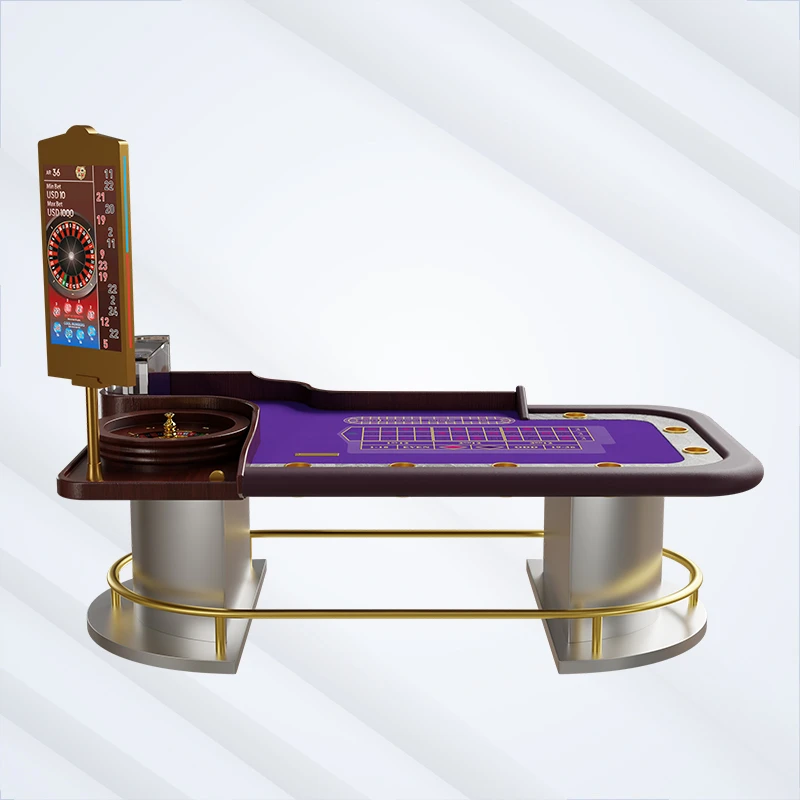
RFID chip readers built into gaming tables operate on high-frequency (HF) technology, typically at 13.56 MHz, which is the internationally accepted frequency for gaming applications due to its proven read accuracy and regulatory acceptance. Unlike standalone cage readers, these table-embedded units are installed flush beneath the table felt or within the chip tray housing, allowing continuous, passive monitoring of every chip that enters or exits the active playing area.
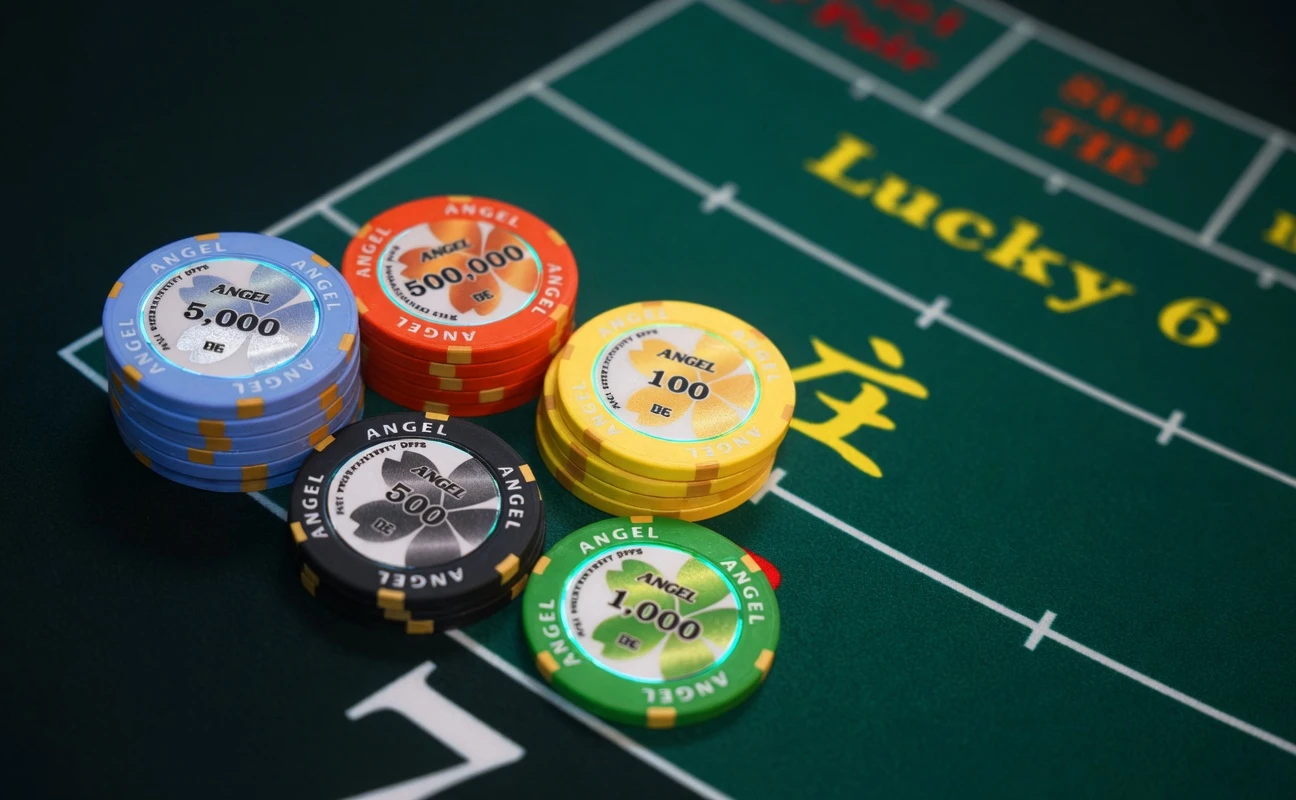
Each RFID casino chip contains a miniature inlay (a thin antenna and integrated circuit) embedded between layers of composite or ceramic material during manufacturing. When a chip crosses the reader’s field, the inlay activates and transmits its unique identification number. Because each chip carries a globally unique UID, the system can distinguish not only between denominations but between individual chips within the same denomination, a level of granularity that is impossible with any visual or manual system.
내장된 리더기는 유선 또는 무선 네트워크 인프라를 통해 카지노 관리 시스템에 연결되어 칩 이벤트 데이터를 실시간으로 스트리밍합니다. 캡처되는 이벤트에는 일반적으로 바이인, 컬러업, 드롭 투 드롭 박스, 스택 정산 등이 포함되며, 모든 이벤트는 초 단위 미만의 정확도로 타임스탬프가 찍히고 특정 테이블 위치와 연결됩니다.
How does real-time data reduce live game disputes?
One of the most immediate operational benefits of RFID table tracking is the dramatic reduction in live game disputes. Table game disputes attributable to chip count errors are uncommon, but each one costs floor time and staff attention to resolve. When RFID tracking is implemented floor-wide, that rate drops to below 0.02%, a 14-fold reduction driven entirely by objective, timestamped chip event data.
When a dispute arises, floor supervisors can pull the exact chip count for any point in time during the game, with individual chip UIDs and position-level breakdowns. Surveillance can correlate video footage with chip event logs, not the other way around. This shifts the dispute resolution dynamic from “whose memory is better” to “what the system recorded,” which in most jurisdictions significantly strengthens the casino’s legal position.
분쟁을 넘어, RFID 테이블 리더기가 생성하는 감사 추적 기록은 딜러, 현장 관리자 및 피트 관리자에게 새로운 책임 기준을 제시합니다. 개별 계산대 거래는 전체 근무 시간 동안 단 하나의 칩 오차 범위 내에서 대조할 수 있으므로, 기존에 관리자 승인 및 복잡한 마감 절차가 필요했던 모호한 부분을 없앨 수 있습니다.
How does RFID give inventory visibility across the gaming floor?
RFID-enabled gaming tables feed real-time chip inventory data into a central casino management system, giving floor managers a live dashboard view of every chip denomination across every active table. This eliminates the traditional morning inventory walk, a labor-intensive process in which cage supervisors physically counted chip racks at each table before the floor opened.
With RFID tracking, the cage management system calculates floor inventory automatically, flagging any discrepancy between expected and actual chip counts before the first game is dealt. Operators who have deployed this technology report saving 30 to 45 minutes of opening procedure time per shift, per pit, labor hours that can be redirected to guest service or floor coverage.
실시간 재고 데이터는 칩 재분배를 더욱 효율적으로 만들어줍니다. 테이블의 칩이 부족해질 때까지 기다렸다가 긴급하게 칩을 추가하거나 채워 넣는 요청을 하는 대신, 카지노 담당자는 칩 소모 추세를 모니터링하고 최적의 칩 재고량을 유지하기 위해 사전에 칩을 재분배할 수 있습니다. 이를 통해 테이블당 시간당 수익을 감소시키는 비활성 시간을 없애고 게임을 끊임없이 운영할 수 있습니다.
How does RFID integrate with surveillance and behavioral data?
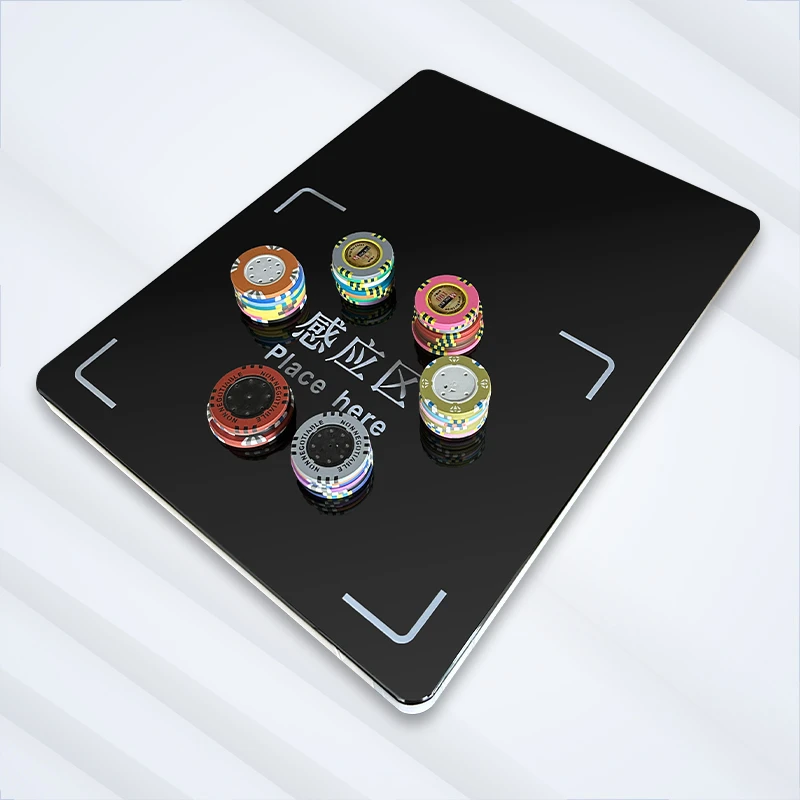
Embedded RFID readers generate a continuous stream of structured chip event data that integrates directly with casino surveillance systems. Each chip movement (buy-in, bet placement, color-up, drop) is logged with a timestamp, table number, position number, and chip UID. When this data is overlaid with video footage, surveillance operators gain a level of analytical precision that manual observation simply cannot match.
Consider a scenario where a player makes an unusually large color-up at an intermediate stage of the shoe. With manual tracking, the surveillance analyst must review multiple camera angles, estimate chip quantities visually, and correlate these observations with the pit boss’s written log. With RFID data, the analyst pulls the exact chip count for the color-up, the denominations involved, and the exact timestamp, then reviews 30 seconds of relevant video. This workflow reduction is not trivial when surveillance teams are monitoring dozens of tables simultaneously.
RFID 칩 추적 시스템은 칩 사용 패턴과 연관시켜 비정상적인 베팅 패턴을 감지하는 이상 탐지 알고리즘을 구현할 수 있도록 합니다. 예를 들어, 칩 추적 시스템이 의심스러운 카드 시퀀스 직전에 고액권 칩이 사이드 베팅으로 사용된 것을 감지하면 감시팀에 자동 알림이 전송되어 사기 행위 개입 시간을 단축할 수 있습니다.
How does RFID verify chips and stop counterfeits?
위조 칩은 카지노 수익에 가장 오래되고 지속적인 위협 중 하나로 남아 있습니다. RFID 기술은 테이블에서의 칩 인증과 계산대에서의 칩 검증이라는 두 가지 측면에서 이 문제를 해결합니다.
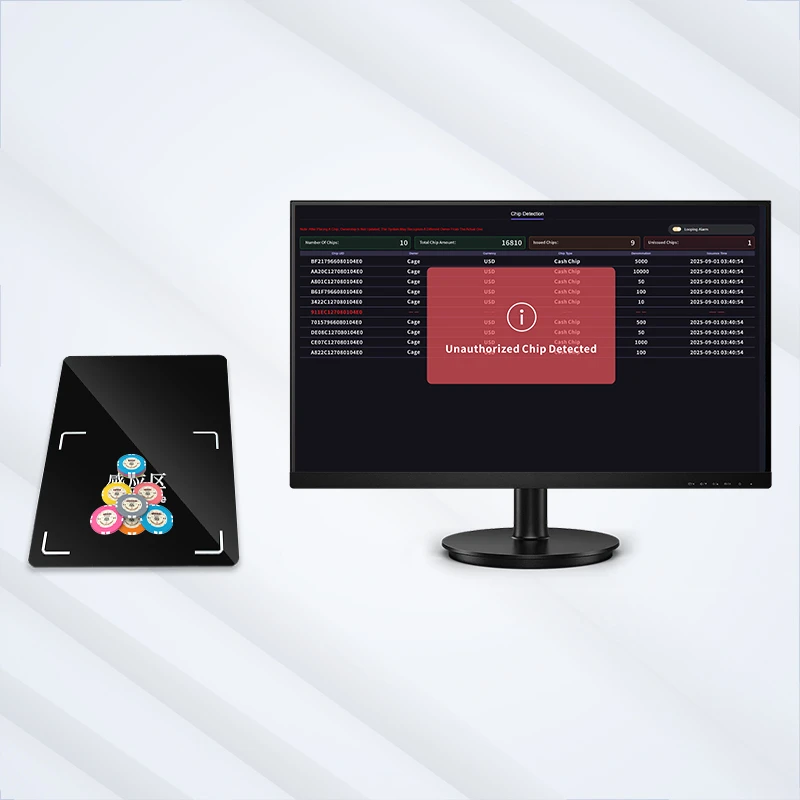
At the table, the embedded RFID reader validates each chip’s UID against the casino’s registered chip database. If an unregistered chip is detected (whether it entered through a buy-in, a transfer, or deliberate insertion) the system triggers an immediate alert to both the floor supervisor’s mobile device and the pit podium. The chip is flagged, and the game pauses until the chip is authenticated or removed from play.
For additional security, the chip cage reader serves as a secondary verification point. When chips are returned to the cage, the reader scans each chip individually, cross-checking UIDs before accepting them into the cash cage inventory. Any chip that fails authentication is rejected and held for supervisor review. This two-point validation model (table-level and cage-level) creates a security envelope that is significantly harder to exploit than either checkpoint alone.
보다 포괄적인 위조 방지 전략을 살펴보려면 다음 기사도 검토해 보시기 바랍니다. 카지노 칩 위조 방지 RFID 테이블 추적 기능을 보완하는 다층 인증 방식에 대한 자세한 분석은 다음을 참조하십시오.
What regulations apply to RFID chip tracking?
Regulatory requirements for chip tracking technology are tightening across major gaming jurisdictions. In Macau, higher-stakes baccarat tables are subject to chip-tracking and accountability requirements. Singapore’s Casino Regulatory Authority imposes similar requirements on equivalent-stakes tables under its Enhanced Table Game Monitoring framework.
In the United States, Nevada regulators have been tightening the technical standards for newly installed table game equipment, with chip-tracking capability increasingly expected. The New Jersey Division of Gaming Enforcement has circulated similar guidance, with implementation timelines currently under review.
For operators planning capital expenditures on gaming tables, this regulatory trajectory has a direct budgeting implication: RFID-enabled tables are no longer a competitive differentiator; they are becoming a licensing prerequisite. Investing in compatible infrastructure now positions operators ahead of compliance deadlines and avoids the rushed procurement premiums that typically accompany regulatory near-deadlines.
What should operators know before implementing RFID tracking?
실제 게임장이 운영 중인 상황에서 RFID 칩 추적 시스템을 도입하려면 운영에 지장을 주지 않도록 세심한 계획이 필요합니다. 다음 프레임워크는 대부분의 주요 장비 공급업체가 중대형 규모 구축에 사용하는 구현 접근 방식을 나타냅니다.
Phase 1. Chip registration and database setup: Before any reader is installed, the casino must register every chip in its RFID system with a unique UID, denomination, color, and series. This database is the foundation of the entire tracking system; any unregistered chip will trigger an alert, so accuracy is non-negotiable. For a 50-table floor with an average chip inventory of 2,000 chips per table, this phase typically requires 4 to 6 weeks of preparation.
Phase 2. Reader installation and zone calibration: 테이블 내장형 리더기는 일반적으로 야간이나 이용객이 적은 시간대와 같이 예정된 작업장 가동 중지 시간에 설치됩니다. 각 리더기 영역은 칩 스택과 개별 칩을 구분하고, 칩 방향의 변동을 고려하며, 인접 테이블에서의 오인식을 억제하도록 보정해야 합니다. 보정 작업은 리더기 모델과 피트 구성에 따라 테이블당 보통 2~4시간이 소요됩니다.
Phase 3. System integration and testing: 리더 네트워크는 카지노 관리 시스템에 연결되며, 테이블 리더, 금고 리더, 감시 시스템 통합 지점 및 중앙 대시보드 간의 데이터 흐름이 검증됩니다. 기능 테스트에는 모든 액면가에 대한 바이인, 컬러업, 드롭 및 컬러다운 시나리오가 포함되며, 편차 보고의 정확성이 검증됩니다.
Phase 4. Staff training and floor rollout: Dealers, floor supervisors, and cage personnel receive role-specific training on interpreting RFID dashboard data, responding to system alerts, and managing games during reader calibration events. A phased floor rollout (typically 3 to 5 tables per night) allows the operations team to adapt without overwhelming support resources.
The total implementation timeline for a 50-table property typically ranges from 3 to 5 months from contract signing to full floor coverage, with the majority of capital expenditure concentrated in hardware procurement. RFID table readers range from USD 3,000 to USD 8,000 per table depending on read zone configuration, and compatible chip sets add USD 2 to USD 6 per chip above standard non-RFID equivalents.
결론
라이브 게임 테이블에서의 RFID 칩 추적은 실험적인 기술에서 벗어나 운영 표준으로 자리 잡았습니다. 실시간 칩 이벤트 포착, 통합 감시 데이터, 위조 방지 검증, 그리고 규정 준수까지 모두 갖춘 RFID 칩 추적 기술은 오늘날 카지노 운영사에게 가장 높은 수익률을 제공하는 기술 투자 중 하나입니다. 이 기술을 도입한 카지노는 분쟁 해결 속도 향상, 재고 정확성 증대, 감시 효율성 제고, 그리고 궁극적으로 수익 보호 측면에서 상당한 이점을 누릴 수 있습니다.
For operators evaluating suppliers, the critical evaluation criteria are reader calibration accuracy under live game conditions, integration compatibility with existing casino management platforms, and the vendor’s regulatory certification track record in the target jurisdiction. Pairing the right reader hardware with the right management software (such as a comprehensive RFID 기반 케이지 관리 시스템) determines whether the deployment delivers a full operational return or merely a partial one.
자주 묻는 질문
RFID 테이블 리더기는 어떻게 서로 다른 칩 종류를 구분하나요?
Each RFID chip carries a unique identification number that is pre-registered in the casino management system and linked to its denomination, color, and series. When the reader detects a chip, it queries this database and returns the denomination and UID. This allows the system to distinguish not only between denominations but between individual chips within the same denomination, something no visual or manual system can achieve.
RFID 테이블 추적 시스템의 일반적인 투자 수익 회수 기간은 얼마나 되나요?
대부분의 운영업체는 자동화된 칩 계수 시스템으로 인한 인건비 절감, 분쟁 해결 비용 감소, 테이블 개폐 절차 간소화, 칩 위조로 인한 수익 손실 감소 등을 통해 도입 후 18~36개월 이내에 투자금을 완전히 회수합니다. 게임 속도가 빠르고 칩 재고량이 많은 업소일수록 투자 회수 기간이 더 짧습니다.
RFID 테이블 추적 시스템을 사용하려면 기존 칩을 모두 교체해야 하나요?
Yes. RFID tracking requires chips that contain embedded RFID inlays. Standard clay, composite, or acrylic chips without inlays are invisible to the reader. However, a phased replacement strategy, in which new RFID chips are introduced during routine color-ups and new game openings, minimizes the capital impact. Chips that are compatible with major reader platforms include composite ceramic hybrids and multi-layer polymer constructions with embedded HF inlays.
경기 도중 RFID 판독기가 오작동하면 어떻게 될까요?
최신 RFID 테이블 판독기 시스템에는 판독기 고장 시에도 칩 추적 연속성을 유지하는 이중화 프로토콜이 포함되어 있습니다. 기본 판독기에 문제가 발생하면 시스템은 칩 트레이 하우징 내의 백업 센서로 전환하고 현장 관리자와 피트 관리자에게 알립니다. 대부분의 시스템에는 판독기가 복구되거나 교체될 때까지 경기 진행 중에 계산대 직원이 임시로 카운트를 수행하는 수동 정산 모드가 포함되어 있습니다.
RFID 칩 추적에는 데이터 개인정보 보호 관련 고려 사항이 있습니까?
RFID 칩 추적은 칩의 이동을 모니터링하는 것이지, 개별 플레이어의 행동을 직접 추적하는 것은 아닙니다. 그러나 플레이어 로열티 시스템이나 안면 인식 감시 데이터와 연동될 경우, 이러한 결합된 데이터 세트는 대부분의 게임 개인정보 보호 규정에 따라 개인정보로 간주됩니다. 따라서 운영자는 해당 관할권의 개인정보 보호 요건을 준수하는 데이터 접근 제어, 감사 로깅 및 보존 정책을 시행해야 하며, 게임 외 데이터 활용과 관련된 경우 GDPR 제9조를 고려해야 합니다.
동일한 칩 판독값이 우리에게 공급됩니다. RFID 포커 테이블따라서 테이블 및 케이지 기록은 하나의 칩 식별 정보를 기준으로 해석됩니다.