Live table games represent a casino’s highest-margin revenue stream, but also its most complex operational challenge. Every chip movement, every denomination change, and every buy-in event generates data that floor managers, surveillance teams, and cage personnel must track accurately and in real time. Manual processes are slow, error-prone, and increasingly insufficient as game speeds increase and regulatory scrutiny intensifies.
RFID chip tracking technology embedded directly into gaming tables solves these problems at the source. Rather than relying on periodic manual counts or post-hoc reconciliation, operators can now capture every chip-level event as it happens, from the moment a buy-in hits the table to the final color-up at the rack. This article examines how embedded RFID readers work in live game environments, what operational improvements they deliver, and what operators should consider during implementation.
How do embedded RFID readers work at the gaming table?
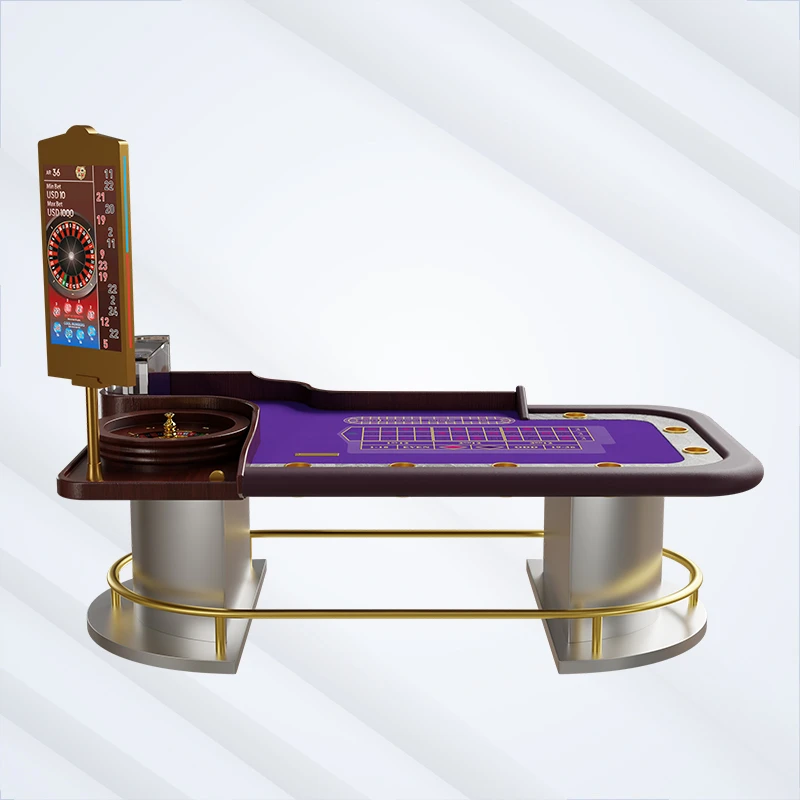
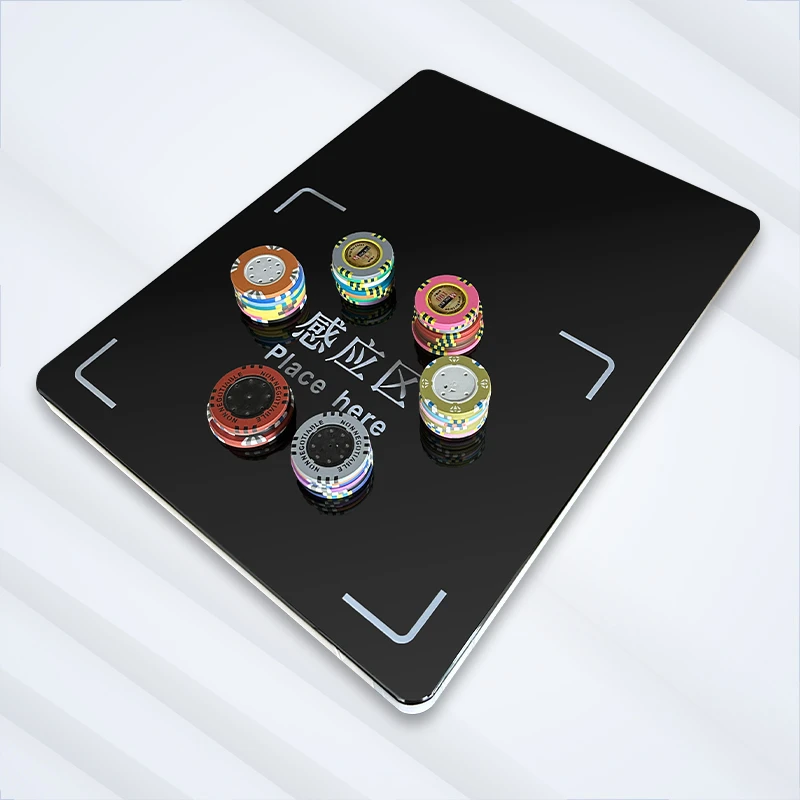
RFID chip readers built into gaming tables operate on high-frequency (HF) technology, typically at 13.56 MHz, which is the internationally accepted frequency for gaming applications due to its proven read accuracy and regulatory acceptance. Unlike standalone cage readers, these table-embedded units are installed flush beneath the table felt or within the chip tray housing, allowing continuous, passive monitoring of every chip that enters or exits the active playing area.
Each RFID casino chip contains a miniature inlay (a thin antenna and integrated circuit) embedded between layers of composite or ceramic material during manufacturing. When a chip crosses the reader’s field, the inlay activates and transmits its unique identification number. Because each chip carries a globally unique UID, the system can distinguish not only between denominations but between individual chips within the same denomination, a level of granularity that is impossible with any visual or manual system.
The embedded reader connects to the casino’s management system via wired or wireless network infrastructure, streaming chip event data in real time. Events captured typically include buy-in, color-up, drop-to-drop box, and stack reconciliation, all timestamped to sub-second accuracy and attributed to specific table positions.

How does real-time data reduce live game disputes?
One of the most immediate operational benefits of RFID table tracking is the dramatic reduction in live game disputes. Table game disputes attributable to chip count errors are uncommon, but each one costs floor time and staff attention to resolve. When RFID tracking is implemented floor-wide, that rate drops to below 0.02%, a 14-fold reduction driven entirely by objective, timestamped chip event data.
When a dispute arises, floor supervisors can pull the exact chip count for any point in time during the game, with individual chip UIDs and position-level breakdowns. Surveillance can correlate video footage with chip event logs, not the other way around. This shifts the dispute resolution dynamic from “whose memory is better” to “what the system recorded,” which in most jurisdictions significantly strengthens the casino’s legal position.
Beyond disputes, the audit trail generated by RFID table readers creates a new standard of accountability for dealers, floor supervisors, and pit managers. Individual cage transactions can be reconciled to within one chip across a full shift, eliminating the gray areas that traditionally require supervisor sign-offs and extended closing procedures.
How does RFID give inventory visibility across the gaming floor?
RFID-enabled gaming tables feed real-time chip inventory data into a central casino management system, giving floor managers a live dashboard view of every chip denomination across every active table. This eliminates the traditional morning inventory walk, a labor-intensive process in which cage supervisors physically counted chip racks at each table before the floor opened.
With RFID tracking, the cage management system calculates floor inventory automatically, flagging any discrepancy between expected and actual chip counts before the first game is dealt. Operators who have deployed this technology report saving 30 to 45 minutes of opening procedure time per shift, per pit, labor hours that can be redirected to guest service or floor coverage.
Real-time inventory data also enables more efficient chip redistribution. Rather than waiting for a table to run low and initiating an emergency color-up or fill request, the cage can monitor depletion trends and proactively redistribute chips to maintain optimal chip rack levels. This keeps games running continuously without the dead time that erodes revenue per table per hour.
How does RFID integrate with surveillance and behavioral data?
Embedded RFID readers generate a continuous stream of structured chip event data that integrates directly with casino surveillance systems. Each chip movement (buy-in, bet placement, color-up, drop) is logged with a timestamp, table number, position number, and chip UID. When this data is overlaid with video footage, surveillance operators gain a level of analytical precision that manual observation simply cannot match.
Consider a scenario where a player makes an unusually large color-up at an intermediate stage of the shoe. With manual tracking, the surveillance analyst must review multiple camera angles, estimate chip quantities visually, and correlate these observations with the pit boss’s written log. With RFID data, the analyst pulls the exact chip count for the color-up, the denominations involved, and the exact timestamp, then reviews 30 seconds of relevant video. This workflow reduction is not trivial when surveillance teams are monitoring dozens of tables simultaneously.
RFID chip tracking also enables anomaly detection algorithms that can flag unusual betting patterns in conjunction with chip behavior. For example, if a chip tracking system detects a large denomination chip placed as a side bet immediately before a suspicious card sequence, the surveillance team receives an automatic alert, shortening the response window for fraud intervention.
How does RFID verify chips and stop counterfeits?
Counterfeit chips remain one of the oldest and most persistent threats to casino revenue. RFID technology addresses this at two levels: chip authentication at the table and chip verification at the cage.
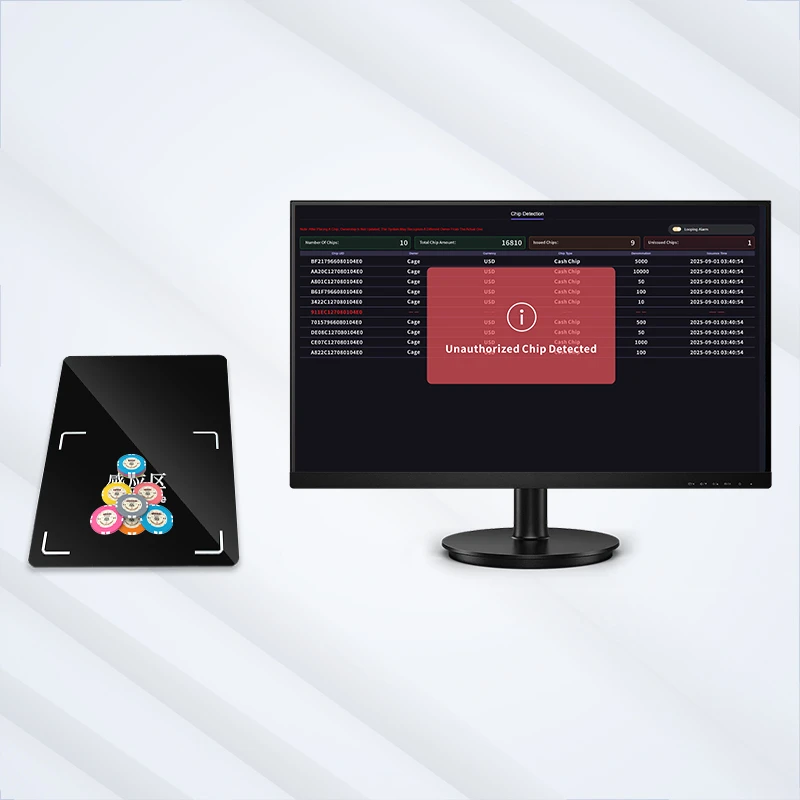
At the table, the embedded RFID reader validates each chip’s UID against the casino’s registered chip database. If an unregistered chip is detected (whether it entered through a buy-in, a transfer, or deliberate insertion) the system triggers an immediate alert to both the floor supervisor’s mobile device and the pit podium. The chip is flagged, and the game pauses until the chip is authenticated or removed from play.
For additional security, the chip cage reader serves as a secondary verification point. When chips are returned to the cage, the reader scans each chip individually, cross-checking UIDs before accepting them into the cash cage inventory. Any chip that fails authentication is rejected and held for supervisor review. This two-point validation model (table-level and cage-level) creates a security envelope that is significantly harder to exploit than either checkpoint alone.
Looking at our broader anti-counterfeit strategy, we also recommend reviewing our article on casino chip counterfeiting prevention for a detailed breakdown of multi-layer authentication approaches that complement RFID table tracking.
What regulations apply to RFID chip tracking?
Regulatory requirements for chip tracking technology are tightening across major gaming jurisdictions. In Macau, higher-stakes baccarat tables are subject to chip-tracking and accountability requirements. Singapore’s Casino Regulatory Authority imposes similar requirements on equivalent-stakes tables under its Enhanced Table Game Monitoring framework.
In the United States, Nevada regulators have been tightening the technical standards for newly installed table game equipment, with chip-tracking capability increasingly expected. The New Jersey Division of Gaming Enforcement has circulated similar guidance, with implementation timelines currently under review.
For operators planning capital expenditures on gaming tables, this regulatory trajectory has a direct budgeting implication: RFID-enabled tables are no longer a competitive differentiator; they are becoming a licensing prerequisite. Investing in compatible infrastructure now positions operators ahead of compliance deadlines and avoids the rushed procurement premiums that typically accompany regulatory near-deadlines.
What should operators know before implementing RFID tracking?
Rolling out RFID chip tracking across a live gaming floor requires careful planning to avoid disrupting active operations. The following framework represents the implementation approach used by most major equipment vendors for mid-to-large-scale deployments.
Phase 1. Chip registration and database setup: Before any reader is installed, the casino must register every chip in its RFID system with a unique UID, denomination, color, and series. This database is the foundation of the entire tracking system; any unregistered chip will trigger an alert, so accuracy is non-negotiable. For a 50-table floor with an average chip inventory of 2,000 chips per table, this phase typically requires 4 to 6 weeks of preparation.
Phase 2. Reader installation and zone calibration: Table-embedded readers are installed during scheduled floor downtime, typically overnight or during low-traffic periods. Each reader zone must be calibrated to distinguish between chip stacks and individual chips, account for chip orientation variance, and suppress false reads from adjacent tables. Calibration typically takes 2 to 4 hours per table, depending on the reader model and pit configuration.
Phase 3. System integration and testing: The reader network connects to the casino management system, with data flows verified between table readers, cage readers, surveillance integration points, and the central dashboard. Functional testing includes buy-in, color-up, drop, and color-down scenarios across all denominations, with deviation reporting validated for accuracy.
Phase 4. Staff training and floor rollout: Dealers, floor supervisors, and cage personnel receive role-specific training on interpreting RFID dashboard data, responding to system alerts, and managing games during reader calibration events. A phased floor rollout (typically 3 to 5 tables per night) allows the operations team to adapt without overwhelming support resources.
The total implementation timeline for a 50-table property typically ranges from 3 to 5 months from contract signing to full floor coverage, with the majority of capital expenditure concentrated in hardware procurement. RFID table readers range from USD 3,000 to USD 8,000 per table depending on read zone configuration, and compatible chip sets add USD 2 to USD 6 per chip above standard non-RFID equivalents.
Conclusion
RFID chip tracking at live gaming tables has moved decisively from experimental technology to operational standard. The combination of real-time chip event capture, integrated surveillance data, anti-counterfeit verification, and regulatory compliance alignment makes it one of the highest-return technology investments available to casino operators today. Properties that deploy this technology gain measurable advantages in dispute resolution speed, inventory accuracy, surveillance efficiency, and ultimately, revenue protection.
For operators evaluating suppliers, the critical evaluation criteria are reader calibration accuracy under live game conditions, integration compatibility with existing casino management platforms, and the vendor’s regulatory certification track record in the target jurisdiction. Pairing the right reader hardware with the right management software (such as a comprehensive RFID-enabled cage management system) determines whether the deployment delivers a full operational return or merely a partial one.
Frequently Asked Questions
How does an RFID table reader distinguish between different chip denominations?
Each RFID chip carries a unique identification number that is pre-registered in the casino management system and linked to its denomination, color, and series. When the reader detects a chip, it queries this database and returns the denomination and UID. This allows the system to distinguish not only between denominations but between individual chips within the same denomination, something no visual or manual system can achieve.
What is the typical return on investment timeline for RFID table tracking?
Most operators achieve a full return on investment within 18 to 36 months of deployment, driven primarily by labor savings from automated chip counts, reduced dispute resolution costs, faster table opening and closing procedures, and decreased revenue leakage from chip counterfeiting. Properties with higher game speeds and larger chip inventories typically see faster returns.
Does RFID table tracking require replacing all existing chips?
Yes. RFID tracking requires chips that contain embedded RFID inlays. Standard clay, composite, or acrylic chips without inlays are invisible to the reader. However, a phased replacement strategy, in which new RFID chips are introduced during routine color-ups and new game openings, minimizes the capital impact. Chips that are compatible with major reader platforms include composite ceramic hybrids and multi-layer polymer constructions with embedded HF inlays.
What happens if an RFID reader malfunctions during a live game?
Modern RFID table reader systems include redundancy protocols that maintain chip tracking continuity during reader outages. If a primary reader fails, the system switches to backup sensors within the chip tray housing and alerts the floor supervisor and pit manager. Most deployments include a manual reconciliation mode in which the game continues while cage staff perform interim counts until the reader is restored or replaced.
Are there data privacy considerations with RFID chip tracking?
RFID chip tracking monitors chip movements, not individual player behavior directly. However, when linked to player loyalty systems or surveillance face-recognition data, the combined dataset constitutes personal information under most gaming privacy regulations. Operators must implement data access controls, audit logging, and retention policies that comply with applicable jurisdictional privacy requirements, including GDPR Article 9 considerations where relevant for non-gaming data applications.
The same chip reads feed our RFID poker tables, so table and cage records resolve against one chip identity.