Why Casino Chip Theft Remains a Critical Threat in 2026
Casino chip theft is one of the most persistent and costly challenges facing the gaming industry. Unlike cash, chips circulate freely across the casino floor, changing hands between players, dealers, and cage staff dozens of times per hour. This liquidity creates vulnerability: a single high-denomination chip stolen from a table or pocketed during a payout can represent thousands of dollars in unrecoverable revenue.
According to the Nevada Gaming Control Board, chip-related theft and counterfeiting remain among the top enforcement categories in regulated gaming jurisdictions. The global RFID market—foundational to modern chip tracking—is projected to grow from approximately $17 billion in 2025 to over $46 billion by 2034, reflecting a CAGR of 11.7% according to industry research by Grand View Research. This growth is driven substantially by the gaming industry’s demand for real-time asset visibility.
For casino operators, the stakes are clear: without robust chip theft prevention, revenue leakage compounds daily. This guide explains how modern casinos combine RFID technology, surveillance integration, cage management protocols, and staff training to close the gaps that thieves exploit.
The Five Most Common Casino Chip Theft Methods
Understanding how theft occurs is the first step to preventing it. Here are the five most frequently reported chip theft scenarios on casino floors worldwide:
1. Palming and Sleight-of-Hand at the Table
Players or colluding dealers pocket chips during high-action moments—when bets are being placed, hands are being paid, or attention is diverted. This method exploits the speed and chaos of live table games, especially baccarat and blackjack where chip volumes are highest.
2. Chip Walking and Floor Distraction
A thief purchases chips with cash, plays minimally, then leaves the table with more chips than they should have—either by claiming mistaken payouts or by picking up another player’s stack during a distraction. Chip walking losses are notoriously difficult to trace without RFID tracking.
3. Counterfeit Chip Insertion
Counterfeiters introduce fake chips into circulation at tables or cage windows. Without authentication technology, fake chips may circulate for days before detection, resulting in significant financial exposure. As we cover in our guide to casino chip counterfeiting prevention, multi-layer security features—holographic labels, UV markings, and RFID—are now essential.
4. Internal Theft by Staff
Employees with access to chip storage, cage vaults, or table float banks represent an inside threat. Internal theft accounts for a disproportionate share of total chip losses because staff can bypass physical controls and exploit procedural gaps during shift changes.
5. Cage and Vault Exploitation
During busy periods, cage clerks processing rapid transactions may fail to verify chip authenticity or count accurately. Thieves exploit this rush to pass counterfeit chips or short-change the count. Our article on cage management systems details how RFID-enabled cage operations close these gaps.
How RFID Technology Prevents Chip Theft
Radio-Frequency Identification (RFID) has transformed casino chip theft prevention from a reactive process into a proactive, real-time defense system. Here is how the technology works across the theft prevention chain:
Embedded RFID Inlays in Every Chip
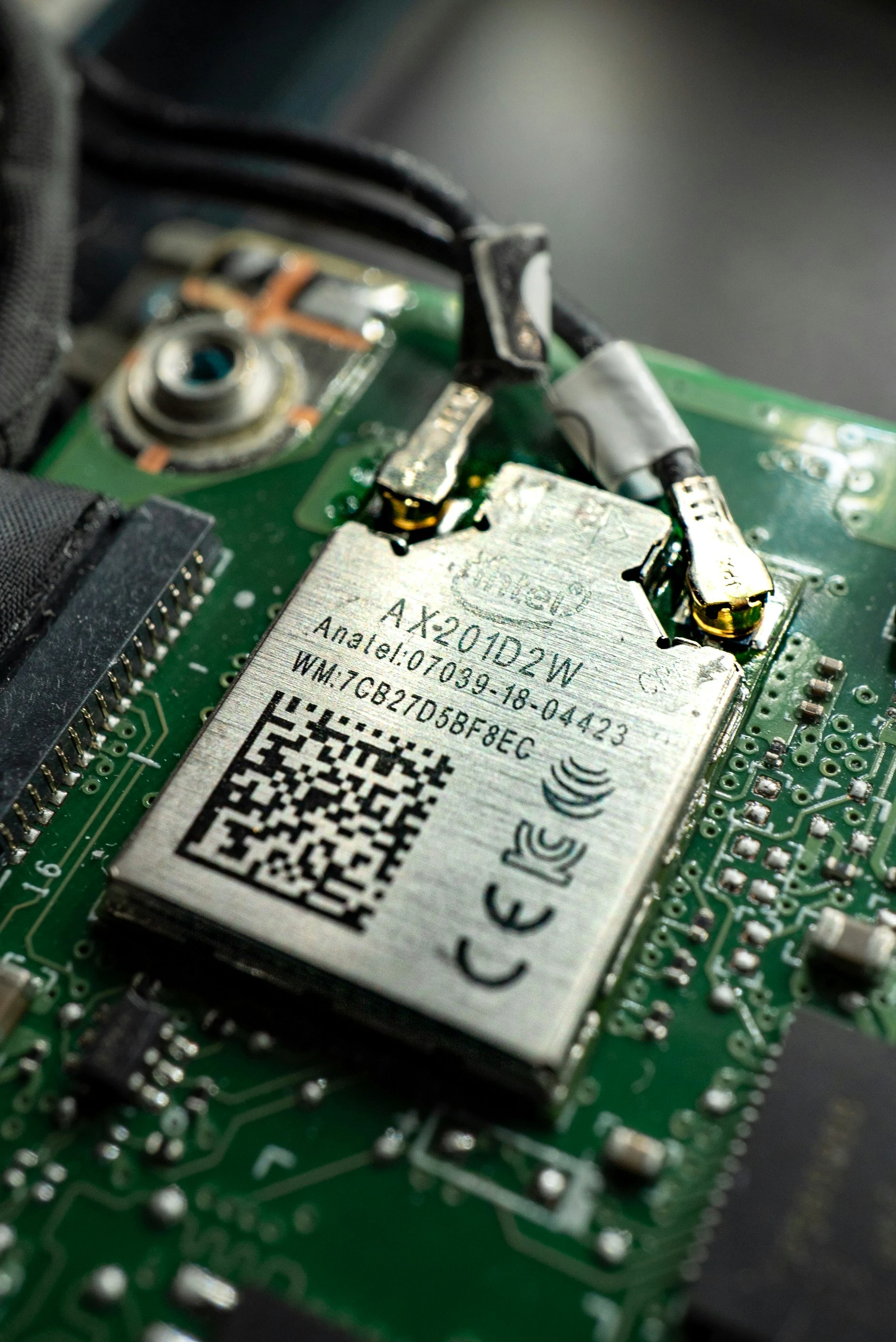
Modern casino chips contain embedded RFID inlays—tiny microchips and antennas laminated inside each chip during manufacturing. Each inlay stores a unique identifier linked to a central database that records the chip’s denomination, issue date, and current status (active, redeemed, flagged). When a chip passes over an RFID reader, its identity is instantly verified without visual inspection.
The Portable Casino RFID Chips Anti-Counterfeit Handheld Terminal allows floor staff to scan individual chips or entire stacks in seconds, instantly flagging counterfeits and unregistered units.
Real-Time Table-Level Tracking
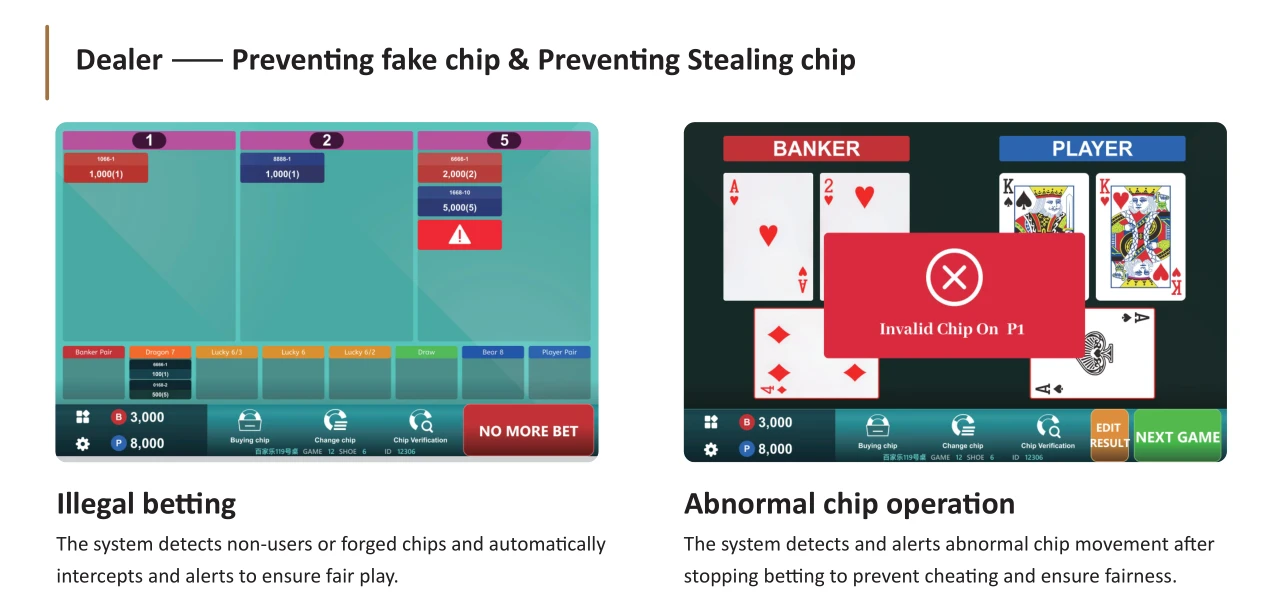
RFID reader boards installed beneath table felt detect every chip on the playing surface in real time. When chips are removed or added, the system logs the change and compares it against the game’s transaction flow. If the total chip count on a table drops without a corresponding payout or buy-in, the system generates an immediate alert to pit managers and surveillance.

Smart Chip Trays with Instant Counts
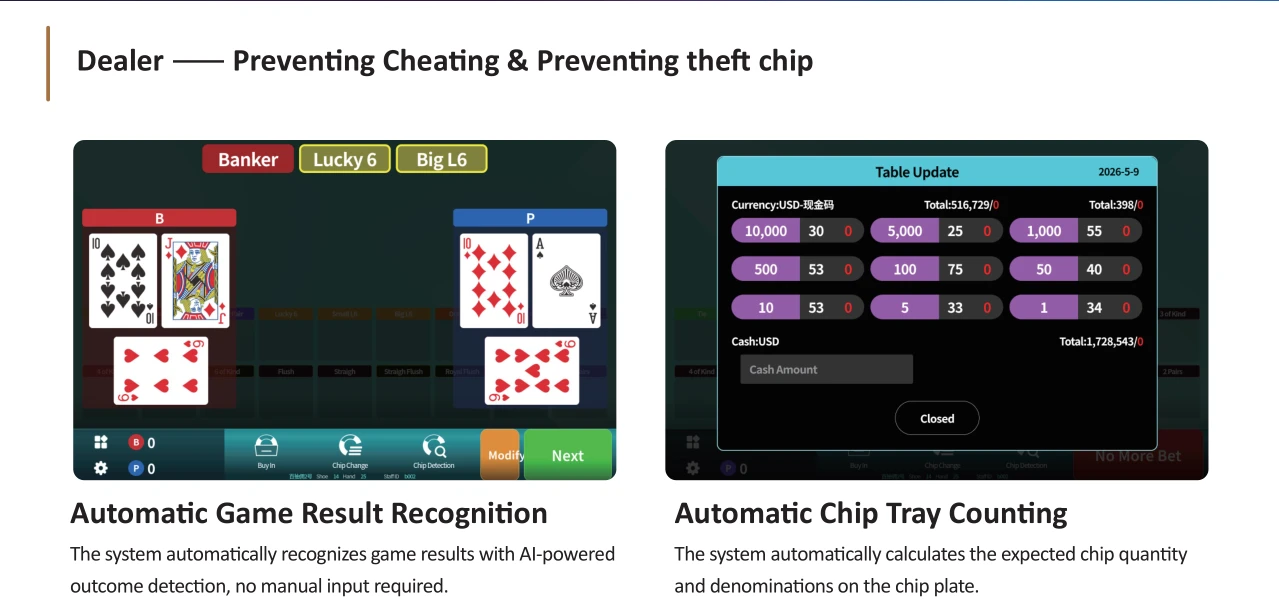
RFID-enabled dealer chip trays automatically count and verify all chips in the tray at any moment. This eliminates manual counts during shift changes, reduces discrepancies, and creates an auditable digital record. The Casino Cage RFID Chips Reader Board extends this capability to cage operations, where the highest chip volumes are handled.
Automated Fake Chip Detection
When a non-RFID chip or a chip with an unregistered RFID signature passes over a reader, the system immediately flags it. This detection happens at the table, the cage, and the vault—providing three layers of automated authentication without relying on human visual inspection, which is prone to error under pressure.
Beyond RFID: Multi-Layer Casino Chip Theft Prevention
While RFID is the technological backbone, effective chip theft prevention requires a layered approach that combines technology, physical security, and procedural discipline.
Surveillance and AI-Powered Analytics
Modern casino surveillance systems integrate with RFID table data to correlate video footage with chip movements. AI analytics flag suspicious patterns—a player whose chip position changes during payouts, a dealer whose tray counts consistently drift, or a cage transaction where chip totals don’t match cash amounts. As covered in our guide to casino surveillance technology, AI-powered cameras now detect behavioral indicators of theft in real time.
Physical Security Features on Chips
RFID works in concert with visible and covert physical security features:
- Holographic labels that shift color under different angles, making visual counterfeiting extremely difficult
- UV fluorescent ink visible only under ultraviolet light for low-cost secondary verification
- Custom edge spots and inner ring designs that are unique to each casino property
- Microtext and laser engraving that requires magnification to verify
The Casino Baccarat Game Customizable Composite Poker Chips with Holographic Labels combine RFID inlays with holographic anti-counterfeit labeling for dual-layer protection.
Cage Management Protocols
The cage is the final checkpoint before chips enter or leave controlled circulation. Effective cage protocols include:
- Mandatory RFID scan of all chips at intake and payout
- Dual-verification for transactions above a threshold amount
- Real-time reconciliation of chip inventory against the central database
- Automated alerts for count discrepancies or unregistered chips
The SiM Cage Management System provides role-based access control, real-time chip tracking, and automated reconciliation—reducing cage shrinkage and human error.
Staff Training and Procedural Controls
Technology is only as effective as the people operating it. Chip theft prevention training should include:
- Recognition of common theft scenarios and behavioral red flags
- Proper chip handling procedures during payouts and buy-ins
- Retailiation protocols when RFID alerts trigger
- Regular audits using both manual counts and RFID verification
Calculating the ROI of Chip Theft Prevention
Investing in RFID chip tracking and multi-layer security delivers measurable returns:
- Reduced shrinkage: RFID tracking typically reduces chip inventory shrinkage by 80–95% compared to manual tracking methods
- Faster audits: Automated RFID counts reduce shift-change audit time from 15–20 minutes to under 2 minutes per table
- Fewer disputes: Real-time chip tracking provides definitive evidence for resolving player disputes over payouts and bet amounts
- Lower insurance premiums: Casinos with certified RFID tracking systems often qualify for reduced gaming liability insurance rates
- Regulatory compliance: Jurisdictions including Nevada, Macau, and Singapore increasingly require or strongly recommend RFID chip tracking as part of gaming license conditions
For a mid-size casino with 50 table games operating 24/7, even a 0.5% shrinkage rate on a $10 million chip float equals $50,000 in annual unexplained losses. RFID systems typically pay for themselves within the first year of deployment through shrinkage reduction alone.
Implementing Chip Theft Prevention: A Practical Checklist
For casino operators evaluating or upgrading their chip theft prevention strategy, here is a prioritized implementation checklist:
- Audit current chip inventory procedures — Document every point where chips change hands and identify gaps in tracking
- Deploy RFID-enabled chips — Start with high-denomination chips where theft risk and financial impact are greatest
- Install table-level RFID readers — Integrate reader boards beneath high-volume baccarat and blackjack tables first
- Upgrade chip trays and cage readers — Replace manual-count trays with RFID smart trays; install cage reader boards
- Integrate with surveillance systems — Connect RFID data feeds to the surveillance network for cross-referencing
- Train staff on new protocols — Conduct hands-on training for dealers, pit managers, and cage staff
- Establish audit cadence — Set daily, weekly, and monthly reconciliation schedules using RFID data
- Monitor and optimize — Review alert patterns monthly to identify emerging theft methods and refine detection algorithms
Frequently Asked Questions
How do casinos detect stolen chips?
Casinos detect stolen chips primarily through RFID tracking. Every chip with an embedded RFID inlay is scanned by readers at tables, cage windows, and vault checkpoints. If a chip appears where it shouldn’t be—or fails to appear where it should—the system generates an immediate alert. Surveillance cameras with AI analytics provide a secondary detection layer by correlating video footage with chip movement data.
Can stolen casino chips be used at another casino?
Generally, no. Each casino’s chips have unique physical designs, custom edge patterns, and property-specific RFID signatures. A chip from one casino cannot be authenticated at another property’s cage or table readers. Even without RFID, the distinct visual design of each property’s chips makes cross-casino use impractical.
What happens when RFID detects a counterfeit chip?
When an RFID reader detects a chip without a valid signature, the system triggers an alert to the dealer, pit manager, and surveillance simultaneously. The chip is confiscated, the table may be temporarily locked for audit, and security investigates the source. Digital logs record the exact time, location, and reader that flagged the chip, providing evidence for regulatory reporting.
How much does a casino RFID chip tracking system cost?
Costs vary based on casino size and scope. RFID-enabled chips cost $1–$3 more per chip than standard chips. Table reader boards range from $2,000–$5,000 per table. Cage reader systems and central management software add $50,000–$150,000 depending on features. For most mid-size operations, the total investment delivers ROI within 12–18 months through shrinkage reduction and operational efficiency gains.