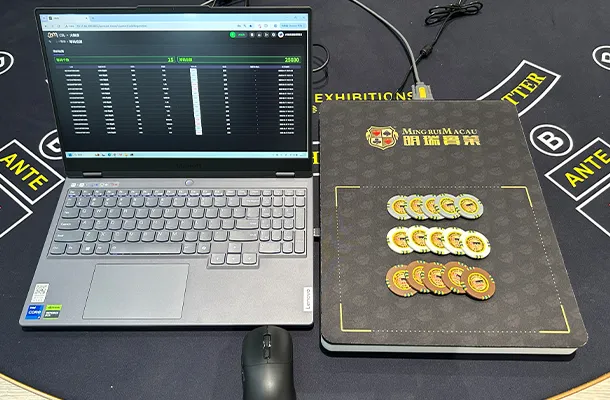
What Is an RFID Gaming Table?
An RFID gaming table is a casino table embedded with radio-frequency identification (RFID) antenna arrays beneath the playing surface. These antennas detect and track every RFID-tagged chip placed on the table in real time—recording denomination, position, and movement without any manual intervention. Combined with backend software, the system transforms a standard gaming table into a data-generating asset that feeds live analytics to pit managers, cage operators, and surveillance teams.

How RFID Table Technology Works
Embedded Antenna Arrays
The core of every RFID gaming table is its antenna grid. Typically, 8 to 16 planar antennas are embedded between the felt layout and the wooden table base. Each antenna emits a low-frequency electromagnetic field (usually 13.56 MHz for HF or 860–960 MHz for UHF) that energizes the passive RFID inlay inside every chip. When a chip enters the field, the inlay transmits its unique ID back to the antenna, and the system maps that ID to a denomination and player position.
RFID-Tagged Casino Chips
RFID casino chips contain a tiny inlay—often a NXP MIFARE or Impinj Monza chip—molded into the chip body during manufacturing. Each inlay carries a globally unique identifier (UID) that cannot be cloned or rewritten. The chip’s denomination is stored in the backend database, not on the inlay itself, which means a stolen chip cannot be reprogrammed to a higher value.
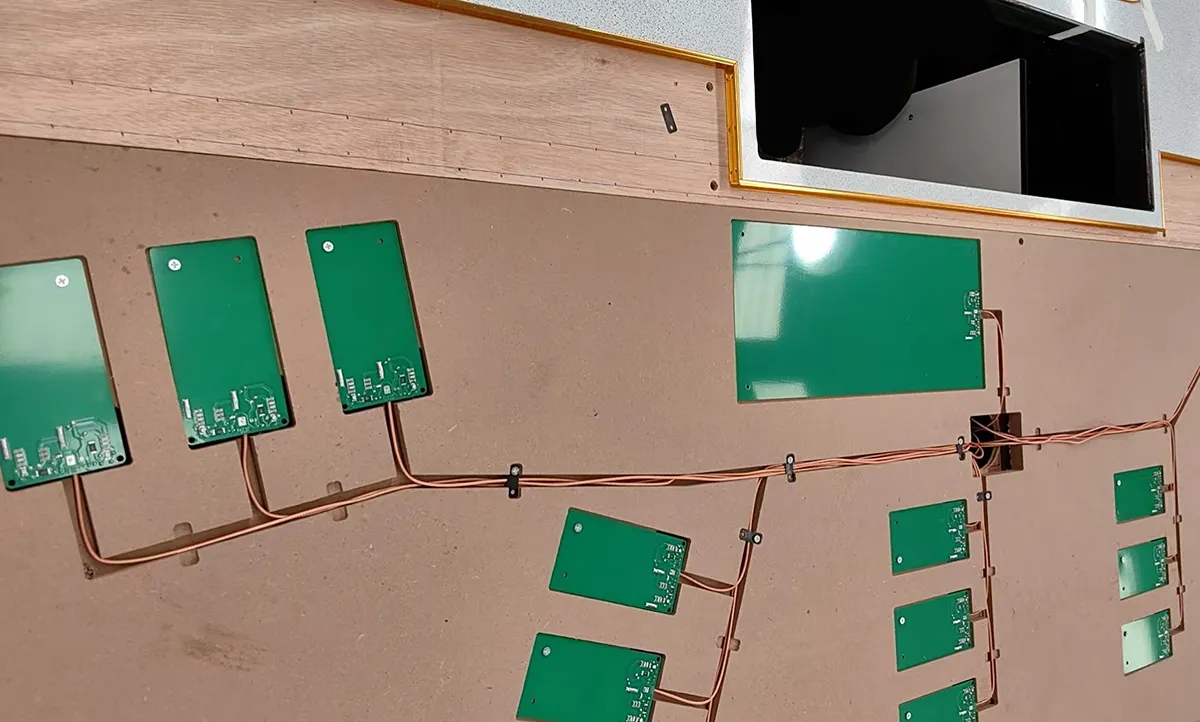
Real-Time Data Processing
As chips move across the table—players placing bets, dealers paying wins, the cage reconciling floats—the antenna array reads every position change. The table controller (typically an ARM-based embedded computer) aggregates these reads, filters duplicate signals, and streams structured data to the casino management system. Pit managers see live bet totals, bankroll tracking, and win/loss ratios on their dashboards within seconds.
Key Benefits of RFID Gaming Tables
1. Fraud Detection and Prevention
RFID tables detect counterfeit chips the moment they enter the antenna field. Because every legitimate chip has a cryptographically signed UID, any chip without a recognized ID triggers an instant alert. The system also flags anomalous betting patterns—such as past-posting (adding chips after the result is known) or bet-capping (stacking extra chips on a winning wager)—by comparing the chip positions at deal time versus settlement time.
2. Automated Inventory and Float Reconciliation
Manual chip counts at shift changes are slow and error-prone. An RFID table provides a continuous, accurate count of every chip on the surface. When the dealer opens a new shoe, the system records the starting float. When the shoe closes, it compares the ending float against the calculated win/loss total. Discrepancies are flagged immediately—no more waiting for end-of-day audits to catch a short float.
3. Real-Time Revenue Analytics
Every bet, win, and loss is timestamped and logged. Pit managers can track table hold percentages in real time, compare performance across tables, and identify underperforming dealers or game variants. This granularity allows data-driven decisions about table limits, game mix, and staffing that directly impact floor revenue.
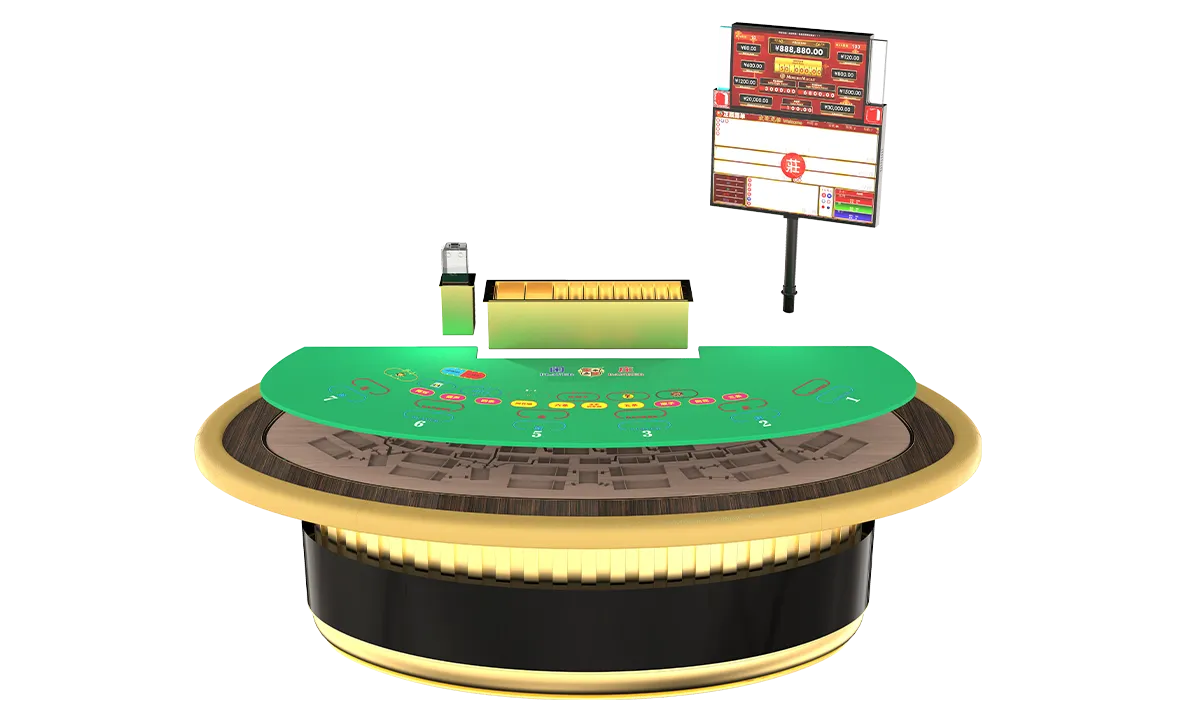
RFID Table Components and Architecture
A complete RFID table system consists of three layers:
- Hardware layer: Embedded antenna arrays, table controller, Casino Waterproof and Dustproof Baccarat Dragon Tiger Gaming Table Layout with RFID-compatible felt, and touchscreen dealer terminals.
- Network layer: Ethernet or Wi-Fi connectivity between the table controller and the server room, with encrypted data transmission (TLS 1.3 minimum).
- Software layer: Casino management system (CMS) with modules for chip tracking, game audit, player rating, and surveillance integration.
The physical integration requires careful engineering. The felt layout must be RFID-transparent—standard PVC-coated felts can attenuate the signal. Our Baccarat Table collection uses purpose-built layouts that maintain signal integrity while meeting casino-grade wear resistance.
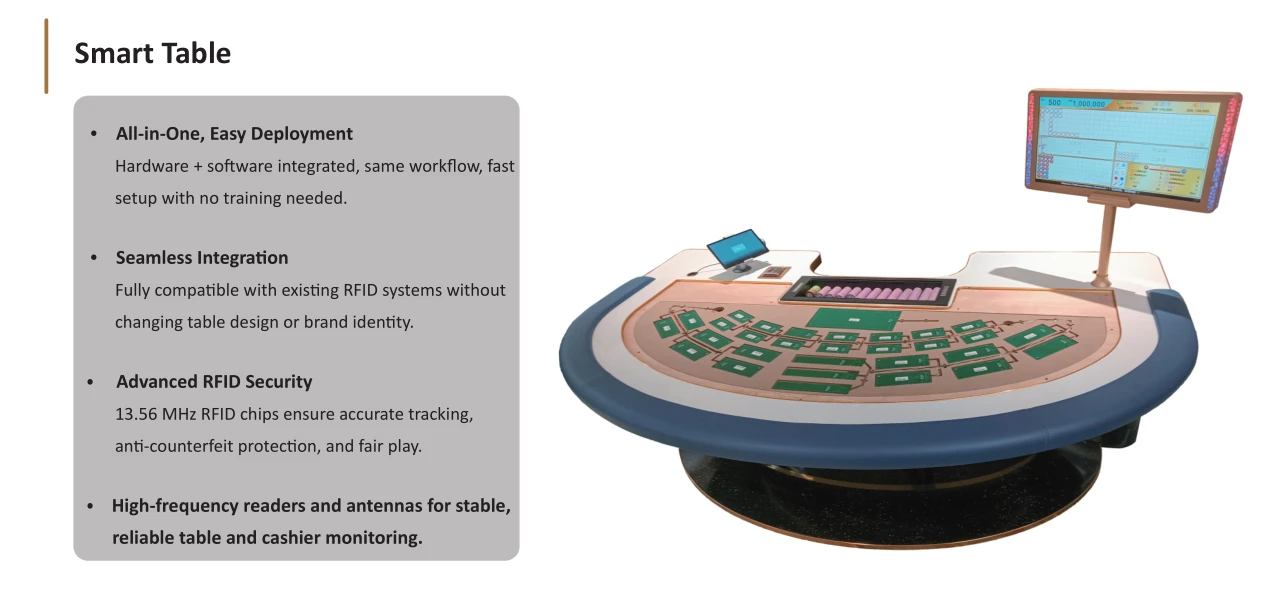
Deployment Considerations for Casino Operators
Read Range and Accuracy
HF (13.56 MHz) systems offer reliable reads at 0–10 cm, ideal for chip-on-table tracking. UHF systems extend the range to 1–3 meters, suitable for cage readers and chip tray scanning. Most RFID table deployments use HF for on-table precision and UHF for back-of-house operations.
Environmental Interference
Metal table frames, electronic shoe housings, and nearby surveillance cameras can create RF noise. Professional installation includes a site survey to map interference sources and adjust antenna positioning and power levels accordingly.
Software Integration Depth
The ROI of an RFID table system scales with integration depth. A basic deployment (chip counting + counterfeit detection) delivers immediate security benefits. A fully integrated deployment (live analytics + player rating + surveillance correlation + cage management) unlocks the full revenue and operational potential. Plan your integration roadmap before purchasing hardware to ensure the chosen system supports your target end state.
Cost and ROI Analysis
RFID table hardware (antenna array + controller + dealer terminal) typically costs USD 3,000–8,000 per table, depending on game type and integration level. RFID chips add USD 0.80–2.50 per chip over standard clay chips. For a 20-table baccarat pit with 10,000 chips, the total hardware investment ranges from USD 60,000 to USD 160,000.
However, the payback period is often under 12 months. A single detected counterfeit ring can save the casino hundreds of thousands of dollars. Automated float reconciliation eliminates 2–3 hours of manual counting per shift across the pit. Real-time hold percentage tracking enables table-limit adjustments that can increase daily revenue by 3–5% per table.