Casino operators lose millions each year to counterfeit chips, inventory shrinkage, and manual counting errors. RFID casino chip sensing devices have emerged as the definitive solution, embedding radio-frequency identification technology directly into chip management workflows to deliver instant authentication, automated inventory tracking, and real-time floor surveillance. This guide explains how these sensing devices work, what to look for when evaluating hardware, and how integration with cage management platforms transforms casino operations from reactive to proactive.
What Are RFID Casino Chip Sensing Devices?
RFID casino chip sensing devices are specialized readers and antenna arrays designed to detect, authenticate, and count casino chips embedded with RFID inlays. Each RFID-enabled chip contains a microchip and antenna that transmits a unique identifier when energized by the reader’s electromagnetic field. Unlike barcode or visual inspection methods, RFID sensing reads through stacks of chips simultaneously, requires no line of sight, and operates at speeds impossible for human auditors to match.

These devices operate primarily on the 13.56 MHz frequency band using the ISO 15693 protocol, which provides a reliable balance between read range and data integrity. The technology enables batch scanning — reading an entire stack or rack of chips in a single pass — which is critical for high-volume casino environments where speed and accuracy directly affect revenue protection.
Core Components of an RFID Chip Sensing System
Embedded Table Readers
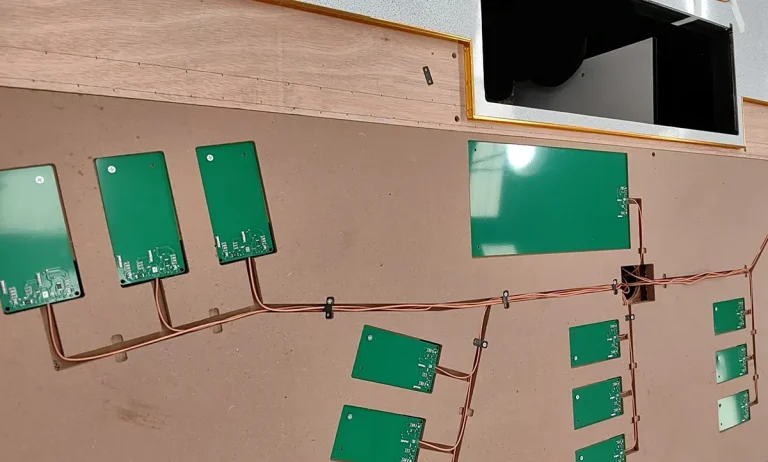
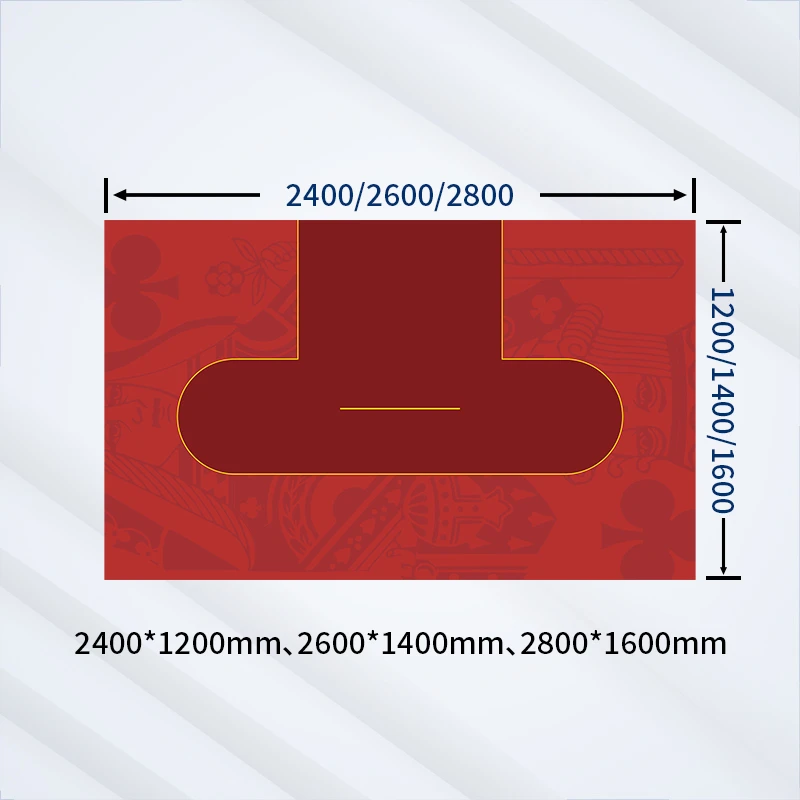
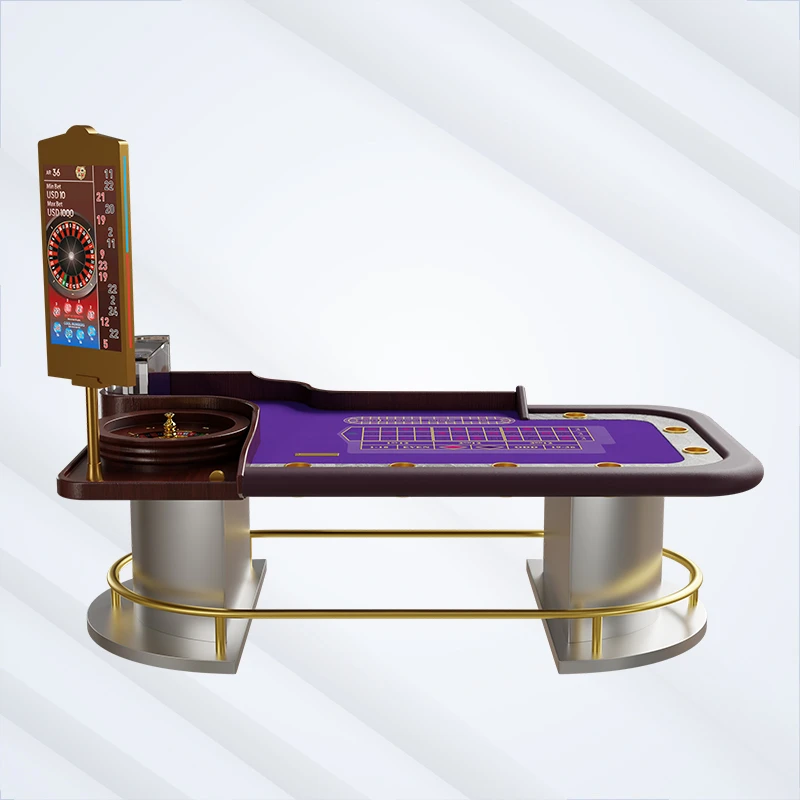
Embedded table readers are antenna arrays installed beneath the gaming table felt. They continuously scan chips placed in betting positions, the dealer tray, and the commission area. These readers connect to the casino’s central management system, providing a live map of chip positions and denominations at every table. The Casino Cage RFID Chips Reader exemplifies this category, offering board-level integration that works with cage countertops and table-side installations alike.
Portable Handheld Terminals
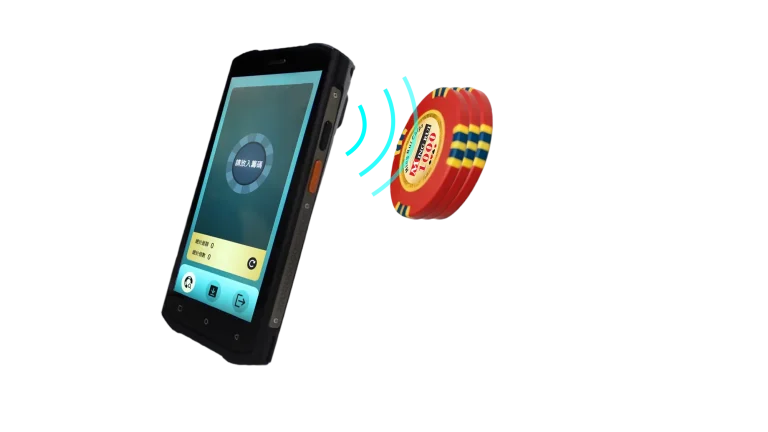
Handheld RFID terminals give floor supervisors and security personnel the ability to verify chip authenticity on the spot — at the table, in the pit, or during player cash-outs. The Portable Casino RFID Chips Anti-Counterfeit Handheld Terminal uses a 13.56 MHz reader with ISO 15693 protocol to scan chip stacks in under one second. Its batch scanning capability processes an entire rack in a single pass, eliminating the need to handle each chip individually.
Cage-Sense Boards and Integration Hubs
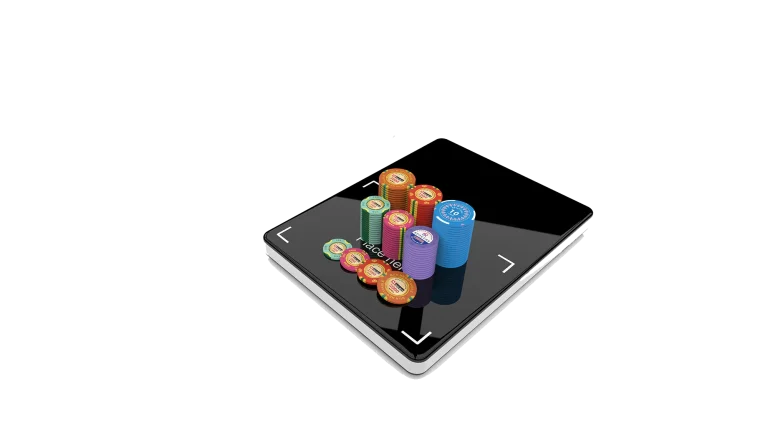
Cage-sense boards are high-density antenna arrays installed in the casino cage countertop. When a player brings chips to cash out, the cage operator places the stack on the sense board, which instantly reads every chip’s unique ID, verifies authenticity, and calculates the total value. This process takes seconds rather than the minutes required for manual counting. You can explore the full range of these systems in our RFID chip sensing device collection.
How RFID Chip Sensing Stops Counterfeiting
Counterfeit chips have plagued casinos for decades. Traditional security measures — UV markings, edge patterns, weight checks — all share a critical weakness: they require human inspection and can be defeated by sophisticated forgeries. RFID sensing changes the equation fundamentally.
Unique Digital Signatures
Each RFID inlay contains a factory-programmed unique identifier that cannot be cloned or rewritten. When a chip passes over a reader, the system compares the transmitted ID against the casino’s master database. A chip whose ID does not match — or whose electronic characteristics differ from the expected profile — is flagged instantly. This verification happens in milliseconds, well before the chip reaches the betting area or the cage.
Multi-Point Authentication
RFID sensing devices create multiple authentication checkpoints across the casino floor. A chip is verified when it leaves the cage, again when it is placed on the table, and once more when it returns to the cage. This chain-of-custody approach means that a counterfeit chip must pass three separate inspections — each powered by a different reader type — to circulate undetected. The probability of a forgery surviving all three checks is effectively zero.
Real-Time Alerts and Anomaly Detection
Modern RFID management platforms go beyond simple ID matching. They analyze chip movement patterns and flag anomalies: a chip appearing simultaneously at two tables, a denomination count that does not match the transaction log, or a chip ID that has never been registered in the system. These alerts trigger immediate security responses, allowing operators to intercept counterfeit or stolen chips before they affect the bottom line.
Operational Benefits Beyond Security
While anti-counterfeiting is the most visible benefit, RFID chip sensing devices deliver substantial operational improvements that directly affect profitability.
Automated Inventory and Audit Compliance
Manual chip counts are labor-intensive, error-prone, and must be performed during floor closures. RFID sensing automates this process entirely. A single scan generates a complete inventory report — chip count by denomination, by table, and by cage location — in seconds. This capability satisfies regulatory audit requirements without the staffing overhead of manual counts. For a deeper dive into this topic, see our article on casino chip inventory management.
Speeding Up Cage Transactions
Every second a player waits at the cage is a second of reduced satisfaction. RFID-sense boards reduce average transaction time from 2–3 minutes to under 15 seconds. The chip stack is placed on the reader, the system instantly verifies and totals, and the cashier disburses funds. This throughput improvement reduces queue lengths and enables casinos to operate with fewer cage positions during peak hours. Browse our cage chips system collection to see integrated solutions designed for high-volume cashier operations.
Real-Time Revenue Tracking
When embedded table readers feed chip position data into the management platform, pit managers gain a live view of chip flow across the entire floor. They can see which tables are holding the most value, which games are generating the highest drop, and where chip inventories are building up. This data supports faster, better-informed decisions about table limits, game mix, and staffing allocation.
Choosing the Right RFID Chip Sensing Devices
Selecting sensing hardware requires careful consideration of the casino’s specific operational environment and strategic goals.
Read Range and Accuracy
Table-embedded readers need short-range precision to identify individual chip positions within the betting layout, while cage-sense boards require medium-range capability to scan stacks of 100+ chips simultaneously. Handheld terminals must balance range with portability. Evaluate each device’s read accuracy rate — the percentage of chips correctly identified in a single scan. Premium devices achieve 99.9% or higher first-pass accuracy.
Protocol Compatibility
Ensure all sensing devices operate on the same RFID protocol (typically ISO 15693 at 13.56 MHz) to guarantee interoperability across the chip fleet. Mixing protocols forces the casino to maintain parallel chip inventories and reader infrastructures, increasing cost and complexity without operational benefit.
Software Integration Depth
The sensing hardware is only as valuable as the software that processes its data. Look for devices that integrate directly with cage management and floor monitoring platforms. The SiM Cage Management System exemplifies this approach, providing a unified platform that reads data from embedded table readers, handheld terminals, and cage-sense boards to deliver a single source of truth for chip status across the entire property.
Implementation Best Practices
Deploying RFID chip sensing technology across a casino property requires methodical planning to avoid common pitfalls.
Start with the Cage
The cage is the highest-impact, lowest-risk starting point. Install sense boards first, train cage staff, and validate data accuracy before extending readers to the gaming floor. This phased approach delivers immediate ROI through faster transactions and reduced counting errors while the operations team builds familiarity with the technology.
Calibrate Antenna Arrays for the Table Environment
Table-embedded readers must be carefully calibrated to account for the specific felt thickness, chip stack heights, and metallic objects (such as dealer trays and commission boxes) in the read field. Poor calibration leads to missed reads or phantom detections. Work with the hardware vendor to perform site-specific tuning for each table model and layout.
Establish a Chip Registration Protocol
Before any RFID-enabled chip enters circulation, its unique ID must be registered in the management database with the correct denomination, color, and set assignment. Establish a formal registration process at the cage, and enforce it as a mandatory step in the chip issuance workflow. As we discuss in our guide to RFID casino chip verification, registration integrity is the foundation upon which all subsequent sensing accuracy depends.
Cost Considerations and ROI
RFID chip sensing hardware represents a significant upfront investment, but the return typically materializes within 12–18 months for mid-to-large-scale operations. Key cost factors include the number of reader stations, the volume of RFID-enabled chips required, and the depth of software integration.
Direct savings come from reduced labor costs for manual counting, eliminated losses from counterfeit chips, and fewer audit discrepancies. Indirect savings include improved cage throughput, faster floor fills, and better data for revenue optimization. Casinos that combine sensing hardware with an integrated management platform — rather than standalone readers — consistently report higher ROI because the platform unlocks the full analytical value of the collected data. Visit our casino chips collection to compare sensing devices, RFID-enabled chips, and management software side by side.
Frequently Asked Questions
How does an RFID chip sensing device differ from a standard RFID reader?
A standard RFID reader is a generic device that can read any RFID tag. An RFID chip sensing device is purpose-built for casino chip authentication and counting, with antenna arrays calibrated for chip stack geometries, firmware optimized for the ISO 15693 protocol at 13.56 MHz, and software that integrates with cage and floor management systems. Casino-specific sensing devices also include tamper detection and audit logging features that generic readers lack.
Can RFID sensing devices read chips through chip trays and racks?
Yes. RFID sensing devices are designed to read through common chip storage containers, including acrylic trays, metal racks, and chip carts. The 13.56 MHz signal penetrates these materials, enabling batch scanning without removing chips from their storage position. Read accuracy depends on the specific tray material and stack height, but calibrated systems routinely achieve 99%+ accuracy through standard casino chip trays.
What happens if a chip’s RFID inlay is damaged?
Damaged inlays are flagged by the management system as unreadable. The standard protocol is to remove the chip from circulation at the cage, log it as a damaged unit, and issue a replacement chip with a new registered ID. Most RFID chip programs maintain a buffer inventory of pre-registered replacement chips for exactly this scenario, ensuring that damaged-chip handling does not disrupt floor operations.
How long does it take to deploy RFID chip sensing across a full casino floor?
A typical mid-size casino (40–80 tables) can complete a full RFID chip sensing deployment in 8–12 weeks. This includes hardware installation, antenna calibration, chip registration, staff training, and a parallel-run period where manual and RFID counts are compared. Large properties with 100+ tables may require 16–20 weeks. Starting with the cage and expanding to the floor in phases reduces risk and accelerates the path to initial ROI.