Description
Ceramic poker chips are the preferred choice for casinos and poker rooms that demand maximum design freedom without compromising on professional quality. Unlike clay composite chips, where printed designs are limited by inlay size and molding constraints, ceramic chips use a heat-transfer printing process that covers the entire chip surface, edge to edge, in full color. Your logo, brand colors, decorative patterns, denomination markings, and security text can all be printed with photographic clarity across the full face of the chip.
Our custom ceramic poker chips are manufactured from premium ceramic material in a single-piece construction, no layered lamination, no glued edges, no inserts that can separate over time. The result is a durable chip with a smooth, comfortable hand feel and clean edges that won’t develop burrs or chips after extended use. At 3.3mm or 3.6mm thick and 9.7g to 46g in weight, these chips cover the full spectrum from standard casino weight to heavyweight high-denomination plaques.
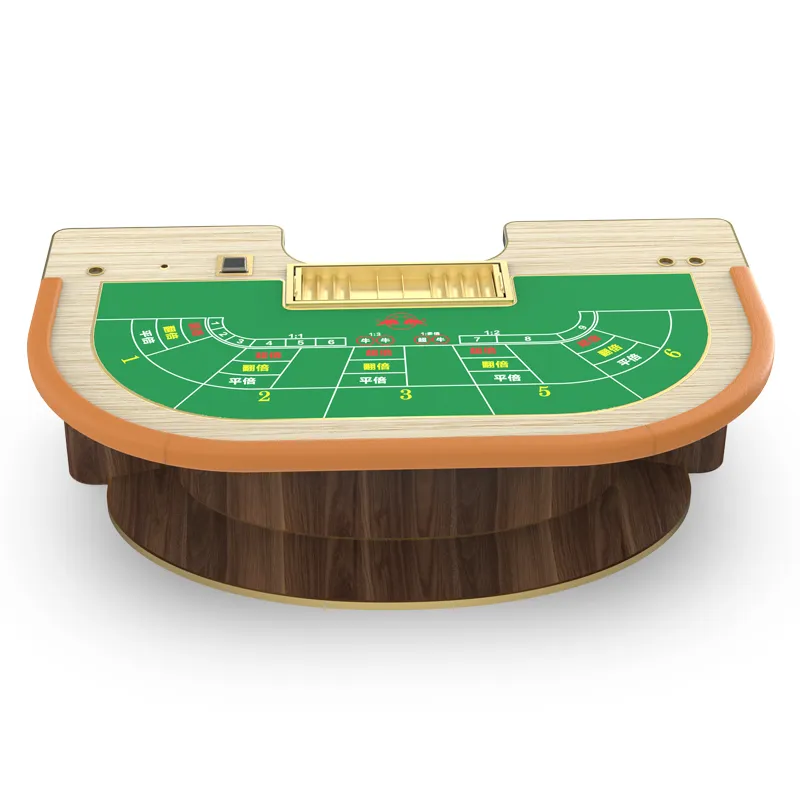
For operators who need anti-counterfeiting protection, we offer multiple security options that can be combined on a single chip: embedded RFID inlay for electronic tracking, UV ink printing invisible under normal lighting, laser-etched serial numbers unique to each chip, and holographic labels with tamper-evident adhesives. Pair RFID-enabled chips with our casino cage RFID chip reader for cashier-side authentication. For a complete branded gaming setup, browse our RFID poker gaming tables.
How do ceramic poker chips compare with clay composite and acrylic?
The three constructions are not interchangeable, and the choice usually follows the part of the floor the chips will serve. Ceramic chips are rigid and heavy with stable stacking, which suits poker rooms and cash games where the chip itself is part of the experience. Ceramic also accepts full-color edge-to-edge printing, so a design that needs fine detail or security text across the whole face has more room to work with than a clay composite chip, where the printed area is bounded by inlay size and molding constraints.
Acrylic chips trade weight for appearance: a crystal-clear or holographic body, used in high-limit rooms, VIP areas and commemorative sets. Clay composite chips hold traditional casino weight with a molded edge and are the usual choice for high-volume tables such as Baccarat and Dragon Tiger, where denomination colors and edge spots carry most of the information.
All three are produced as RFID-enabled chips, so the material decision is separate from whether the set will be tracked.
Features
- Premium ceramic material with single-piece construction (no lamination layers)
- Heat-transfer printing for edge-to-edge, full-color graphics with photographic clarity
- Unlimited design freedom: logo, patterns, denominations, edge text, decorative elements
- Smooth, comfortable tactile feel with no sharp edge burrs
- Two thickness options: 3.3mm (standard) or 3.6mm (premium)
- Weight range: 9.7g–46g (from standard casino weight to heavyweight plaques)
- Standard 39mm round format (also available: 43 / 45 / 50 / 55 / 60mm)
- Rectangular plaque format (85×55mm) for high-denomination tables (up to 100,000)
- Multiple anti-counterfeiting options: RFID inlay, UV ink, laser-etched serial numbers, holographic labels: combinable on a single chip
- Wide denomination range: 1 / 5 / 25 / 50 / 100 / 500 / 1,000 / 5,000 / 10,000 / 25,000 / 50,000 / 100,000
- Suitable for casinos, poker rooms, VIP clubs, cruise ships, and tournament organizers
- Bulk orders welcome: MOQ typically 300–1,000 pieces per denomination
Specifications
Construction: Single-piece premium ceramic (heat-transfer printed)
Standard Diameter: 39mm (also available: 43 / 45 / 50 / 55 / 60mm)
Plaque Size: 85mm × 55mm (high denomination format)
Thickness: 3.3mm or 3.6mm
Weight: 9.7g–46g (varies by size, thickness, and format)
Printing: Heat-transfer sublimation, edge-to-edge full color
Denominations: 1 / 5 / 25 / 50 / 100 / 500 / 1,000 / 5,000 / 10,000 / 25,000 / 50,000 / 100,000 / custom
Anti-Counterfeiting Options: RFID inlay (UHF or HF), UV ink, laser-etched serial numbers, holographic labels (multiple options can be combined)
Customization: Logo, brand colors, denominations, patterns, edge design, edge text, thickness, weight, packaging
MOQ: Typically 300–1,000 pieces per denomination (custom logo orders)
How does an RFID ceramic chip move from the cage to the table?
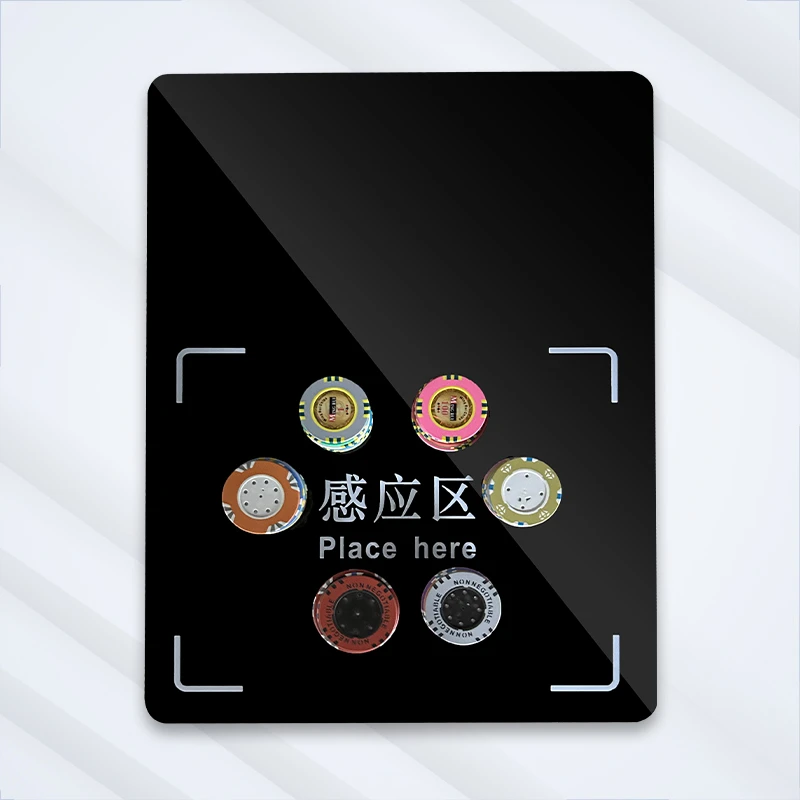
Tracking begins where chips are counted and stored. A cage reader board authenticates chips during issuance, return, destruction, warehousing, fill and credit operations, and passes each event to the casino management system, where the vault, the cage and the tables are reconciled against one chip database.
On the floor the reading points move to the table. RFID gaming tables carry readers under the betting area, and a chip sensing device provides the reading hardware for tables that need a separate unit. Supervisors can also use the portable RFID handheld terminal for spot checks in the pit and the vault.
Coverage is a design decision rather than a product feature. Which cage and table events must be recorded, where the reading points sit, how unrecognized chips are handled and how the records are reconciled are all settled before the system is accepted.