Casino surveillance technology has evolved far beyond the iconic eye-in-the-sky cameras that once defined gaming floor security. Today’s casino operators face a threat landscape that includes sophisticated chip counterfeiting rings, colluding player networks, and internal theft schemes that can drain millions before traditional monitoring detects them. According to the American Gaming Association, U.S. commercial gaming revenue reached a record $66.5 billion in 2023, making every percentage point of loss to fraud a significant financial concern for operators. For B2B procurement managers and casino operations directors, understanding the full spectrum of surveillance technology—from RFID-enabled chip tracking to AI-powered behavioral analytics—is essential to protecting table game revenue and maintaining regulatory compliance.
This guide examines the integrated security architecture that modern casinos deploy across their table game operations. We cover RFID chip sensing hardware, cage management software platforms, real-time fraud detection algorithms, and the compliance frameworks that tie them together. Whether you are outfitting a new VIP room or upgrading an entire casino floor, the technologies discussed here represent the current standard for gaming security investment.
How RFID Chip Tracking Systems Transform Casino Surveillance
RFID casino surveillance technology represents the most significant advancement in gaming floor security since the introduction of closed-circuit television. By embedding passive RFID transponders inside poker chips, casinos gain the ability to track every chip on the floor in real time—from the cage to the table to the player’s stack and back. This granular visibility eliminates blind spots that have historically enabled chip theft, counterfeiting, and denomination swapping.
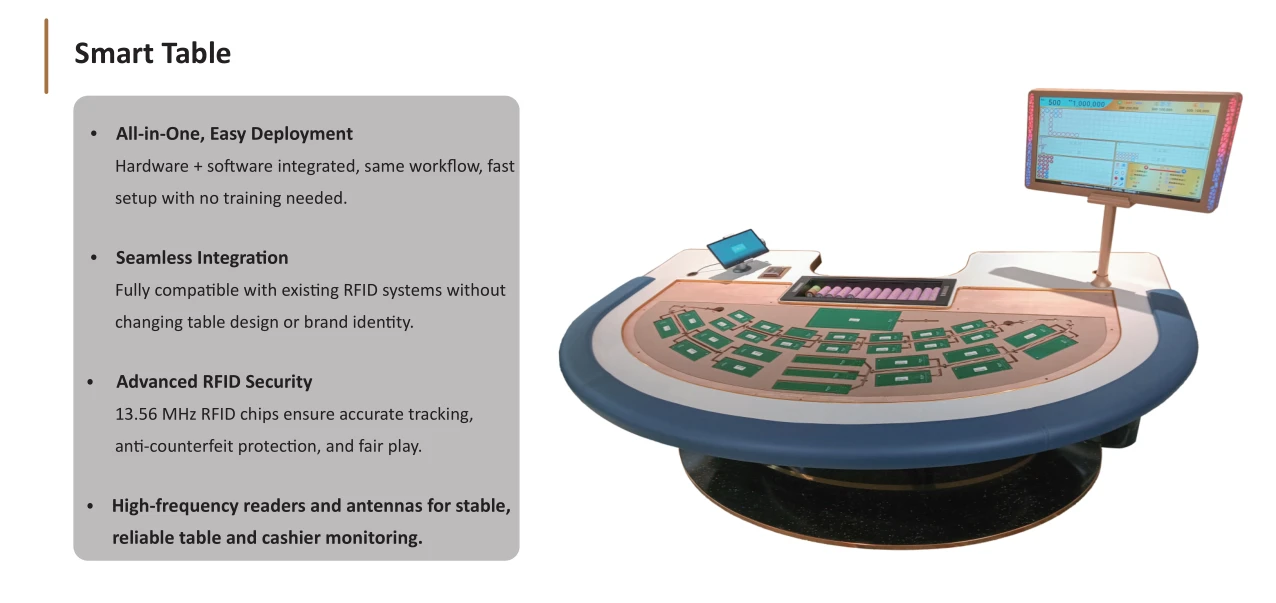
The core architecture of an RFID chip tracking system consists of three integrated components. First, Casino Cage RFID Chips Reader hardware installed at cage windows performs batch authentication and denomination counting as chips move between the cage and the floor. Second, table-embedded reader boards detect every chip placed in betting positions, creating a real-time map of table inventory and player wagers. Third, the SiM Cage Management System aggregates this data into a centralized software platform that monitors chip flow across the entire property.
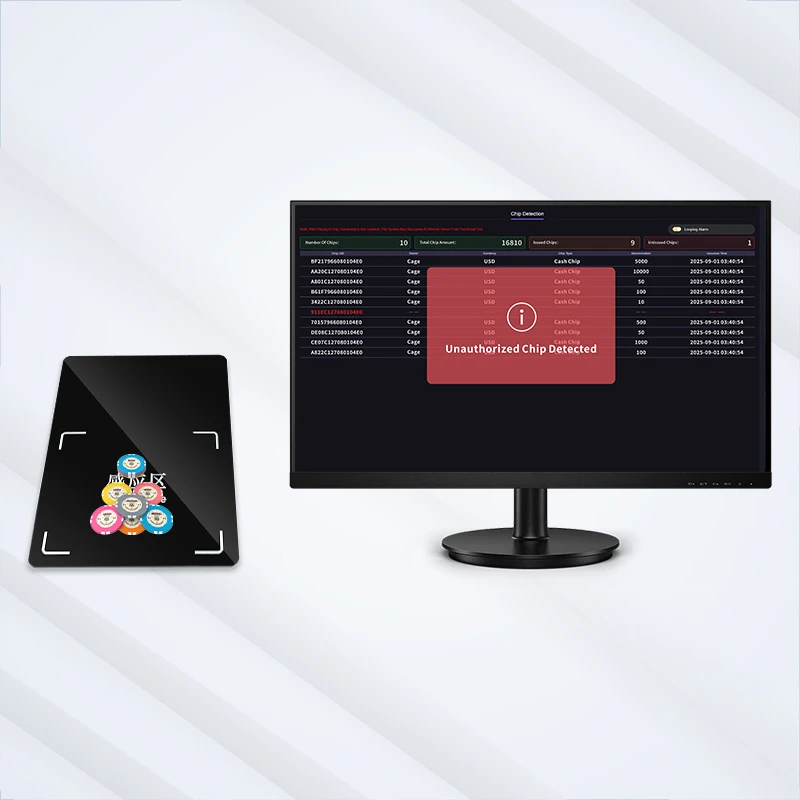
The operational impact is measurable. When a chip that was not issued by the casino cage appears on a table, the system triggers an immediate alert—displaying “Unauthorized Chip Detected” on the monitoring dashboard. This real-time fraud detection capability allows surveillance teams to intervene within seconds rather than discovering discrepancies during end-of-shift reconciliations. For properties running high-limit Baccarat games where individual bets can exceed $50,000, this rapid response window can prevent single-incident losses that would otherwise exceed the cost of the entire RFID deployment.
Procurement managers evaluating RFID chip systems should consider the RFID Poker Chips collection for chip hardware that integrates with standard reader infrastructure. The key specifications to evaluate include read range (typically 5–10 cm for table readers), batch read speed (cage readers should authenticate 100+ chips in under 3 seconds), and software compatibility with existing cage management platforms.
Casino Cage Management Software: The Central Security Hub
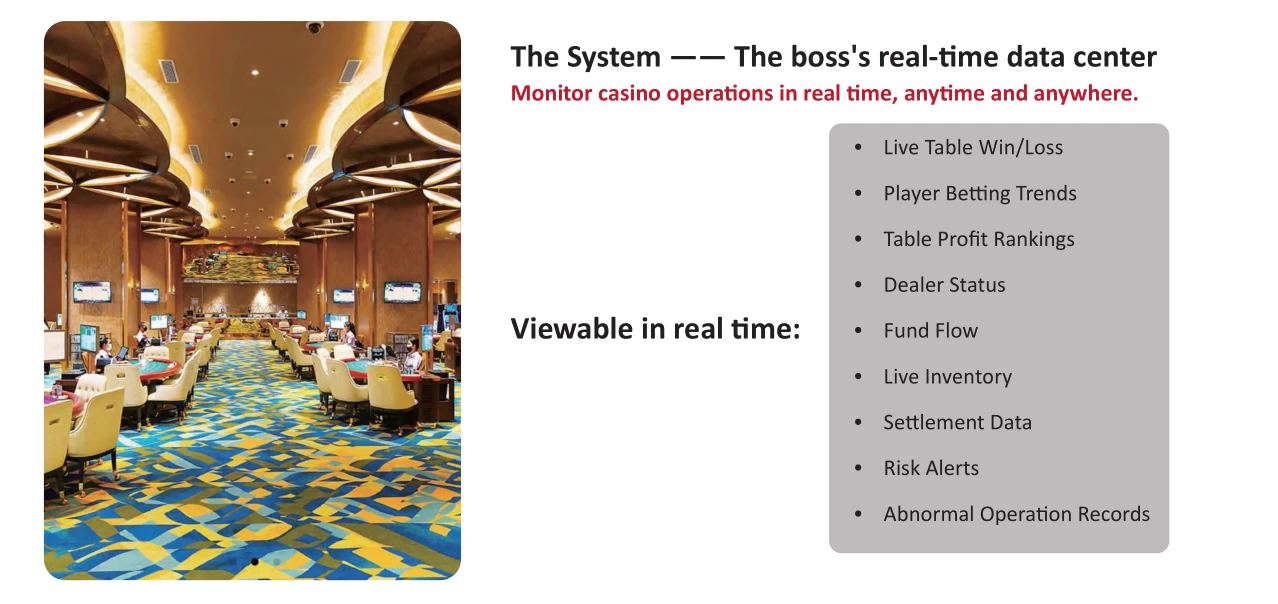
While table-level RFID hardware captures the data, cage management software serves as the analytical brain of the surveillance ecosystem. Modern casino cage platforms process thousands of chip transactions per hour—issuing chips to players, reconciling table fills, processing color-ups, and verifying chip authenticity at every touchpoint. The software layer is what transforms raw RFID read events into actionable intelligence for surveillance teams and floor managers.
A robust cage management system performs several critical functions simultaneously. It maintains a real-time inventory ledger showing exactly how many chips of each denomination exist at every location on the floor—cage, tables, chip bank, and reserve storage. When a table requests a fill, the system automatically verifies that the chips being issued match the requested denominations and logs the transaction against the receiving dealer’s ID. This eliminates the manual reconciliation gaps that have historically been exploited by colluding employees.
The cage chips system collection provides the hardware components that feed data into these management platforms. For properties that need mobile verification capability, the Portable Casino RFID Chips Anti-Counterfeit Handheld Terminal enables floor supervisors to authenticate chips anywhere on the gaming floor without returning to the cage. This is particularly valuable for VIP rooms where high-denomination chips circulate and for junket operations where chip verification must occur at remote gaming stations.
The compliance benefits of integrated cage management software extend beyond fraud prevention. Gaming regulators increasingly require detailed chain-of-custody documentation for all chip movements. A properly configured system automatically generates the audit trails that satisfy Nevada Gaming Control Board Regulation 5 and equivalent requirements in Macau, Singapore, and other major gaming jurisdictions. This regulatory alignment alone can justify the capital expenditure for properties operating under strict oversight.
Real-Time Fraud Detection: From Reactive to Proactive Security
Traditional casino surveillance operated on a reactive model—surveillance officers reviewed footage after a suspicious event was reported, often hours or days later. Modern casino surveillance technology shifts this paradigm to proactive detection, where AI-assisted systems identify anomalies as they occur and alert surveillance teams before losses accumulate.
The integration layer between RFID hardware and fraud detection analytics is where the most significant security gains occur. By correlating chip movement data with table game results, the system can identify patterns that would be invisible to human observers. For example, if a player’s chip stack grows beyond what their betting pattern and game outcomes would mathematically support, the system flags the discrepancy for investigation. This catches techniques like past-posting (placing bets after the outcome is known) and chip sliding (secretly adding chips to a winning bet) that generate small but consistent illicit gains over time.
According to research published by the University of Nevada, Las Vegas Center for Gaming Research, table game hold percentages vary significantly based on operational factors including dealer skill, game pace, and surveillance coverage. Properties that deployed integrated RFID tracking systems reported measurable improvements in hold percentage accuracy and reduction in variance investigations. These operational metrics directly correlate with the effectiveness of real-time fraud detection infrastructure.
For a deeper analysis of how multi-layer security architecture prevents specific revenue loss scenarios, see our article on casino chip theft prevention and RFID multi-layer security. The strategies discussed there complement the surveillance technology stack covered here.
Integrated Surveillance Architecture: Connecting Table Hardware to Central Monitoring
The effectiveness of casino surveillance technology depends not on any single component but on the integration of multiple systems into a unified security architecture. A typical deployment combines RFID chip tracking, electronic card shoes with card recognition, overhead cameras with AI video analytics, table game display systems, and centralized monitoring dashboards. Each component captures a different data stream, and the surveillance value emerges from correlating these streams in real time.

Consider a high-stakes Baccarat table equipped with the full technology stack. The RFID reader board embedded in the table surface tracks every chip placed in the Player, Banker, and Tie betting areas. The electronic dealing shoe reads and records each card as it is dealt, creating a digital game log that can be automatically reconciled against chip movements. The overhead camera system provides video confirmation of every transaction, with AI analytics flagging unusual hand movements or betting patterns. The table’s display system shows real-time roadmaps and game statistics, while simultaneously feeding game pace and outcome data to the central surveillance platform.
This integrated approach addresses a fundamental limitation of single-system surveillance. Camera-only systems cannot verify chip authenticity or track chip movement through player hands. RFID-only systems cannot detect card manipulation or dealer collusion. Electronic shoes cannot identify unauthorized personnel at the table. Only by combining these data streams can surveillance teams build a complete picture of table activity and identify the sophisticated multi-vector threats that organized cheating groups employ.
Our guide to AI and facial recognition in casino surveillance systems covers the video analytics layer of this architecture in detail. For B2B procurement planning, the key consideration is ensuring that each component you purchase supports standard data interfaces that allow integration with your central monitoring platform.
Anti-Counterfeiting Technology: Protecting Chip Integrity
Chip counterfeiting remains one of the most direct threats to casino revenue. A single high-quality counterfeit chip cashed at the cage can represent a five-figure loss, and organized counterfeiting operations have been known to introduce hundreds of fake chips across multiple properties. Modern anti-counterfeiting technology employs multiple verification layers that make successful counterfeiting prohibitively expensive and operationally risky.

The primary anti-counterfeiting layer is the RFID transponder embedded within each chip. Each transponder carries a unique identification code that is registered in the casino’s central database when the chip is manufactured and issued. When a chip passes over any RFID reader on the property, the system instantly verifies that the transponder code matches an active chip in the inventory. Counterfeit chips without valid transponders are flagged the moment they touch a reader-equipped surface.
Secondary verification layers include holographic labels with machine-readable features, UV-reactive ink patterns visible only under blacklight inspection, and proprietary chip construction materials that are difficult to source or replicate. The RFID Chip Sensing Device collection includes both fixed reader boards for table and cage installation, as well as portable verification terminals for floor-wide spot checks.
The investment calculus for anti-counterfeiting technology is straightforward. A single confirmed counterfeit incident at a high-limit table can cost more than the entire RFID hardware deployment. For properties that have not yet implemented RFID chip tracking, the risk exposure increases proportionally with table limits and chip inventory size. The image below illustrates the type of counterfeit detection alert that cage operators see when an unauthorized chip is presented:
Implementation Strategy: Phased Deployment for Maximum ROI
For casino operators planning a surveillance technology upgrade, a phased implementation strategy delivers the best return on investment while minimizing operational disruption. The recommended approach prioritizes the highest-risk areas first and expands coverage as budget allows and as staff become proficient with the new systems.
Phase one typically focuses on the casino cage and high-limit table games. Installing RFID cage readers and management software provides immediate inventory control and counterfeit detection at the most critical chip verification point. Equipping two to four high-limit Baccarat tables with embedded RFID readers addresses the tables where individual chip values are highest and where the financial impact of fraud is greatest. This phase can be completed within 4–8 weeks and typically demonstrates measurable loss reduction within the first quarter of operation.
Phase two extends RFID coverage to all table games on the main floor and integrates table-level data with the central surveillance platform. This phase also introduces electronic dealing shoes with card recognition capability, creating the integrated data streams necessary for real-time fraud detection analytics. The implementation timeline for phase two is typically 3–6 months, depending on the number of tables and the complexity of software integration.
Phase three adds advanced analytics capabilities, including AI-assisted behavioral pattern detection, automated variance investigation workflows, and regulatory reporting automation. By this stage, the property has accumulated sufficient historical data to train anomaly detection models specific to its game mix, player demographics, and operational patterns. This is also the appropriate phase to evaluate facial recognition integration with the existing camera infrastructure.
Staff training is a critical success factor that is often underestimated. Surveillance officers, floor supervisors, cage personnel, and IT staff all require role-specific training on the new systems. The most successful implementations include a 30-day shadow period where the new technology runs in parallel with existing procedures, allowing staff to build confidence and identify configuration issues before the system goes live for fraud detection and compliance reporting.
Frequently Asked Questions
What is casino surveillance technology and why is it important for table game operations?
Casino surveillance technology encompasses the integrated hardware and software systems that monitor gaming floor activity to prevent fraud, track chip movement, and ensure regulatory compliance. It is important for table game operations because it provides real-time visibility into chip transactions, enables immediate detection of unauthorized chips or suspicious betting patterns, and generates the audit trails required by gaming regulators. Without modern surveillance technology, casinos rely on manual observation and end-of-shift reconciliations that allow losses to accumulate before detection.
How much does an RFID casino chip tracking system cost?
An RFID casino chip tracking system typically requires investment in three areas: RFID-enabled chips ($0.50–$2.00 per chip depending on denomination and order volume), reader hardware ($2,000–$8,000 per table reader and $5,000–$15,000 per cage reader), and management software ($15,000–$50,000 for licensing and integration). A complete deployment for a 20-table property with 50,000 chips generally ranges from $150,000 to $400,000, with ROI typically achieved within 12–24 months through reduced shrinkage and improved operational efficiency.
Can RFID casino surveillance technology integrate with existing camera systems?
Yes, modern RFID casino surveillance technology is designed to integrate with existing CCTV infrastructure through standardized data interfaces. The RFID system provides chip-level transaction data that can be synchronized with video timestamps, allowing surveillance officers to instantly pull camera footage corresponding to any flagged RFID event. This integration capability is a standard feature of contemporary cage management platforms and should be a key evaluation criterion when procuring new systems.
Conclusion
Casino surveillance technology has progressed from passive observation to active intervention, driven by RFID chip tracking, integrated cage management software, and AI-assisted fraud detection analytics. For B2B operators and procurement managers, the strategic imperative is clear: investing in integrated surveillance architecture protects table game revenue, satisfies regulatory requirements, and provides the operational visibility needed to run a profitable gaming floor. The phased implementation approach outlined in this guide allows properties of any size to begin realizing security benefits within weeks while building toward a comprehensive surveillance ecosystem over time. As gaming industry revenue continues to grow and regulatory scrutiny intensifies, the technology gap between protected and unprotected properties will increasingly determine which operations remain profitable and compliant in the years ahead.