

RFID Poker Table
-
Live RFID Texas Hold’em Poker Table for Tournament Broadcast
RFID Poker Table -
RFID Niu Niu Gaming Table with Chip Tracking
RFID Poker Table -
RFID Dragon Tiger Gaming Table with Side-Bet Reading
RFID Poker Table -
RFID Baccarat Table with Under-Felt Chip Tracking
RFID Poker Table -
RFID Blackjack Table with Split and Double-Down Tracking
RFID Poker Table
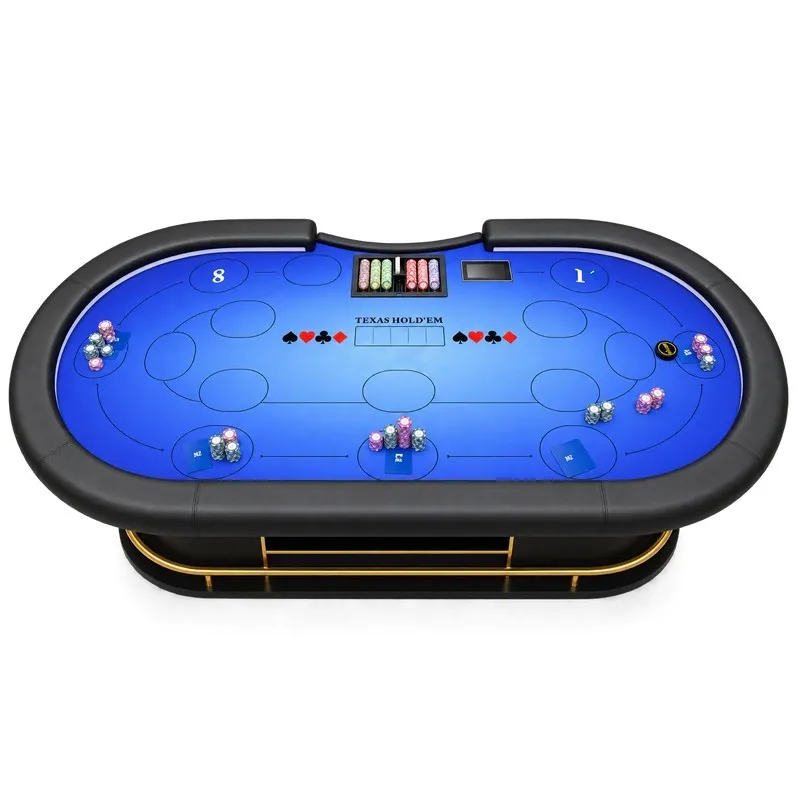
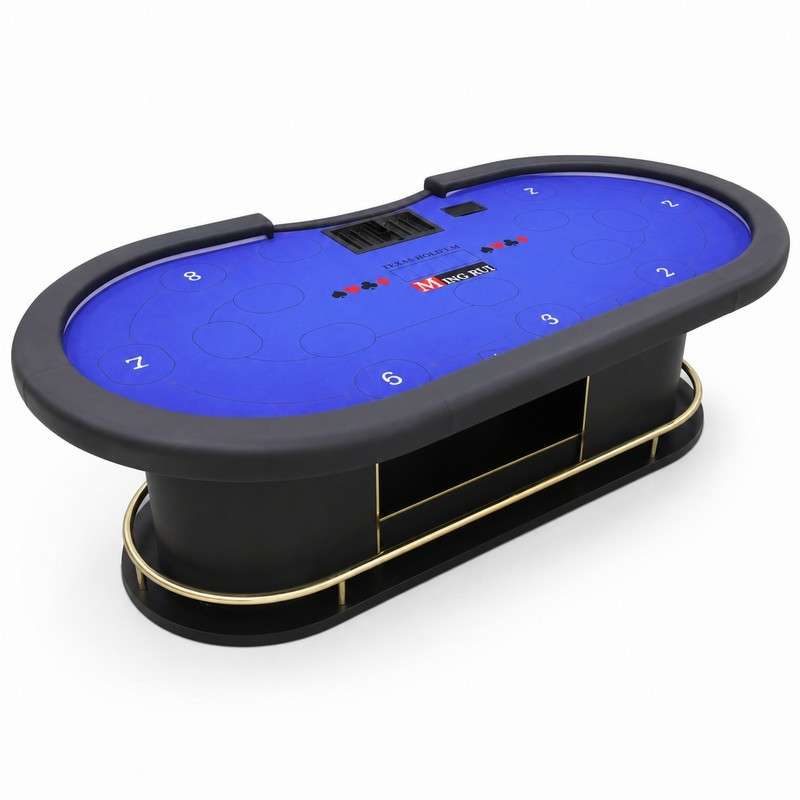
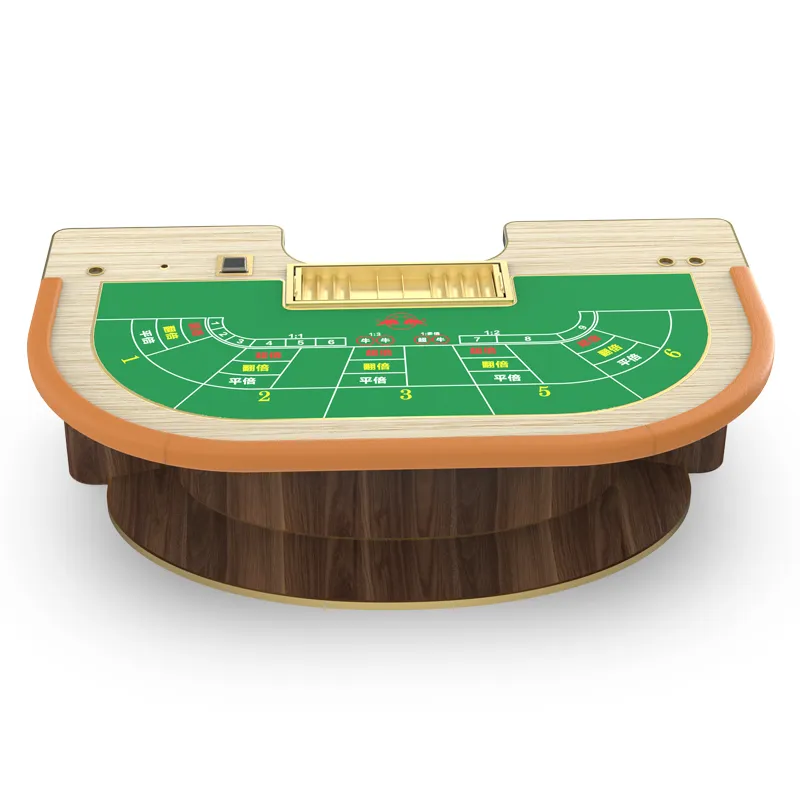

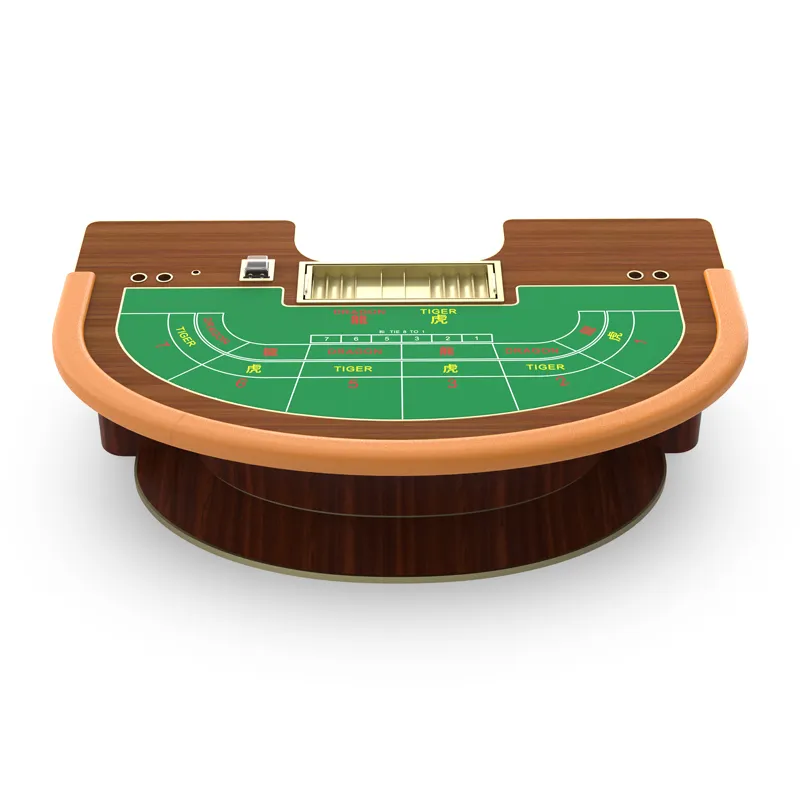


An RFID poker table embeds chip-reading antennas below the felt, so every chip that moves across the betting area is identified and logged as the hand is played. Macaumr builds RFID poker tables for Texas Hold’em alongside RFID gaming tables for Baccarat, Blackjack, Niu Niu and Dragon Tiger, using one chip-tracking layer across every game type on the floor.
As of 2026, Macaumr RFID tables read chips at 13.56 MHz HF on the ISO 15693 / ISO 14443 protocols, with UHF 860–960 MHz available on request — the same standard used by the Macaumr cage RFID reader board and the portable handheld terminal. Readers handle up to 200 chips per second in a multi-stack and complete a betting-zone scan in under a second, and data leaves the table over USB or RS-232 to the display system or pit management server. Because every game type writes to the same chip identifiers, poker-table data, Baccarat-table data and cage counts reconcile against one record instead of separate systems, and logs land in the SiM Cage management system.
What does an RFID poker table track?
Antennas sit under the felt and cover the betting zones, reading the chips placed there. The table reports which denominations are in play, how many chips are in each zone, and where they moved between rounds. That record supports the three things operators ask for most: live wager visibility for supervisors, a per-round log for regulatory review, and evidence when a large hand is disputed after the fact.
What the table does not do matters just as much. The chip carries an identifier, not a balance. The system tracks chip identity and movement, while bets, payouts and win/loss are calculated by the management software that consumes the feed. That separation is why the data holds up in an audit: the table reports what physically happened, and the software applies the game rules on top.
The check runs on the chip rather than on the count. Every chip carries an encrypted unique identifier, so a chip outside the authorised set is flagged instead of being counted as a wager; a denomination that does not match the position it sits on is flagged too, and the payout rules for the game are checked against the recorded stack.
Which RFID poker table configurations does Macaumr build?
Tables are built to order, so the base specification is confirmed per project rather than taken from a fixed catalogue. The standard reference build is a wood-body table measuring approximately 2500 x 1550 x 800 mm, running on AC 110-220V / 50-60Hz, with a data output over USB or RS-232 to the display system or pit management server.
- Seating: 7-seat or 9-seat builds are standard, and Texas Hold’em layouts are taken up to ten player positions with a dealer station and a community-card area.
- Reading layer: under-felt antenna arrays are positioned to cover the betting zones, from the player positions to the community-card and dealer areas.
- Frequency and protocol: 13.56 MHz HF, ISO 15693 and ISO 14443 chip protocols. Frequency is matched to the reader hardware and management software before the order is confirmed, and cross-frequency compatibility is never assumed.
- Layout details: felt colour and material, chip-tray layout, betting-box count, dealer station and branding are all specified per project.
- Warranty: 12 months from delivery.
For operators who need verification away from the table, the Portable Casino RFID Chips Anti-Counterfeit Handheld Terminal reads chip identifiers at chip banks and cage windows, so the same identifiers can be checked without bringing the chips to a fixed reader.
Reading is specified on four numbers rather than one. A multi-stack read runs at up to 200 chips per second, a full betting-zone scan completes in under one second, a single zone reads up to 20 chips, and a tray scan takes about five seconds at shift settlement. Read accuracy is specified at ≥99.9%, with latency typically between 100 and 500 ms.
Build follows the same per-project logic. The reference frame is solid wood with aluminium edging, a padded armrest and a floor-standing base, and tables travel as a complete unit rather than in parts, and the reference build weighs about 120 kg. They are specified for main casino halls, poker rooms and VIP areas. No footrest is fitted as standard; a footrest can be specified as part of the customisation.
Which games can share the same RFID chip system?
The chip-tracking layer is game-independent; what changes is the table configuration built around it. Texas Hold’em tables use up to ten player positions with a dealer station and community-card area. Baccarat tables run longer to carry the full Banker, Player and Tie layout. Niu Niu tables prioritise clear positioning across the boxes. Dragon Tiger tables are built compact around two positions.
Because a single chip standard is used across all of them, a floor can mix game types without running separate inventories. One chip set, one reader standard and one reconciliation record cover the whole floor, which is what keeps cage counts and table data aligned as the game mix changes.
| Game | Model | Dimensions (mm) | Player positions | Betting layout |
|---|---|---|---|---|
| Texas Hold’em | TB-THRFID-TD-270140 | 2700 × 1400 × 800 | 10 plus dealer | Ten seat positions with community-card and dealer area |
| Baccarat | TB-BARFID-BC-250150 | 2500 × 1550 × 800 | 7, 9 on request | Banker, Player and Tie zones, full table length |
| Niu Niu | TB-NNRFID-BC-250150 | 2200 × 1100 × 780 | 7, 9 on request | Seven player boxes around one dealer area |
| Dragon Tiger | TB-DTRFID-BC-250150 | 2200 × 1100 × 780 | 7, 9 on request | Dragon and Tiger positions plus side-bet zones |
| Blackjack | TB-BJRFID-BC-250150 | 2200 × 1100 × 780 | 7, 9 on request | Seven betting boxes, insurance line, dealer area |
The dimensions above are the reference builds; every one of them can be changed for a project. What does not change between games is the chip protocol, which is why one chip set covers a mixed floor.
How does an RFID poker table connect to the cage and management system?
The table is one layer in a three-part stack: the antenna array and reader electronics under the felt, the table host that aggregates chip events per betting zone, and the management software that receives the feed. Data leaves the table over USB or RS-232 to the display system or pit management server, and the software layer applies the game rules and produces the reporting.
The practical consequence is reconciliation. A chip read at the table carries the same identifier as the same chip read on the cage RFID chips reader board, so table counts and cage counts are checked against one record rather than two independent ones. Hand data, fills and credits, and cage movement all resolve to the same identity, which shortens end-of-shift reconciliation and gives supervisors a single source when a discrepancy appears.
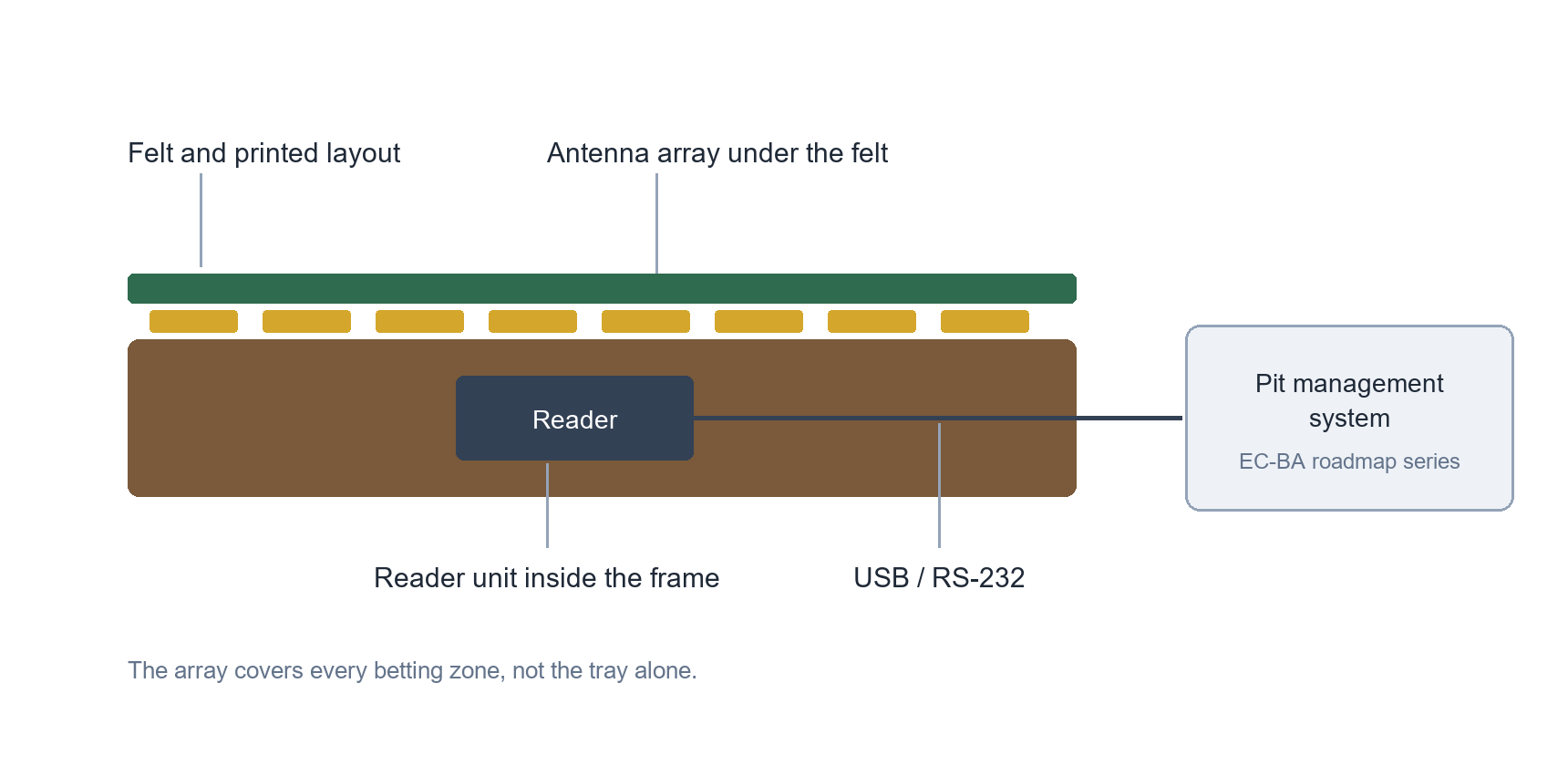
Behind the table, the software reports a failed read zone down to the antenna rather than as a generic fault, monitors chip flow live, settles the shift, raises alerts on unusual movement, exports reports and stays in sync with the roadmap display. One server covers 20–50 tables, access is role-based and the operation log is retained; the table pairs with the Macaumr roadmap system (EC-BA series). Reads can be cross-checked against an external IP camera by timestamp, so a disputed hand can be reviewed against footage from the same moment. The interface itself is standard; integration with a particular casino management system or an electronic card shoe is confirmed against your platform per project rather than assumed.
What should you confirm before ordering an RFID poker table?
Four things decide whether a project runs smoothly. First, the reader hardware and protocol already on your floor; Macaumr tables are supplied for 13.56 MHz, ISO 15693 environments, and mismatched hardware is the most common cause of a failed pilot. Second, the table configuration: game type, player positions, table length and shape, felt, chip tray layout and dealer station. Third, the chip mix the table has to read, including denominations, materials and whether existing chips carry compatible inlays. Fourth, the software path, meaning which display and pit management systems the table feed has to reach and over which interface.
Operators who already run compatible chip hardware can upgrade the reading layer without replacing the whole floor. Where chips are older or mixed, the practical route is a pilot on one table with a matched chip set, so that read rates and reconciliation are verified against real play before a wider rollout.
Can RFID poker tables be customized for OEM projects?
Yes. Tables are produced to order rather than from a fixed catalogue, so length, shape, felt colour and material, chip tray layout, betting-box count, dealer station and branding are all specified per project. Distributors can order under their own brand as part of an OEM or ODM programme, and a table can be matched to a layout, display and chip package for a full floor refresh. The indicative minimum is 1–10 pcs depending on configuration, confirmed with the quotation.
Several of the choices behind an order are specification details rather than features. Felt is matched to a supplied swatch or Pantone reference, batch colour variation is held to ΔE ≤ 2, Martindale abrasion data is available, and fire test reports are supplied to the standard the destination market requires. Antenna cut-outs, chip tray and cup holder positions follow the approved drawing; spare felt tops and armrest covers can be supplied with the table; and diagnostics can be run remotely on installed units.
What proof does Macaumr offer to casino operators?
Verification is independent and citable rather than self-declared. An onsite assessment was carried out by Intertek on 16 January 2026 under the Alibaba Verified Supplier programme, certificate 483021414_T, valid to 14 January 2027. A factory audit was carried out by SGS-CSTC, which re-audited the Panyu facility on 5 September 2024 under report QIP-ASR2411238; the audited product scope explicitly includes casino tables, gambling tables and RFID casino chips. A supplier assessment was also carried out by Bureau Veritas (MIC-ASR2011166), with casino tables and poker chips in scope.
Macaumr has manufactured gaming equipment in Guangzhou Panyu since 2013, and holds one registered design patent for casino chip appearance (ZL 2017 3 0090318.8). RFID tables have been delivered to City of Dreams Macau (2019), Solaire Manila (2021), Crown Melbourne (2022) and Tigre de Cristal, Primorsky Krai. RFID hardware is covered by the same 12-month warranty as the table, and compatibility is confirmed against the reader hardware in use before a quotation is issued.
How do you request a quote for an RFID poker table?
Send the floor plan, game mix, table dimensions and chip requirements, and include the reader hardware you intend to use so compatibility is checked before the quotation is issued. Reach the team on WhatsApp at +853 63403801, by email at [email protected], or through the contact page. Photographs and a layout sketch are usually enough to confirm the configuration and give a firm price.
Operators comparing table-tracking options can also read the guide to RFID chip-tracking technology before the project starts, and see the RFID poker chips that pair with these tables.
Indicative figures to plan around: minimum order 1–10 pcs, production 15–45 working days after the drawing and artwork are approved, export packing in a wooden case or carton, and service response of four hours remotely with an engineer on site within 24–48 hours where the project needs one. All five models ship under HS code 9504904000, of Chinese origin.
Frequently asked questions about RFID poker tables
How fast does a Macaumr RFID poker table read chips?
Readers handle up to 200 chips per second in a multi-stack, and a single betting zone completes its scan in under a second. Read performance depends on chip inlay quality, stack height and antenna coverage, which is why a sample set is tested in the pit before a full order.
Which chip frequencies and protocols does the table support?
13.56 MHz HF on ISO 15693 and ISO 14443. Frequency must match the reader hardware and management software already in use, so the reader standard on your floor is confirmed before the table specification is fixed.
Can an RFID poker table be retrofitted to an existing table?
Retrofit is possible where the table body can accept the antenna layer and the existing chip set is compatible. In practice operators either upgrade the reading layer on an existing table or move to a purpose-built RFID table, and the choice is settled once the chip inlays and reader standard have been checked.
What happens if a reader goes offline during play?
The table is designed to keep the game running. If the reading layer is unavailable, the table continues as a normal table and play is not interrupted, while the outage is recorded so the affected period can be reconciled manually rather than left as an unexplained gap.
What is the minimum order quantity for an RFID poker table?
The indicative minimum is 1–10 pcs. Tables are built to order, so the final figure depends on the configuration, the chip set and the layout work involved, and is confirmed in the quotation.
What is the production lead time?
Production runs 15–45 working days after the drawing and artwork are approved. The final lead time depends on configuration, chip encoding and quantity, and is confirmed in the quotation alongside sample and production milestones. Operators planning a floor refresh should allow for artwork approval on the chip set in parallel with table production.
How those tables are scoped, costed and serviced across a floor is covered in the operator guide to RFID smart tables.