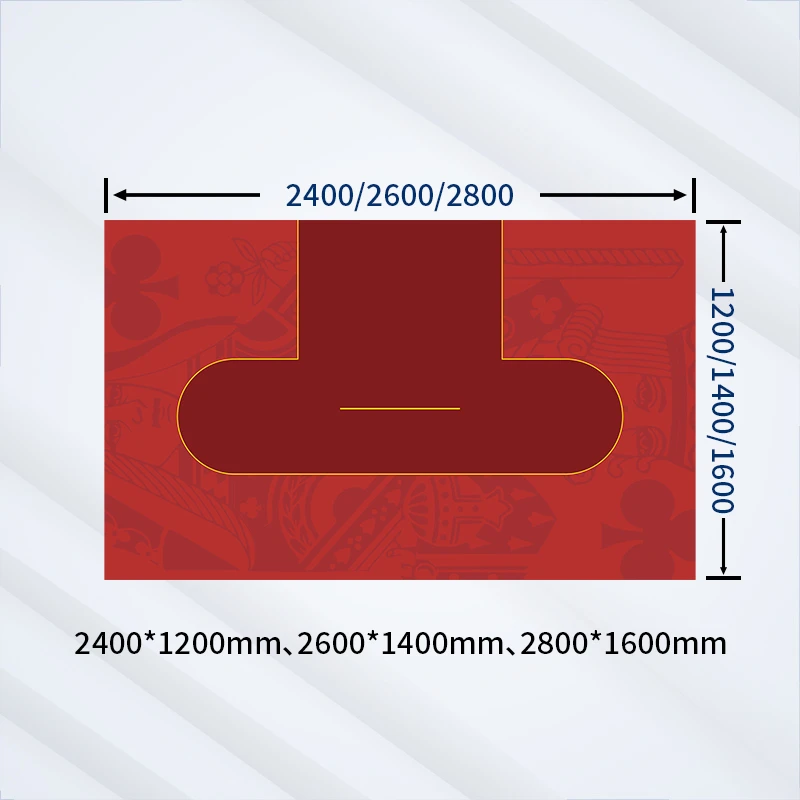
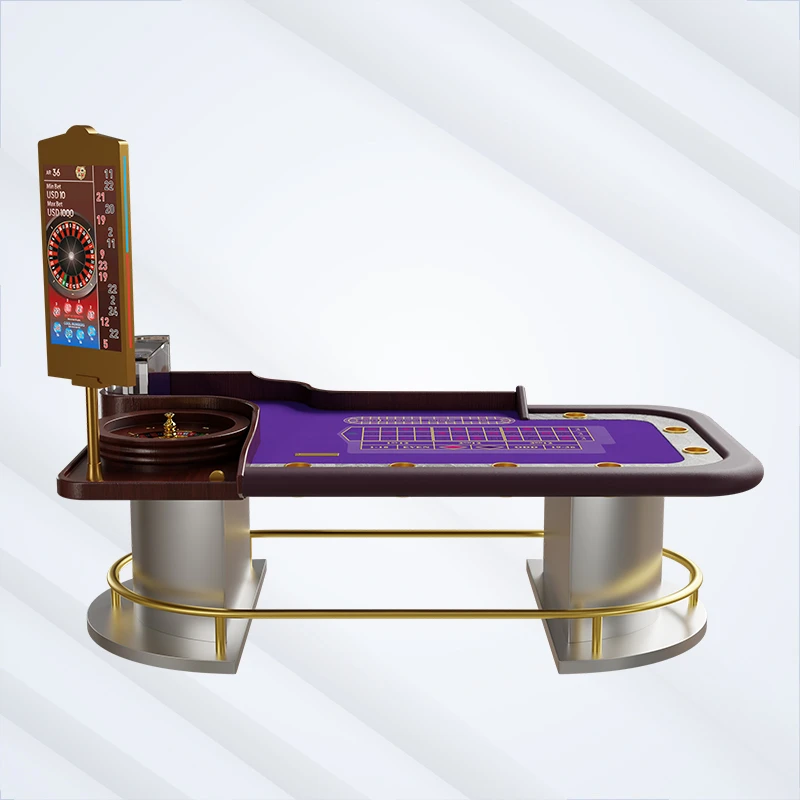
An RFID gaming table carries readers at the betting positions so chip identifiers can be read as wagers are placed. The data feeds the pit and cage systems for live oversight and audit records, and Macaumr supplies the tables together with the readers, chips and cage software around them.

What Is an RFID Gaming Table?
RFID gaming tables are casino floor installations embedded with radio-frequency identification readers beneath the playing surface. Each casino chip contains a passive RFID inlay that broadcasts a unique serial number when it passes within range of the table’s antenna grid. The system logs every chip movement in real time: buy-ins, colour-ups, rake deductions, and transfers between players. Unlike manual count procedures that operate on 15-minute intervals, RFID tracking provides continuous, millisecond-resolution data across every active seat.
The Nevada Gaming Control Board first referenced RFID chip-monitoring protocols in its 2008 Surveillance Standards advisory, and by 2015 the technology had achieved commercial viability in Macau’s premium mass-market segment. Today, a single RFID gaming table installation covers three functional layers: the physical antenna array beneath the felt, the edge server that aggregates chip events, and the casino management system (CMS) API that distributes data to pit-desk dashboards, loyalty platforms, and surveillance workstations simultaneously. According to Gartner’s 2024 Hospitality Technology report, RFID-integrated casino floors report a 31% reduction in counting errors and a 22% improvement in table utilisation reporting accuracy compared with legacy manual processes.
Real-Time Data and Casino Floor Optimisation
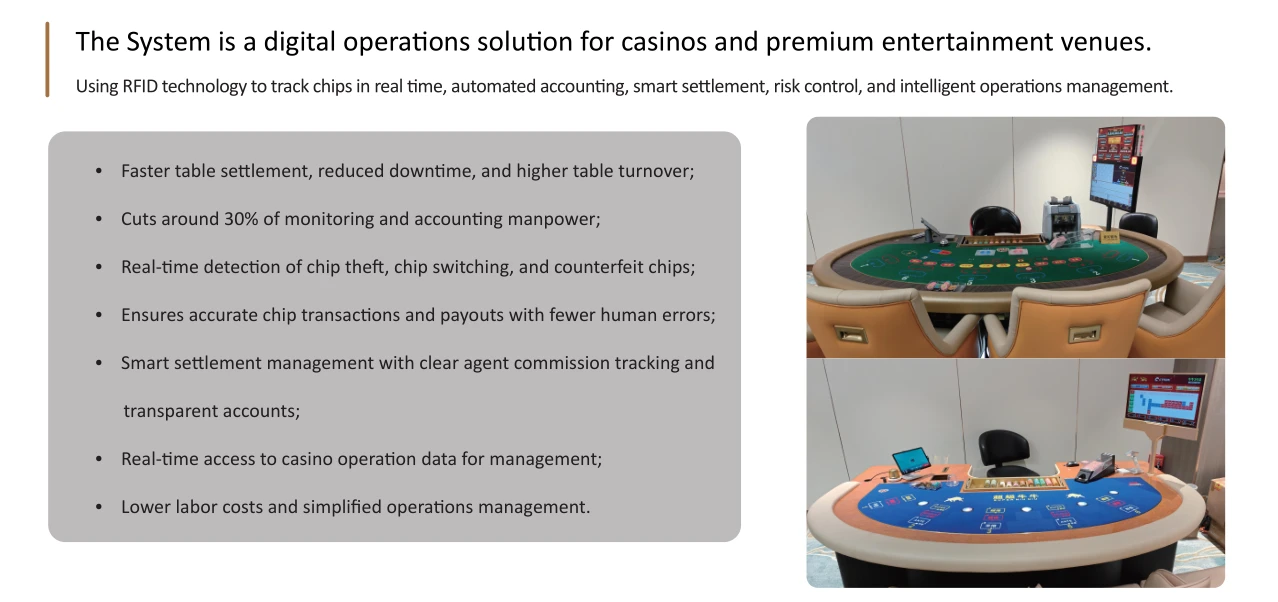
The most immediate operational benefit of RFID gaming tables is the elimination of the reporting lag between game action and management information. Pit bosses traditionally rely on supervisor calls and periodic chip counts to assess table performance. With RFID, every colour-up and buy-in is visible on the pit desk dashboard the moment it occurs, enabling instant reassignment of floor coverage and more precise bankroll tracking per table per shift.
Real-time data also transforms player-tracking workflows. When a high-value patron buys in, the system cross-references the chip serial numbers against the loyalty database and pushes a player rating update to the floor supervisor’s mobile device within seconds. This capability allows operators to allocate dealer attention and complementary resources to players who generate the most theoretical revenue, rather than relying on supervisor memory or delayed reports. Operators deploying RFID at scale in Singapore and Philippines markets have reported a 15–18% improvement in promotional offer redemption rates, because the system can trigger offers at the moment a player’s activity triggers a tier threshold, rather than the next morning when batch data is processed.
AI Integration: From Tracking to Intelligent Decision-Making
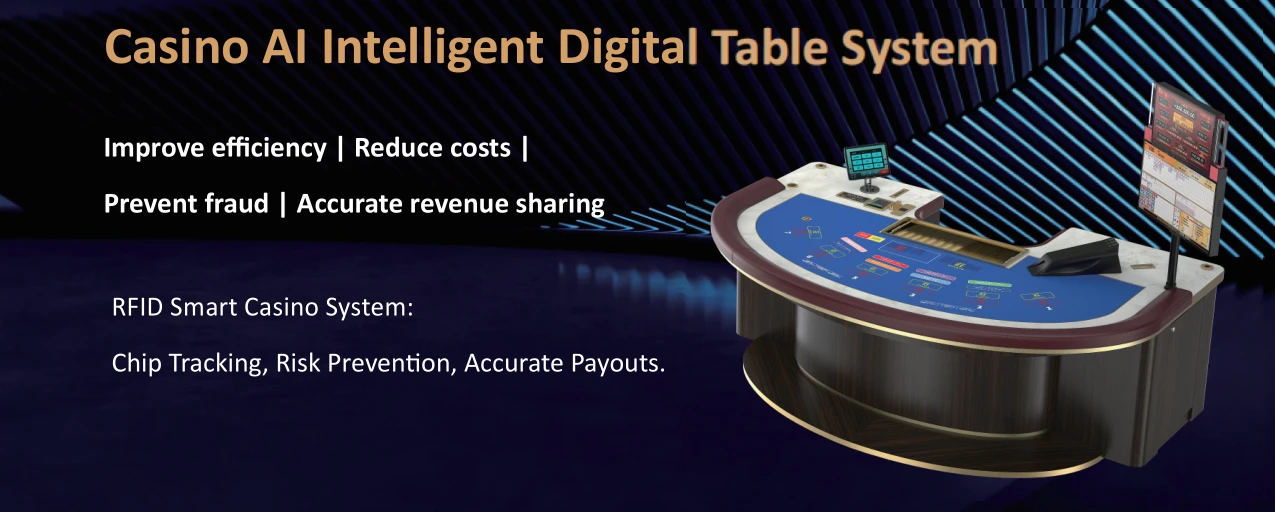
Raw RFID chip data becomes exponentially more valuable when layered with machine-learning models. Modern casino analytics platforms ingest the continuous event stream from RFID tables and apply anomaly-detection algorithms to flag patterns that human supervisors would miss. Sudden shifts in betting frequency, atypical chip-movement sequences, or deviations from a player’s established profile can be tagged for compliance review without manual trigger.
McKinsey’s 2024 report on casino operations notes that AI-augmented pit management systems reduce the time between an anomalous event and a compliance officer notification from an average of 47 minutes (manual process) to under 4 minutes (automated alert pipeline). For casino operators, that difference directly affects loss-prevention outcomes. The AI layer does not replace human judgment; it surfaces the right data at the right moment so floor staff can act faster and more consistently. Our RFID gaming tables collection includes integration-ready models designed to feed CMS platforms with structured, machine-readable event streams.

The Employee Experience: Technology as Helper or Watchdog?
The sigma.world feature on RFID smart tables highlighted a tension that operators cannot afford to ignore. In Macau, nearly 1,000 casino floor supervisors reported in 2024 that smart table deployments had increased, rather than decreased, their administrative workload due to frequent technical alerts and system false-positives requiring manual clearance. Staff members experienced elevated stress levels, and in several documented cases, supervisors faced disciplinary action for failing to resolve alerts within prescribed response windows.
Similarly, the Culinary Workers Union in Las Vegas — representing tens of thousands of hospitality employees — has negotiated contract provisions including severance pay and internal retraining pathways specifically in anticipation of automation-driven role changes. These are not hypothetical concerns. They represent the lived experience of workers on casino floors where RFID systems are already deployed.
The lesson for operators is clear: technology rollout without change-management planning creates operational friction that erodes the efficiency gains the technology was meant to deliver. Best-practice implementations involve staff in the configuration of alert thresholds, provide dedicated IT support during the ramp-up period, and treat training as an ongoing investment rather than a one-day onboarding session. As Riaan Van Rooyen, CEO of Aria Group International, noted in the sigma.world interview: “We held town halls and included staff feedback in planning. We demonstrated how data could support their roles, resolving disputes more accurately and recognising top performers for bonuses. It takes ongoing dialogue, but trust can be built.”
Data Privacy and Regulatory Compliance
RFID chip tracking collects detailed behavioural data: betting patterns, buy-in frequency, chip transfer timing, and game-duration metrics per player. In Macau, this granular surveillance has prompted criticism from legal observers and civil liberties advocates who argue that such data, if disclosed to authorities without appropriate legal basis, could expose patrons to privacy violations. Pedro Cortés, a Macau-based gaming law specialist, has emphasised that operators must maintain strict data-minimisation protocols, limiting collection to information strictly necessary for operational and compliance purposes.
In Europe and the United Kingdom, GDPR Article 5 principles require that personal data collection be limited to what is necessary for specified purposes. Casino operators deploying RFID must document the lawful basis for each data category collected via chip tracking and implement access controls that restrict RFID event data to personnel with a legitimate operational need. Failure to do so creates regulatory exposure that can result in fines under GDPR and reputational damage that far exceeds the cost of compliance infrastructure. The Nevada Gaming Control Board’s surveillance standards, last updated in 2022, similarly require that all player-tracking data be auditable and retained according to jurisdiction-specific retention schedules.
Implementation: Legacy Systems, Retrofits, and Staff Training
One of the most consistent practical challenges in RFID table deployment is integration with existing casino management systems. Legacy CMS platforms — many still running on architectures from the early 2000s — frequently cannot ingest the high-frequency event data that RFID tables produce without middleware translation layers. In one Southern African deployment documented by Aria Group International, the project team had to build a custom middleware bridge to convert RFID chip events into the format the casino’s existing CMS could parse, adding approximately six weeks to the project timeline and significant cost.
Retrofit installations also require electrical and network infrastructure upgrades. The antenna array beneath each gaming table needs a stable power supply and either a hardwired Ethernet connection or a dedicated wireless access point to transmit data to the edge server without latency. Many older casino properties underestimate the complexity of their backend infrastructure until installation teams are on-site. A phased rollout — beginning with two to four pilot tables in a controlled pit area — allows the IT and operations teams to identify integration gaps before full-scale deployment.
Training must cover three distinct audiences: dealers, floor supervisors, and pit managers. Dealers need to understand how RFID affects chip-handling procedures and how to explain the technology to players who ask. Supervisors need to interpret dashboard alerts and distinguish genuine anomalies from system noise. Pit managers need enough technical fluency to configure alert thresholds and manage vendor escalation processes. Our RFID Baccarat Gaming Table (BA10) and RFID Blackjack Gaming Table (BB10) product pages include specification sheets that detail integration requirements and compatibility with major CMS platforms.
Return on Investment: What Operators Can Realistically Expect
The cost of an RFID gaming table system varies significantly depending on scope. Per-table hardware costs (antenna array, edge node, cabling) typically sit in the mid tier for a new installation in a purpose-built property, and in the premium tier for a retrofit that requires structural modifications to existing tables. Central infrastructure — edge servers, CMS integration middleware, and software licences — adds a project-scale budget line depending on property size and existing IT maturity.
Against these costs, operators can quantify returns across several dimensions: reduction in chip-fill errors (typically 2–4% of chip inventory value in high-volume pits), faster dispute resolution (reducing player complaint escalation rates by an estimated 35%), and more efficient floor coverage allocation (5–10% improvement in dealer utilisation through real-time table-hold data). The break-even timeline for a 40-table deployment typically falls between 18 and 30 months, depending on property volume and the maturity of existing operational processes. Our team provides ROI modelling support for operators evaluating RFID Dragon Tiger Gaming Table (DT10) and broader RFID floor deployments.
Conclusion
RFID gaming tables represent a mature, commercially proven technology that delivers measurable operational improvements in chip security, data accuracy, and floor management efficiency. The evidence from Macau, Las Vegas, Singapore, and Southeast Asian markets is consistent: operators who invest in thoughtful implementation — including change management, staff training, and data governance — capture the efficiency gains while managing the legitimate concerns of floor employees and patrons.
The technology is not a magic solution. It generates new categories of data that require governance frameworks, it introduces new failure modes that demand IT support capacity, and it changes the nature of floor-level work in ways that must be actively managed. But for operators who approach RFID deployment as a systemic change rather than a hardware upgrade, the return on investment and competitive positioning justify the commitment.
Frequently Asked Questions
How do RFID gaming tables work?
What are the main benefits for casino operators?
How much does an RFID gaming table system cost?
Are RFID tables difficult to integrate with existing casino systems?
What are the data privacy concerns with RFID table technology?
What hardware does an RFID table project include?
The table is one layer of a stack that also covers the chips, the cage and the software. Macaumr produces the RFID gaming table with readers at the betting positions, the RFID poker chips for 13.56 MHz (ISO 15693) environments, the cage reader board and the handheld terminal for verification away from the table.
The events land in the SiM Cage management system, which logs buy-in, cash-out, exchange, withdrawal and tip-settlement transactions against the chip identifiers detected. The RFID casino gaming table hub and the RFID gaming tables guide cover the same stack from the operator side.
How should an RFID table deployment be scoped?
Start from the events that must be recorded and the tables where the exposure is highest, then decide which of them get readers. A retrofit changes the table structure, so it is planned before the build rather than after. The cage chips system and the table accounting guide explain how the records are reconciled per game type.
- Reader coverage. Which betting positions and which tables are read.
- Chip specification. Material, denomination range and RFID configuration.
- Software scope. Casino management system, interfaces and reporting.
- Procedure. How exceptions and unrecognized chips are handled during play.
How do you request an RFID table quotation?
Send the floor plan, the tables in scope, the chip mix and the casino management system in use. Macaumr has manufactured casino equipment in Panyu, Guangzhou since 2013 and supplies operators, distributors and system integrators across Europe, America, Russia, Japan and South Korea, Southeast Asia, Central Asia, Africa and the Middle East (About Macaumr).
There is no fixed minimum order quantity: the minimum is confirmed per project because it depends on the table build, the reader configuration and the deployment size. Production typically takes about one to two weeks after the specification is approved, and reference units are available for a non-refundable sample fee.
Talk to the team before the tables are specified. Reach Macaumr on WhatsApp at +853 63403801, on Telegram at https://t.me/lym52 or by email at [email protected], or start from the contact page.
What are the data privacy considerations with RFID table technology?
RFID tables record chip movement and table events, not personal player data, but the records are still subject to the property’s data policy and local rules. Operators should define who can access the data, how long it is retained and how it is protected before go-live.
Can existing tables be retrofitted with RFID readers?
Retrofit is possible but structural: reader positions and cabling have to be planned around the table frame, which is why retrofits sit in a higher budget tier than new builds. The decision should be taken at the specification stage so the build allows for the readers.
Which chips work with an RFID gaming table?
The table reads RFID-tagged chips supplied for the same frequency and protocol, such as the 13.56 MHz (ISO 15693) range that Macaumr produces in clay composite, ceramic and acrylic. Chip and table are confirmed together, because mixing hardware from different ecosystems is the most common cause of a failed pilot.
How do I request a quote for RFID gaming tables?
Send the floor plan, the tables in scope, the chip mix and the casino management system in use to the Macaumr team. You can reach them on WhatsApp at +853 63403801, on Telegram at https://t.me/lym52 or by email at [email protected]. The quotation confirms configuration, integration scope and lead time.