While traditional casino gaming tables have hosted countless classic games for decades, they still face persistent challenges in fairness, transparency, and real-time data tracking. Human errors, cheating risks, and the difficulty of capturing live game data often leave both operators and players frustrated. That’s why RFID poker tables—a breakthrough in casino floor technology—are completely transforming how gaming tables operate in professional casinos and high-stakes tournament settings.
In this comprehensive guide, we’ll dive into how RFID poker tables work technically, explore why they matter for casino operators and tournament organizers, and highlight their wide-ranging applications from pro tournament broadcasting to live streaming and smart casino operations. Whether you’re a casino manager, tournament operator, or gaming equipment buyer, you’ll find actionable insights here.
How RFID Poker Tables Work
The Basics of RFID Technology
RFID (Radio Frequency Identification) is a wireless technology that enables data transfer without physical contact. In RFID poker tables, each playing card or casino chip is embedded with a tiny RFID tag containing a unique identifier. When a card or chip is placed on the table, RFID readers embedded beneath the table surface emit radio waves that activate the tag. The tag then transmits its information back to the reader, allowing the system to instantly recognize every item on the playing field.
The system uniquely identifies each chip and actively tracks its position and movement in real time across the entire table surface. RFID readers, strategically positioned beneath the gaming table felt, cover the complete dealing and betting area to ensure full coverage and minimize missed reads—even when chips are stacked or moved rapidly during high-speed play.
Data Collection and Transmission Process
The signals captured by the RFID readers are first processed by built-in signal processing units that filter and consolidate the raw data into a real-time game data stream. This structured data is then transmitted via wired or wireless networks to the casino’s backend software system.
The software interprets the data, mapping each chip and card to its position on the table and syncing it with the game logic to maintain an accurate view of the current game state at all times. To prevent cheating and protect the integrity of live broadcasts, the system implements a delay synchronization mechanism that ensures live feeds do not reveal information prematurely to players who haven’t yet acted.
Beyond real-time display, the collected data is stored and analyzed for post-game statistics, player behavior tracking, and strategic research. Visualization tools present key details like hole cards, community cards, and betting actions clearly, enhancing the experience for floor supervisors, surveillance teams, and viewers alike.
Hardware and Software System Components
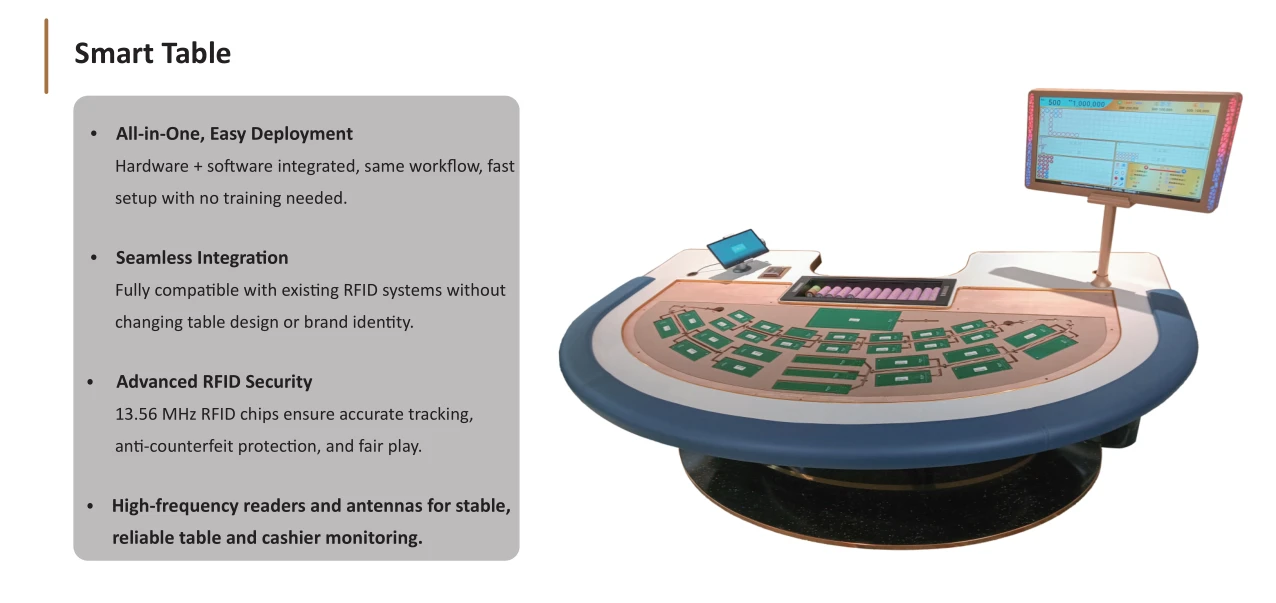
The hardware consists of a specially designed casino gaming table with integrated RFID antenna arrays and readers embedded throughout the surface for complete coverage. The table’s materials and construction are optimized to minimize signal interference from metal components while protecting the sensitive electronics inside the table structure.
On the software side, the system includes low-level data processing firmware, middleware interfaces for casino management system integration, and user-facing applications for floor supervisors and surveillance operators. Modern RFID table systems can seamlessly integrate with popular streaming platforms like OBS Studio and tournament management software, enabling automated data overlay and synchronized broadcasts for professional events.
Together, the hardware and software form a smart, connected system that upgrades the traditional casino gaming table—significantly boosting game transparency, operational security, and spectator engagement.
Why RFID Poker Tables Matter
Enhancing Fairness and Transparency in Competitions
RFID poker tables automatically identify and accurately record every chip movement and card placement, effectively eliminating the risk of human error that plagues traditional manual chip counting and game logging. Each chip’s identity, denomination, and position are tracked in real time, ensuring the integrity and accuracy of game data from the first bet to the final showdown.
This high level of automation greatly reduces disputes and cheating possibilities, providing a solid foundation for fair competition in both casino floor operations and formal tournament settings. According to the American Gaming Association (AGA), automated chip-tracking systems reduce fill-and-credit errors by 80% or more compared to manual pit desk logging.
Additionally, the system automatically generates hand histories and synchronized video data, making it easy for tournament officials and casino floor managers to review and verify gameplay after the fact. This boosts the credibility and transparency of events, building greater trust among players and viewers while fostering healthy, sustainable growth in the industry.
Transforming the Poker Live Streaming Experience
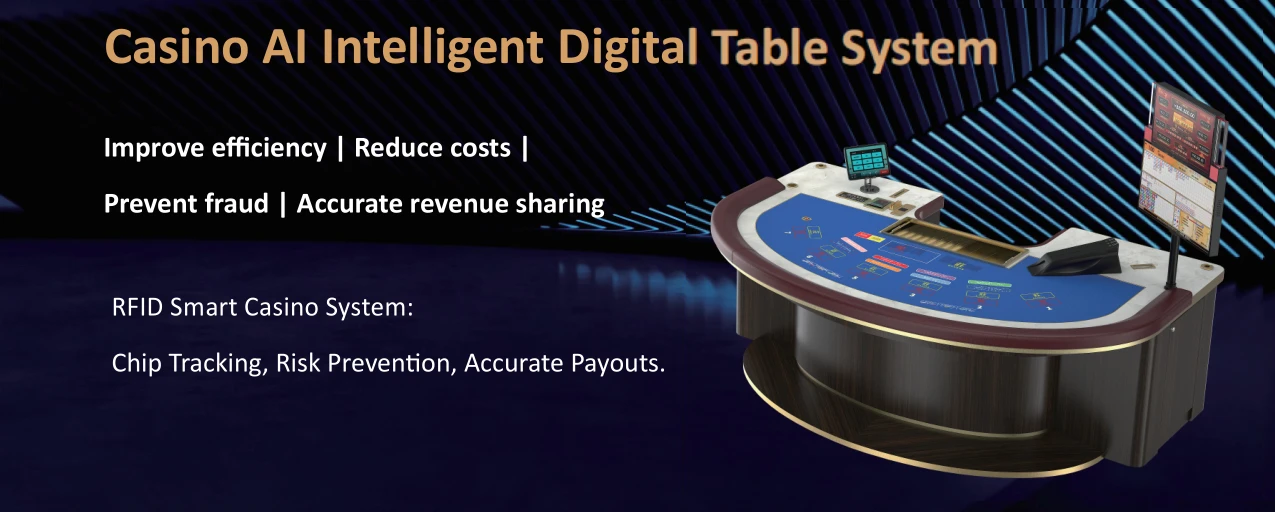
By capturing players’ hole cards, betting actions, and real-time chip stack movements, RFID poker tables add a whole new layer of excitement and strategic depth to poker broadcasts. Viewers can not only see the community cards and visible bets but also get direct insights into each player’s chip stack and changing pot odds—making the stream dramatically more engaging and suspenseful.
This transparent, dynamic display attracts more viewers and increases audience retention and interaction on streaming platforms. The professionalism and entertainment value of poker broadcasts improve significantly, helping to spread casino gaming culture to a wider global audience and attracting new players to the tables.
Driving Data-Driven Decision-Making
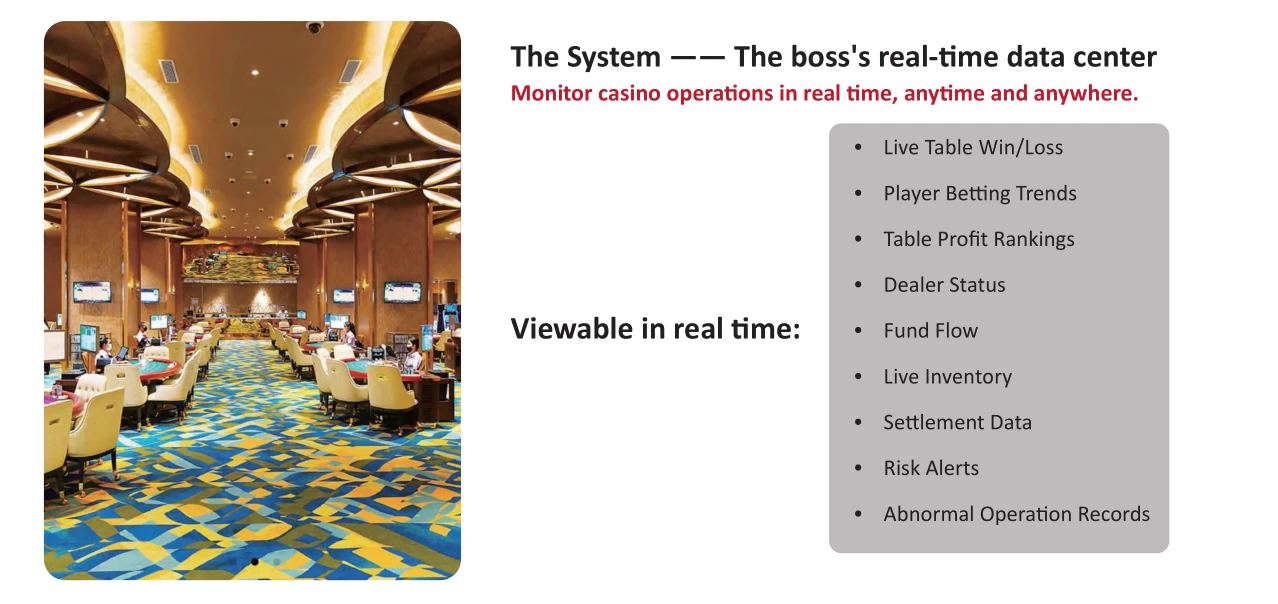
The detailed chip-tracking data generated by RFID poker tables provides powerful analytical support for casino operations managers, pit bosses, and compliance teams. Complete game records make it easier to audit table performance and identify patterns in player behavior.
Moreover, this data is widely used in gaming analytics and risk management. Machine learning models analyze betting patterns and chip stack dynamics to optimize floor layout and staffing decisions. Data-driven decision-making is gradually transforming casino management from a game of intuition into a more scientific and efficient operation.
Supporting Smart Casino Operations
In commercial casinos, RFID poker tables enable operators to manage the entire gaming floor through data. The system tracks chip movements and player actions in real time, providing invaluable support for risk management and anti-fraud detection across every table on the floor.
Automated data collection reduces the need for manual floor monitoring, improving operational efficiency while freeing up supervisory staff to focus on customer service. Through comprehensive data analytics, casinos can better segment their customers and offer personalized services, boosting overall profitability and customer satisfaction simultaneously.
Advantages and Applications of RFID Poker Tables
Professional Tournaments

In high-level poker tournaments, RFID poker tables greatly simplify live broadcasting and event management. Automated data collection and transmission systems minimize manual intervention, ensuring accurate and real-time broadcast data for viewers watching from around the world. Tournament organizers can leverage this precise data to boost their brand presence and enhance the professional image of their events.
Additionally, automatic chip-tracking and hand history recording make it easier for referees and tournament officials to review gameplay post-event, ensuring fairness and effectively preventing cheating. These benefits have made RFID poker tables a standard fixture at top-tier poker tournaments worldwide.
Commercial Casinos and Gaming Venues
For casinos and gaming clubs, RFID poker tables offer an effective way to optimize daily floor operations. By automatically tracking chip movements and player behavior, these tables reduce the need for manual chip counting and record-keeping, cutting operational labor costs while improving accuracy.
At the same time, the system accurately collects detailed data on table performance, game velocity, and player patterns, enabling operators to make informed decisions about floor layout and staffing. Integration with casino management systems allows venues to deliver more personalized service to their guests, boosting customer loyalty and long-term profitability.
Content Creators and Tournament Broadcasters
With the rise of streaming platforms like Twitch and YouTube, more tournament organizers and casino marketing teams are leveraging RFID poker tables to enhance the quality of their poker broadcasts. Real-time display of chip stacks and betting actions makes streams more engaging and interactive, attracting larger audiences of poker fans.
RFID poker tables also serve as valuable tools for poker training and strategy analysis. Coaches and serious players can use detailed hand replays and chip-tracking data to improve their training outcomes and sharpen their competitive edge.
Frequently Asked Questions
Conclusion
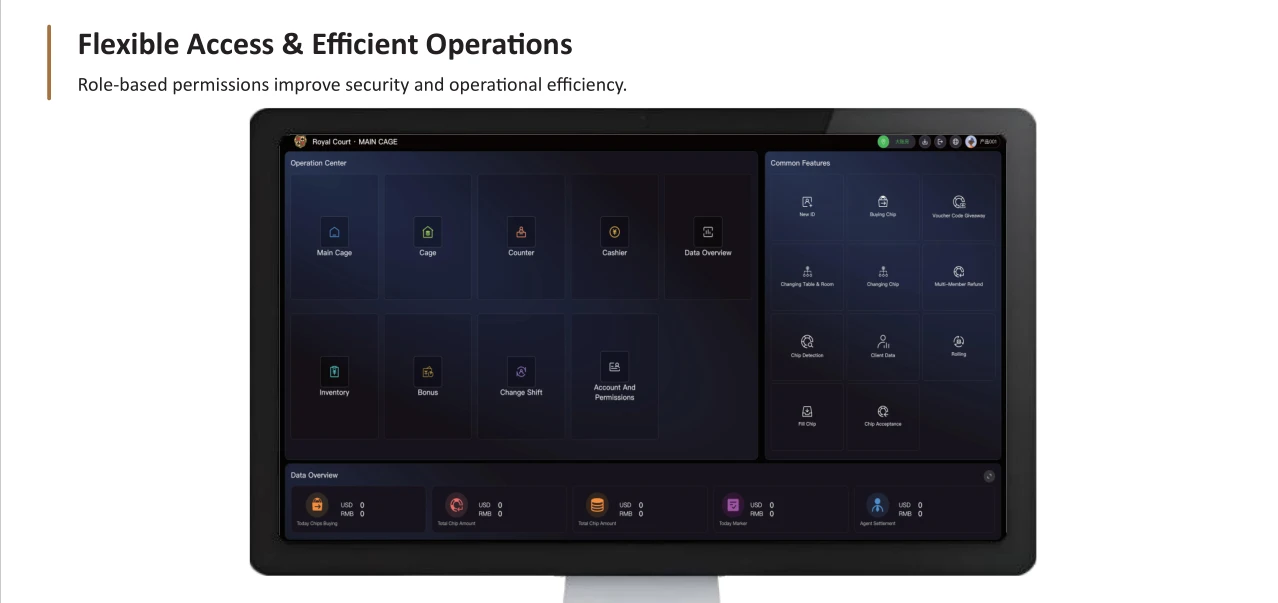
RFID poker tables represent a significant leap forward in casino floor technology, redefining fairness, transparency, and operational efficiency for gaming operators of all sizes. From automated chip tracking that eliminates manual counting errors to real-time data feeds that power live broadcasts and analytics dashboards, the technology addresses real pain points that casino operators face every day on the gaming floor.
Whether you’re a casino manager looking to upgrade your floor technology, a tournament organizer seeking broadcast-quality chip tracking, or a gaming equipment buyer evaluating your next investment, understanding and adopting RFID table technology will give you a clear competitive advantage and open new possibilities for revenue growth and operational excellence.
Ready to explore RFID gaming table solutions for your venue? Browse our complete range of RFID gaming tables, RFID poker chips, and RFID chip sensing devices—all designed for commercial casino deployment and available with custom branding options.