When a viral video surfaced in late 2025 showing a blackjack table stripped of its felt to reveal a tangle of sensors taped beneath the betting zones, the internet rushed to its preferred conclusion: casinos are cheating. The narrator in the clip — posted by X user @JOKAQARMY, which garnered more than 1 million views in a single day — declared the sensors as proof of a rigged game. He was wrong. As Casino.org reported in its Vegas Myths Busted series, those sensors were Radio Frequency Identification (RFID) readers that track chip values and betting patterns, not card outcomes. But the misunderstanding reveals something valuable: most people, including many casino operators, still do not fully understand what RFID gaming tables do, how they work, or why they have become the operational backbone of modern casino floors from Macau to Las Vegas.
This article cuts through the myths to deliver a practical, technically grounded explanation of RFID gaming table technology — written specifically for casino operators, gaming floor managers, procurement directors, and hospitality investors evaluating whether to deploy this technology in their own venues.
What Is an RFID Gaming Table, Exactly?
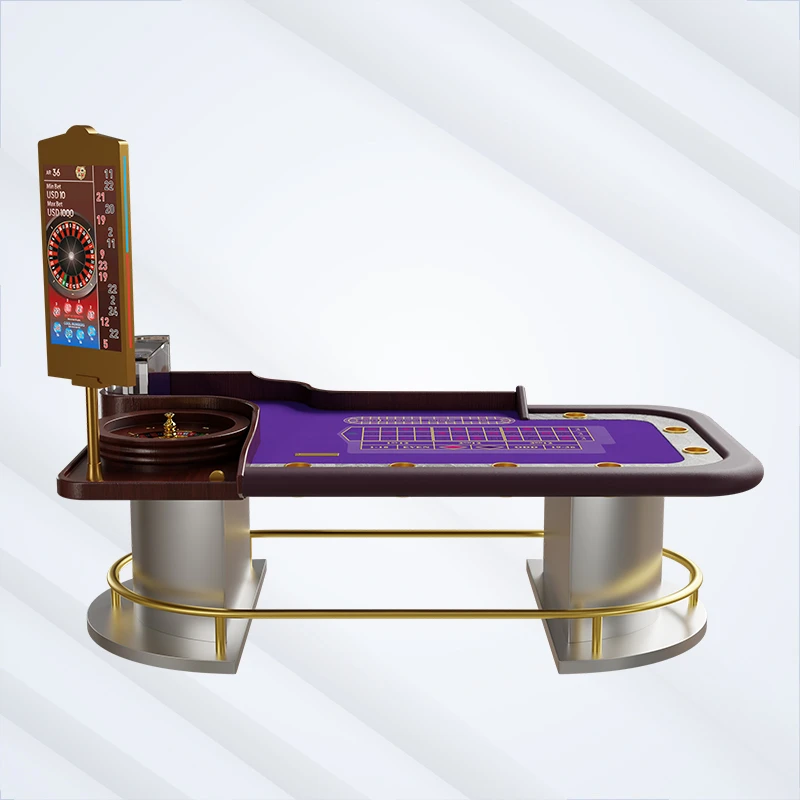
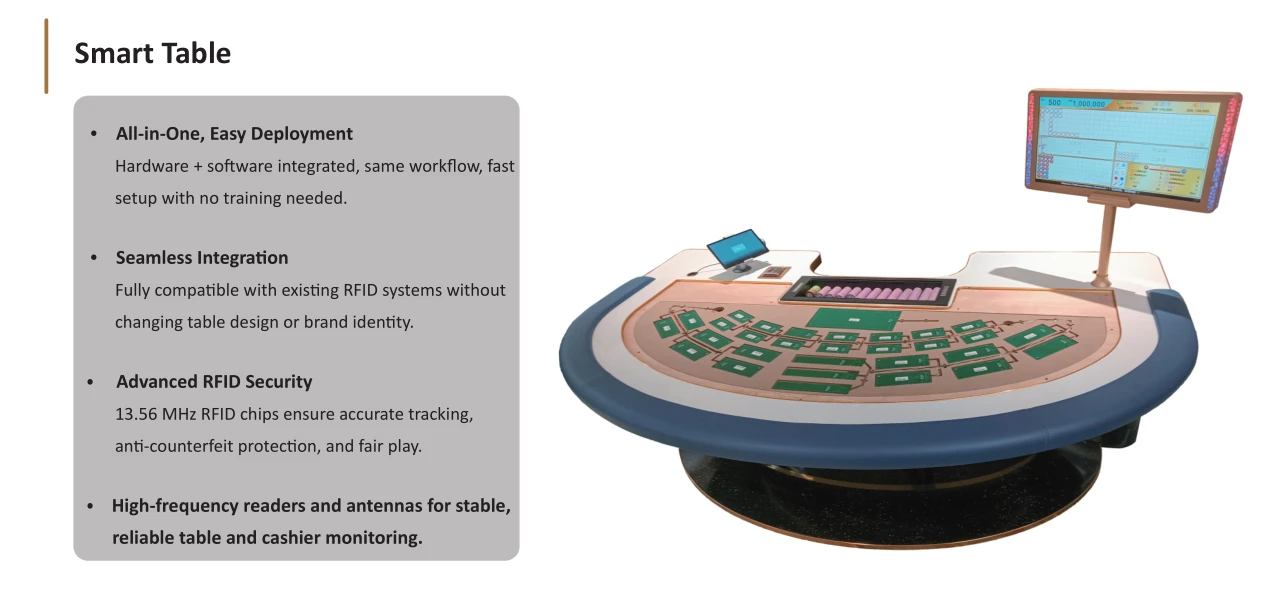
An RFID gaming table is a standard casino table (baccarat, blackjack, roulette, or any live dealer game) equipped with a network of antennae and sensors embedded in or beneath the table felt. These components communicate with RFID chips embedded in casino gaming chips, enabling the table to identify, track, and log every chip that crosses its surface in real time.
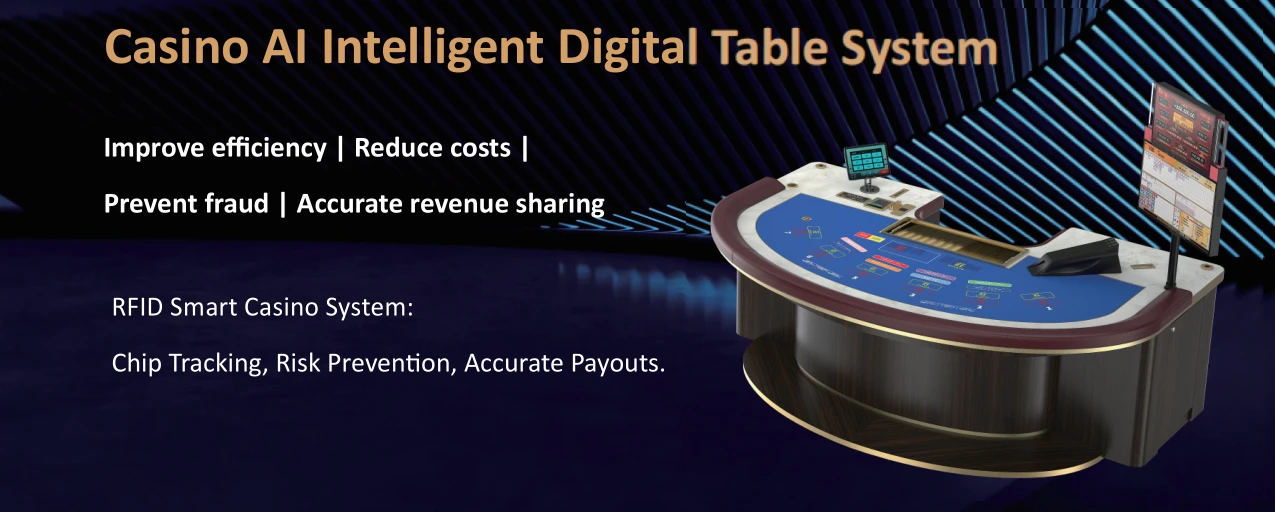
Unlike surveillance cameras that record visual data, or shufflers that only interact with cards, an RFID gaming table operates at the intersection of the physical and digital gaming environment. The table becomes a data-collection endpoint — feeding live information to a casino’s management system about every wager placed, every chip moved, and every stack counted. Leading models such as our BA10 RFID Baccarat Table integrate embedded antenna arrays with standard casino table furniture, enabling real-time chip tracking without altering the gaming experience for players.
The Four Core Functions That Drive RFID Gaming Table Adoption
Casino operators deploy RFID gaming tables for four well-documented operational reasons, none of which involve manipulating card game outcomes:
1. Player Rating and Comps Accuracy
Traditional player rating relies on pit boss estimation — a dealer or floor supervisor watching a player and estimating average bet size, hands played per hour, and theoretical loss. This method is inherently imprecise. According to the American Gaming Association (AGA), pit boss estimates of average bet size can deviate by as much as 30–40% from actual wagering data, resulting in inaccurate comp allocations and missed VIP identification.
RFID gaming tables eliminate this guesswork. Every chip that enters the betting circle is scanned and logged. Casino management software calculates true average bet, theoretical win, and hands per hour automatically — producing comp-worthy data that stands up to regulatory audit. Operators who have deployed RFID table systems report a 15–25% improvement in VIP identification accuracy within the first six months.
2. Anti-Counterfeit and Anti-Fraud Security
Counterfeit casino chips represent one of the most persistent security threats on any gaming floor. In 2023, Nevada gaming regulators recorded 23 confirmed counterfeit chip incidents across the state’s licensed properties, with individual chip fraud cases exceeding $200,000 in chip face value. RFID gaming chips carry encrypted inlays that are virtually impossible to clone without access to the casino’s proprietary chip authentication keys.
When a counterfeit chip is placed on an RFID-enabled table, the system detects the mismatch immediately and alerts floor security — before the chip can be cashed out. Similarly, mid-hand bet tampering (adding chips to a winning bet after a card is revealed) is detected in real time, as the table logs the precise moment each chip enters the betting zone.

3. Dealer Performance and Table Productivity Monitoring
RFID gaming tables generate a continuous stream of operational metrics that casino managers can use to evaluate dealer performance, optimize table allocation, and identify floor bottlenecks. Key data points include hands dealt per hour per dealer, average game duration, chip movement velocity, and table revenue per square meter of gaming floor space.
A 2024 study by the University of Nevada, Las Vegas (UNLV) Gaming Research program found that casinos utilizing RFID table monitoring achieved an average 8–12% improvement in dealer productivity through data-driven scheduling and performance coaching. The data also enables floor managers to make real-time decisions about opening, closing, or reassigning tables based on actual demand rather than gut feeling.
4. Responsible Gaming and Regulatory Compliance
Linking RFID casino chips to player loyalty cards enables a casino to flag unusual or excessive gambling behavior in real time — a capability increasingly mandated by gaming regulators in major jurisdictions. Nevada Gaming Control Board Regulation 14, which took effect in 2023, requires all Class B licensees to implement automated player activity monitoring for tables with minimum bets exceeding $500.
RFID gaming tables are the most efficient technical solution for meeting this requirement. The system automatically logs session duration, cumulative wagering, and betting pattern anomalies (such as a sudden doubling of bet size after a losing streak), generating alerts when thresholds are crossed — without requiring manual pit boss observation or intrusive player surveillance.
The Vegas Myth vs. the Reality: Why RFID Tables Cannot Rig Games
The viral video that sparked renewed suspicion of RFID tables fundamentally misunderstood the technology’s operating parameters. Blackjack — the game at the center of the viral claim — is played face up. Unlike poker, where card values are hidden, every player at a blackjack table can see every card on the table at all times. There are no live dealer games in any licensed casino in which the house plays with secret cards against players.
More fundamentally, RFID gaming tables track chips, not cards. The sensors beneath the felt detect the presence and location of RFID-tagged chips; they have no mechanism for interacting with playing cards, shuffling devices, or card shoes. The shuffling machine — a separate piece of equipment — is independently regulated and certified by gaming laboratories such as GLI (Gaming Laboratories International) and BMM Testlabs before deployment on any licensed gaming floor.
The statistical house edge in casino table games does not come from electronic manipulation. It comes from game mathematics — specifically the payout structure of each game. As Casino.org’s analysis noted, the standard 6-to-5 blackjack payout (now prevalent on the Las Vegas Strip) increases the house edge by 1.39% over the classic 3-to-2 payout. Triple-zero roulette adds 2.43% to the house edge over double-zero roulette. These edges are baked into the game rules, not delivered through sensors beneath the felt.
Deployment Considerations for Casino Operators
RFID gaming table adoption requires careful planning across three dimensions: hardware investment, software integration, and operational change management.
Hardware Requirements
Each RFID gaming table requires embedded antenna arrays (typically 4–8 reader points per table, positioned beneath the felt at high-frequency 13.56 MHz or ultra-high-frequency 860–960 MHz), compatible RFID gaming chips (ISO/IEC 14443 or ISO/IEC 18000-3 compliant), and a local edge controller that aggregates chip reads and forwards data to the central casino management system. The total hardware cost per table, including installation, typically ranges from $8,000 to $15,000 depending on configuration and chip volume requirements.
Software Integration
RFID table data must integrate with the casino’s existing systems — including the casino management system (CMS), player tracking system (PTS), and surveillance management platform (SMP). Most major CMS vendors (including IGT Advantage, Scientific Games (now Light & Wonder), and Konami Synkros) offer native or API-based integration with leading RFID table hardware platforms.
Return on Investment Timeline
Based on operator deployments documented in UNLV Gaming Research reports and AGA white papers, the average payback period for RFID gaming table investment ranges from 18 to 36 months. The primary value drivers are: (a) reduced chip inventory shrinkage from counterfeiting and theft (averaging $50,000–$150,000 annually per high-limit table), (b) improved comp allocation efficiency, and (c) labor savings from automated player rating and table productivity tracking.
The Bottom Line: RFID Tables Are a Trust Technology, Not a Rigging Technology
The sensors beneath a blackjack table are not there to cheat players. They are there to protect the integrity of the game, safeguard chip inventory, ensure regulatory compliance, and provide the operational data that allows casino managers to run a modern, efficient gaming floor. The fact that the same viral video that sparked suspicion was cited and debunked by Vegas Myths Busted investigation on Casino.org — with a Macaumr RFID gaming table prominently featured — reflects a broader industry shift toward transparency and technological accountability in casino operations.
For casino operators evaluating RFID gaming table technology, the question is not whether the technology works. It is whether your floor is ready to operate at the level of data precision, security, and compliance that RFID tables enable. Browse our baccarat gaming table collection and our baccarat roadmap display system collection to explore available RFID-compatible configurations. For most mid-to-large-scale operators in regulated jurisdictions, the answer is increasingly yes.