Table of Contents
Why Casino Gaming Table Specifications Matter More Than Ever
Casino operators replacing or expanding their gaming floors often underestimate how much table dimensions and materials affect daily operations. A baccarat table that is too wide slows dealer reach. A felt layout that wears out after six months forces unplanned downtime. The wrong wood choice leads to warping in humid climates like Macau or Manila.
In 2026, with RFID integration now standard on new builds, table specifications directly influence both pit efficiency and technology compatibility. This guide breaks down the exact dimensions, materials, and construction standards that procurement teams and pit managers need to know before placing their next order.

Standard Casino Gaming Table Dimensions by Game Type
Not all gaming tables share the same footprint. Each game type has established dimension ranges that balance dealer ergonomics, player comfort, and pit density. Here are the specifications that matter.
Baccarat Table Dimensions
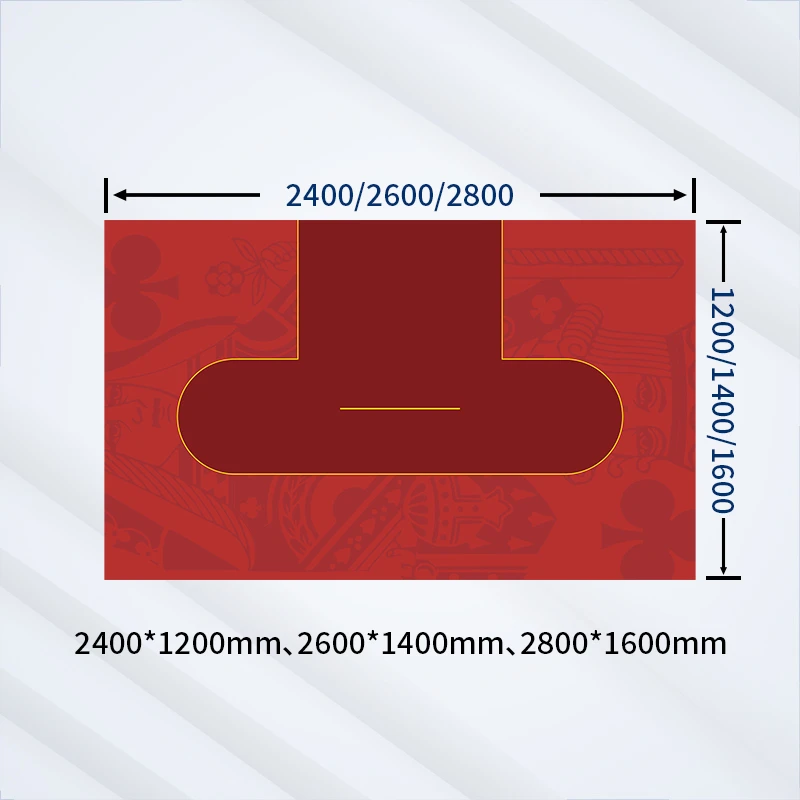
The standard baccarat table measures between 2800–3200 mm in length and 1600–1800 mm in width. Macau-style mini-baccarat tables, which seat 7–9 players, typically run 2800 × 1600 mm. Full-size big baccarat tables for VIP rooms stretch to 3200 × 1800 mm to accommodate up to 14 seated players plus standing spectators.
Table height should fall between 750–780 mm from floor to playing surface. This range allows dealers to reach all betting positions without leaning while keeping seated players comfortable. For more detail on how these dimensions affect RFID integration, see our guide to RFID casino table efficiency and GGR optimization.
Blackjack and Other Card Game Tables
Standard blackjack tables measure approximately 1800 × 1100 mm for a 7-seat semi-circular layout. Poker tables (Texas Hold’em) range from 2500–2800 mm in diameter for oval configurations, or 2100 × 1100 mm for rectangular competition layouts.
Roulette Tables
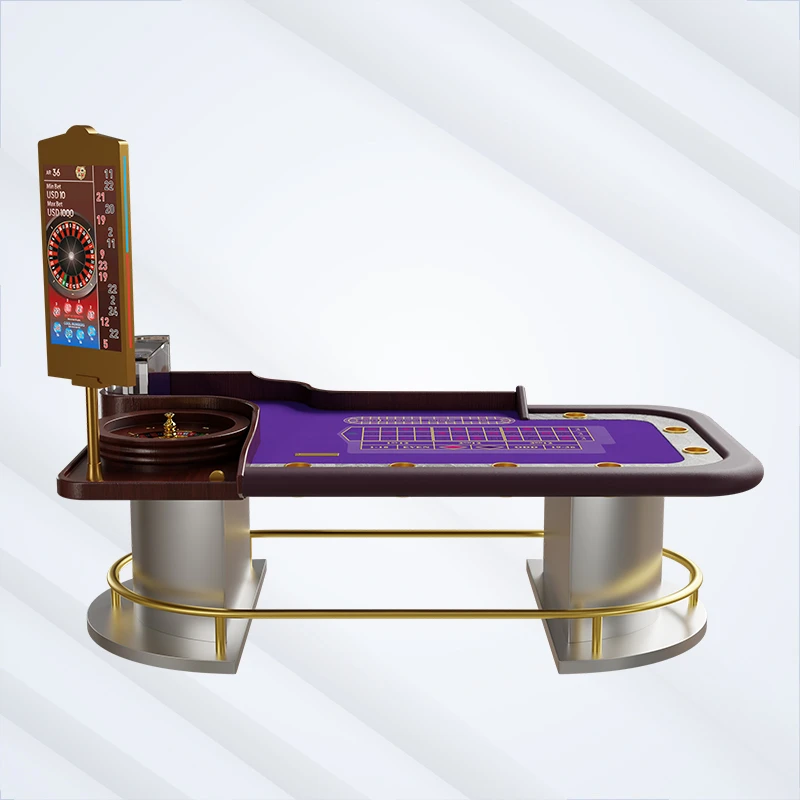
Roulette tables come in two parts: the wheel stand and the betting layout. The combined footprint typically spans 3200 × 1700 mm. The betting layout alone measures roughly 2500 × 1100 mm.
Core Materials: What High-Quality Casino Tables Are Made Of
Material selection determines durability, player experience, and long-term maintenance costs. Cutting corners here guarantees premature replacement.
Frame and Base: Hardwood Construction
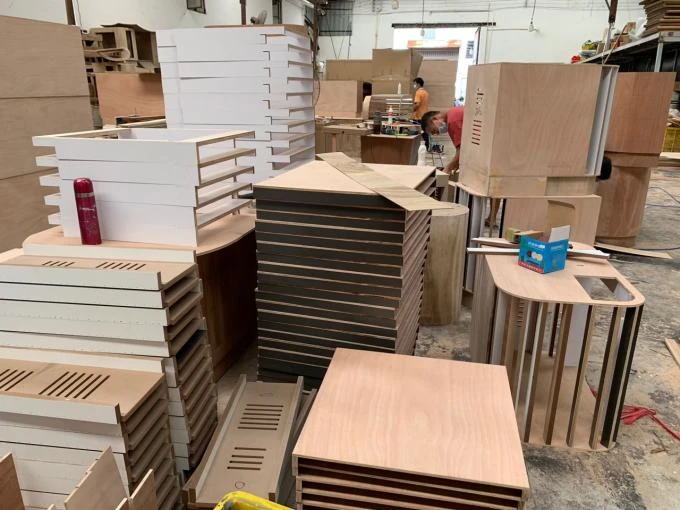
The table frame requires dense, stable hardwood. The industry standard choices:
- Oak — Highest durability, resistance to warping, preferred for high-traffic floors
- Beech — Good balance of strength and cost, common in mid-range builds
- Plywood core with hardwood veneer — Used in budget builds but risk delamination in humid environments
For Macau and Southeast Asian markets, kiln-dried oak with moisture content below 12% is strongly recommended. Tables built with improperly dried timber warp within 18–24 months in tropical humidity.
Playing Surface: Felt and Synthetic Options
The playing surface material affects chip glide, card dealing speed, and visual clarity:
- Wool felt (traditional) — Smooth chip glide, rich appearance, but wears faster (12–18 months in high-traffic pits)
- Speed cloth (polyester-nylon blend) — Cards slide faster, more durable (24–36 months), now the dominant choice for baccarat
- Heat-transfer printed layouts — Custom designs baked into the cloth surface, fade-resistant, waterproof, and increasingly popular for branded tables
Layout thickness matters for RFID tables. The RFID antenna mat sits beneath the felt, so the playing surface must be thin enough (under 3mm compressed) to allow reliable chip scanning. Thicker felts create signal attenuation problems. Operators outfitting their cage operations should also consider the RFID casino cage chip reader for end-to-end chip tracking from table to cage.
Rail and Armrest
The padded rail serves both comfort and function. Standard construction uses high-density foam (40–50 kg/m³) wrapped in genuine leather or premium PU. Leather lasts 5–7 years; PU alternatives last 2–3 years in high-touch environments. The rail width typically measures 180–220 mm, providing adequate arm support without reducing the playing area.
RFID-Ready Table Construction Requirements
In 2026, most new casino table orders include RFID capability. This changes the construction requirements significantly.
Antenna Mat Integration
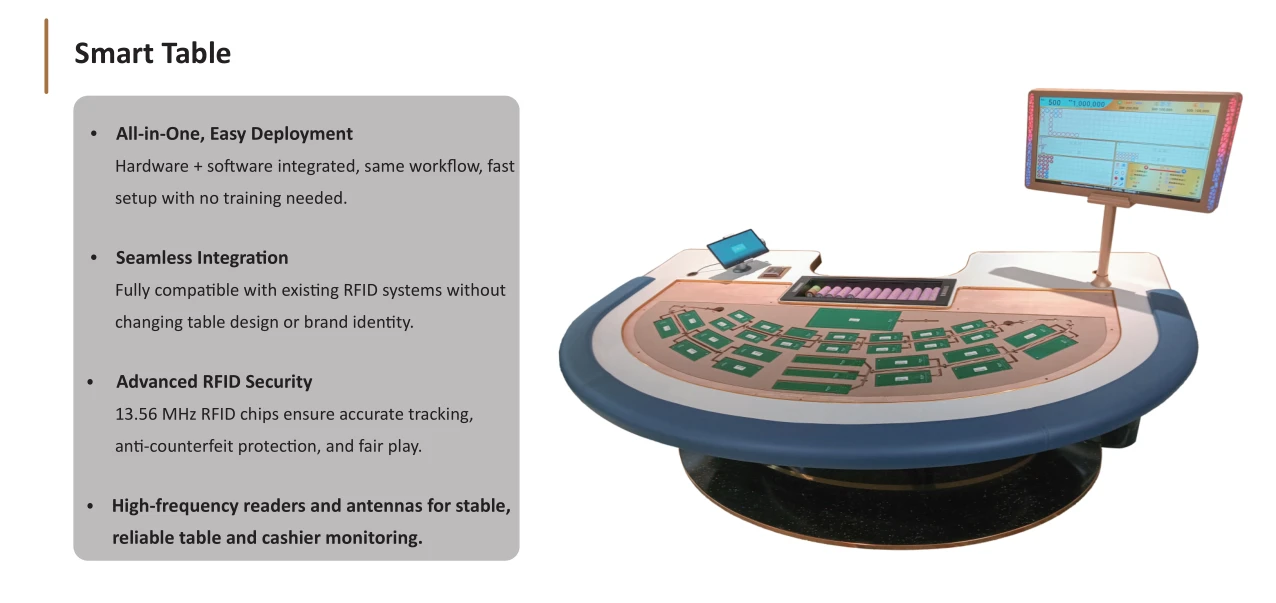
The RFID antenna mat sits between the table base and the felt layout. It must be perfectly flat with no air gaps. Table construction needs a recessed channel of 3–5 mm depth to house the antenna mat, ensuring the playing surface remains level.
Cable Management
RFID tables require cable routing from the antenna mat to the edge of the table, then down to the processing unit. Quality builds include internal cable channels with removable access panels, allowing technicians to replace cables without disassembling the table.
Display Mounting Points
Modern baccarat tables include dealer display screens and player-facing road map displays. Tables must be built with pre-drilled mounting points for these displays. To understand how these displays integrate with the full table system, see our 2026 buyer’s guide to baccarat display screens.
Customization Options That Impact Procurement Decisions
Casino operators have more customization choices than ever. Here is what affects both cost and operational outcomes.
Layout Design and Branding
Heat-transfer printing allows full-color custom layouts with casino logos, game-specific betting zones, and branded color schemes. Minimum order quantities typically start at 5–10 layouts per design. Turnaround time runs 15–25 business days for custom layouts versus 5–7 days for standard templates.
Table Shape Modifications
While standard shapes dominate, some operators request custom modifications:
- Extended-length baccarat tables (up to 3600 mm) for ultra-high-limit VIP rooms
- Reduced-width tables (1400 mm) for compact pit configurations
- Modular table systems with interchangeable layout frames for multi-game pits
Integrated Technology Packages
Beyond RFID, modern tables can integrate electronic shoe readers, chip tray scanners, and dealer touchscreen terminals. These packages add 40–60% to the base table cost but eliminate the need for separate equipment procurement. For a full breakdown of electronic shoe integration, check out our 2026 baccarat electronic shoe buying and usage guide.
Quality Control Checklist: What to Verify Before Accepting Delivery
Receiving a table order without thorough inspection leads to costly remediation. Verify these points on every table:
- Surface flatness — No warping or bowing; use a straightedge across the playing surface
- Felt tension — Layout should be taut with no wrinkles or bubbles; press firmly across the surface
- Rail attachment — No gaps between rail and frame; padding should be even with no hard spots
- RFID signal test — Place test chips at every betting position and verify 100% scan rate
- Leg levelers — All feet should adjust smoothly and lock in place
- Finish quality — No visible staples, glue residue, or rough edges
For operators sourcing complete table systems, Macaumr offers factory-direct RFID baccarat tables built to these specifications. You can explore the baccarat table collection for standard and custom configurations, or the RFID poker table collection for multi-game solutions.
Maintenance Schedules That Extend Table Lifespan
A well-maintained casino table lasts 8–12 years. A neglected one needs replacement in 3–4 years. The difference comes down to consistent maintenance.
Daily Care
Wipe down the felt with a dry microfiber cloth after each shift. Brush chips and debris away from the betting zones. Inspect the rail for tears or loose padding.
Monthly Inspection
Check all leg levelers and tighten loose hardware. Examine the felt for thinning in high-traffic betting zones. Test RFID scan rates at every position — degradation often starts at the table edges.
Annual Service
Replace felt layouts showing wear patterns. Re-glue any lifting edges on the rail. Inspect the antenna mat for creases or damage. For operators managing both table inventory and chip supply, the electronic shoe collection pairs well with RFID table setups for full pit modernization.
Cost Benchmarks: What to Budget in 2026
Understanding price ranges helps procurement teams set realistic budgets and spot inflated quotes.
| Table Type | Standard Build (USD) | RFID-Ready Build (USD) |
|---|---|---|
| Baccarat (Mini) | $2,800–$4,200 | $5,500–$8,000 |
| Baccarat (VIP Full-Size) | $4,500–$7,000 | $8,000–$12,000 |
| Blackjack | $2,200–$3,500 | $4,500–$6,500 |
| Roulette (with wheel) | $6,000–$10,000 | $9,000–$14,000 |
Prices include standard felt layout, padded rail, and delivery within Asia-Pacific. Custom layouts, premium leather rails, and integrated display systems add 20–40% to these figures. For operators seeking the specific RFID baccarat table model with full hardware integration, the casino electronic card shoe product page provides detailed specifications and pricing.
Frequently Asked Questions
What are the standard dimensions of a baccarat table?
A standard mini-baccarat table measures approximately 2800 × 1600 mm, while a full-size VIP baccarat table ranges from 3000–3200 mm in length and 1700–1800 mm in width. Table height from floor to playing surface should be 750–780 mm for optimal dealer ergonomics.
What material is used for casino table felt?
Modern casino tables primarily use speed cloth, a polyester-nylon blend that offers superior durability and faster card dealing compared to traditional wool felt. Speed cloth lasts 24–36 months in high-traffic pits, while wool felt typically requires replacement every 12–18 months.
Can existing tables be retrofitted with RFID?
Yes, most solid-frame tables can be retrofitted with RFID antenna mats. The process requires routing a 3–5 mm recess into the table base for the antenna, replacing the felt layout with an RFID-compatible thinner surface, and installing cable channels. Retrofitting costs approximately 60–70% of a new RFID-ready table.
How long do casino gaming tables last?
With proper maintenance, a quality casino gaming table lasts 8–12 years. Felt layouts require replacement every 12–36 months depending on material and traffic. The hardwood frame and rail structure typically last the full lifespan with annual servicing.
What is the minimum ceiling height needed for a baccarat table pit?
A baccarat table pit requires a minimum ceiling height of 3 meters (10 feet) to accommodate overhead lighting, camera surveillance, and signage displays. VIP rooms with chandeliers or decorative elements often need 3.5–4 meters for proper aesthetic proportions and lighting distribution.