Chip tracking has become one of the most transformative technologies in the gaming industry, reshaping how casinos manage chip inventory, prevent fraud, and ensure regulatory compliance. As the U.S. commercial gaming industry continues to grow, the stakes for protecting chip assets and maintaining game integrity have never been higher. For casino operators and procurement managers, understanding RFID chip technology is no longer optional; it is a strategic imperative.
Unlike traditional chips that rely solely on visual identification and manual counting, RFID-enabled casino chips embed radio-frequency microchips that transmit unique serial numbers, denomination data, and authentication codes to readers embedded in tables, chip trays, and cage stations. This invisible layer of intelligence allows casinos to track every chip on the floor in real time, detect counterfeits instantly, and automate accounting processes that once consumed thousands of labor hours.
This guide examines RFID casino chips from a B2B perspective, covering the underlying technology, anti-counterfeiting capabilities, integration with table game infrastructure, ROI considerations, and practical implementation strategies for casino operators evaluating an RFID upgrade.
How do RFID casino chips work?

RFID casino chips operate on the same fundamental principles as RFID systems in other industries, but with specialized engineering tailored to the demanding environment of a casino floor. Each chip contains a passive RFID transponder (a microchip paired with an antenna coil) embedded within the chip body during the manufacturing process. The transponder is passive, meaning it has no internal power source; instead, it draws energy from the electromagnetic field generated by RFID readers installed beneath betting positions, inside chip trays, and at cage windows.
When an RFID-equipped chip enters the read zone of an antenna, the electromagnetic field induces a current in the chip’s antenna coil, powering the microchip. The chip then transmits its stored data (typically a unique 64-bit or 128-bit serial number, denomination code, and optional encryption checksum) back to the reader via load modulation. The reader forwards this data to the casino management system, which matches the serial number against a central database to verify authenticity and track location.
Casino RFID systems predominantly operate in the HF (High Frequency, 13.56 MHz) band, which offers an optimal balance between read range (typically 10–30 cm for table-level reading) and data transfer speed. Some newer implementations use UHF (Ultra High Frequency, 860–960 MHz) for cage and inventory applications where longer read ranges of 1–3 meters are needed to scan bulk chip stacks. The choice of frequency depends on the specific use case: HF for table game monitoring where precision matters, UHF for cage and vault operations where throughput is prioritized.
For operators considering an RFID upgrade, the SiM Cage Management System offers RFID-enabled cage and chip operations software that integrates with both HF and UHF reading infrastructure, providing a unified platform for chip accountability across the entire property.
How does RFID stop counterfeit chips?
Casino chip counterfeiting has evolved from crude reproduction techniques to sophisticated operations using industrial-grade molding equipment and professional-grade inks. Commercial gaming revenue is at record levels, making casinos an increasingly attractive target for fraudsters. RFID technology provides a multi-layered defense that visual inspection and UV verification alone cannot match.
The core anti-counterfeiting advantage of RFID chips lies in the cryptographic authentication protocol embedded in each transponder. Modern casino-grade RFID chips use ISO 14443 or ISO 15693 standards with optional AES-128 or triple-DES encryption. When a reader interrogates a chip, it doesn’t just read a static serial number; it initiates a challenge-response handshake that requires the chip to prove it possesses the correct cryptographic key. A counterfeit chip without the encrypted key will fail authentication even if its physical appearance is indistinguishable from a genuine chip.
Beyond cryptography, RFID enables continuous authenticity verification throughout a chip’s lifecycle. Every time a chip passes over a reader (whether during a bet, a rack refill, or a cage transaction) the system validates its identity. This creates an unbroken chain of custody that makes it nearly impossible for a counterfeit to circulate undetected. By contrast, traditional UV-marked chips are only verified when a dealer or supervisor manually inspects them under ultraviolet light, a process that is episodic and prone to human error.
For casinos seeking chips with additional anti-counterfeiting features beyond RFID, Casino Baccarat Game Customizable Composite Poker Chips with Holographic Labels combine RFID-ready construction with holographic security labels, creating a layered defense against counterfeiting. You can also explore our RFID Poker Chips collection for a full range of RFID-enabled options.
How do RFID chip tracking systems deliver real-time inventory?
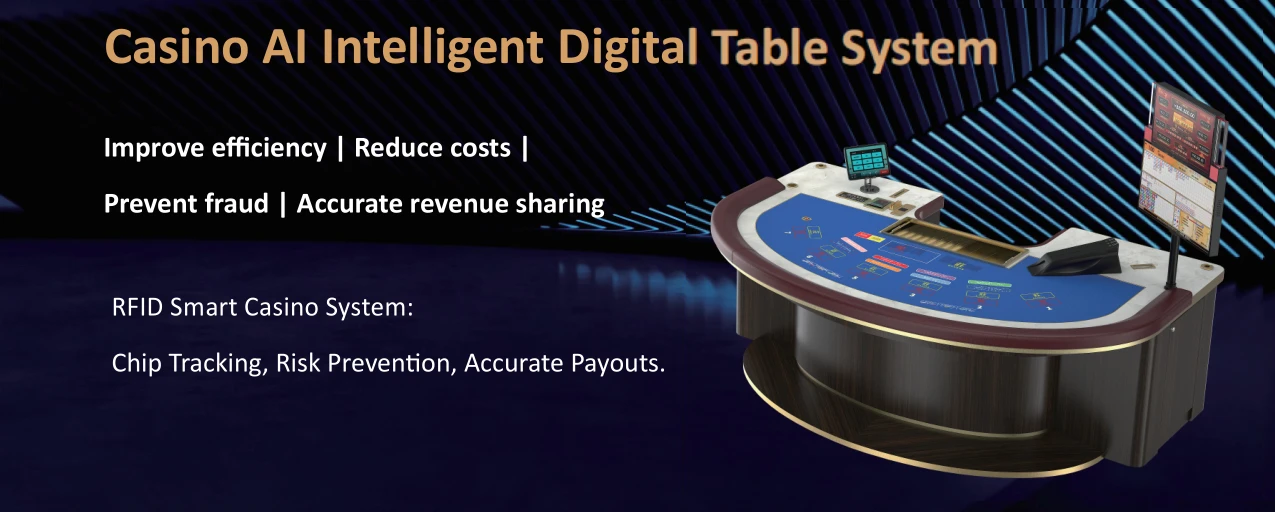
Real-time chip tracking represents the most immediate operational benefit of RFID casino chips. Traditional chip management relies on manual counts performed at shift changes, cage reconciliation, and periodic audits, processes that are labor-intensive, disruptive to floor operations, and inherently imprecise. RFID tracking eliminates these inefficiencies by providing continuous, automated visibility into chip location and status.
An RFID tracking system typically consists of three layers: table-level readers embedded in betting positions and chip trays, cage-level readers at cashier windows and vault stations, and a central management platform that aggregates data from all readers. At the table level, readers can count chips in the betting circle, dealer tray, and player racks in real time, automatically updating the floor management system with denomination-level data. This enables pit bosses to monitor table float, detect discrepancies instantly, and generate accurate game-level revenue reports without manual intervention.
The cage management layer handles chip movements between the cage, vault, and floor. When a dealer requests a chip fill, the cage system logs the specific serial numbers of each chip issued, creating an auditable trail from vault to table to player and back. If a chip goes missing, the system can trace its last known location, the transactions it was involved in, and the personnel who handled it, a level of accountability impossible with non-RFID chips.
For operators looking to implement comprehensive tracking, our Cage Chips System collection provides integrated hardware and software solutions designed for end-to-end chip accountability. For a deeper understanding of how RFID tracking prevents inventory shrinkage, see our article on casino chip inventory management and RFID tracking systems.
What do operators need to know about RFID gaming table integration?
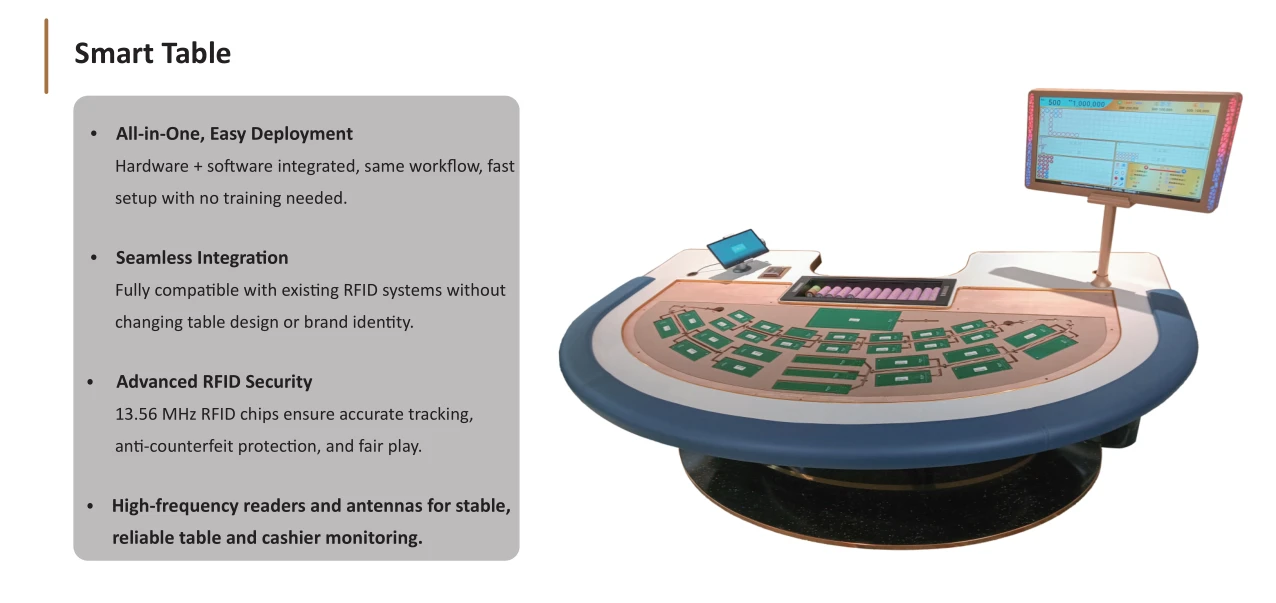
Integrating RFID technology into gaming tables requires careful planning across hardware, software, and operational dimensions. The physical integration involves embedding RFID antenna arrays beneath the table felt at strategic positions: betting circles, dealer tray slots, and the drop box area. These antennas connect to reader modules typically housed in the table base or a nearby equipment rack, which in turn interface with the casino’s floor management network via Ethernet or fiber optic cabling.
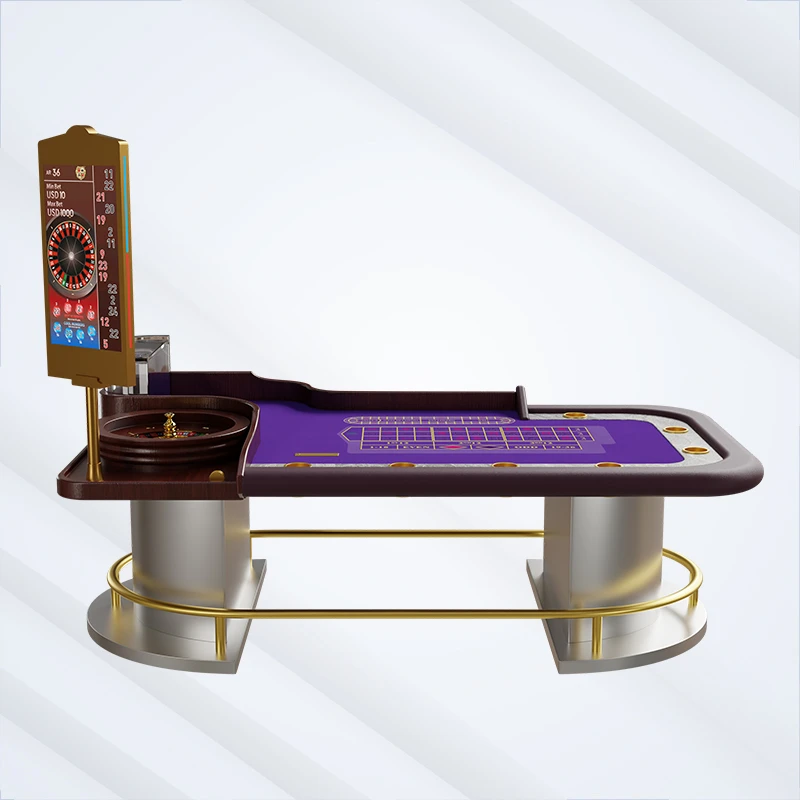
One of the most critical integration considerations is antenna placement and tuning. Casino tables are typically constructed with wood, metal framing, and dense felt, materials that can interfere with RF signal propagation. Engineers must carefully position antennas to ensure reliable reads across the entire betting surface while avoiding crosstalk between adjacent reading zones. For example, a Baccarat table with multiple betting positions requires zone-isolated antennas so that chips on the Player side don’t register on the Banker side, ensuring accurate bet attribution.
On the software side, the RFID reader data must integrate with the casino management system (CMS) or table games management system (TGMS). This integration enables real-time dashboards showing table-level chip counts, bet tracking, and automated reconciliation against the electronic shoe and roadmap display data. The RFID poker table collection features tables pre-engineered for RFID integration, with optimized antenna placement and cable management channels designed during manufacturing rather than retrofitted afterward.
Operators should also consider the Casino Double Layer Metal Dealer Chip Tray with Locking Cover, which is compatible with RFID reader integration for automated tray counting and fill management.
What is the business case for RFID casino chips?
Implementing RFID casino chips requires significant upfront investment, but the return on investment typically materializes within 18–36 months through a combination of labor savings, loss prevention, and operational efficiency gains. Understanding the cost-benefit breakdown is essential for casino operators justifying the capital expenditure to ownership groups and regulatory bodies.
The most quantifiable ROI driver is labor reduction. A typical mid-size casino with 40–60 table games performs daily chip counts requiring 8–12 staff hours per table. RFID automation reduces this to minutes, as readers can count an entire dealer tray or chip rack in under two seconds. For a property operating 50 tables across three shifts, this translates to approximately 150 staff hours saved per day, equivalent to roughly $500,000–$700,000 in annual labor costs, depending on market wage rates.
Loss prevention provides a second major ROI component. Casinos lose part of their table game chip float each year to theft, counterfeiting, and untracked discrepancies. For a property with $5 million in active chip inventory, even a conservative 0.5% loss rate represents $25,000 in annual losses that RFID tracking can virtually eliminate. Over a five-year period, the cumulative loss prevention savings alone can offset the initial RFID infrastructure investment.
Additionally, RFID enables data-driven decision-making that was previously impossible. Real-time bet tracking allows casinos to optimize table minimums based on actual player behavior, identify underperforming games, and adjust floor layouts to maximize revenue per square foot. These operational optimizations, while harder to quantify precisely, can contribute an additional 2–4% improvement in table game hold percentage. For a comprehensive look at how RFID technology enables real-time compliance monitoring, see our guide on RFID casino table game audits and compliance monitoring.
How do you deploy RFID chips across a property?
A successful RFID chip deployment requires phased implementation to minimize operational disruption and ensure regulatory compliance. The process typically follows a four-phase approach: assessment, pilot, scaled rollout, and full integration. Each phase has distinct deliverables and risk considerations that casino operators must manage carefully.
Phase 1. Assessment: Conduct a comprehensive audit of existing chip inventory, table infrastructure, cage operations, and IT systems. Identify which tables will receive embedded readers, which chip denominations will be RFID-enabled (typically $25 and above), and what integration points exist with the current CMS. This phase also includes vendor selection, with evaluation criteria covering reader performance, chip durability, software compatibility, and ongoing support capabilities.
Phase 2. Pilot: Deploy RFID infrastructure on 3–5 tables in a single pit area. This controlled rollout allows staff to train on new procedures, IT to validate system performance under live conditions, and management to identify operational bottlenecks before scaling. The pilot phase typically runs 60–90 days and should include regular reconciliation audits comparing RFID system data against manual counts to establish accuracy baselines.
Phase 3. Scaled Rollout: Extend RFID deployment across the entire table games floor in phases, typically pit by pit. This phase includes dealer training on RFID-aware procedures (such as proper chip placement within reader zones), pit boss training on the new dashboard tools, and cage staff training on RFID-enabled chip handling. Parallel running of old and new systems during this phase ensures continuity if technical issues arise.
Phase 4. Full Integration: Retire legacy chip inventory, complete cage and vault RFID integration, and activate advanced features such as automated compliance reporting and predictive analytics. At this stage, the casino should achieve a fully paperless chip audit trail, real-time regulatory reporting capability, and comprehensive floor-wide chip accountability. For insights into how RFID supports pit-level performance optimization, read our article on casino pit management and RFID table monitoring.
Frequently Asked Questions About RFID Casino Chips
How much do RFID casino chips cost compared to traditional chips?
RFID casino chips typically cost $2–$5 per unit, compared to $0.50–$1.50 for standard composite chips without embedded transponders. The price premium reflects the cost of the RFID inlay, specialized manufacturing processes, and cryptographic programming. For a casino ordering 50,000 chips across multiple denominations, the incremental cost ranges from $75,000 to $175,000, which is recovered through labor savings and loss prevention within the first 18–36 months of deployment.
Can RFID chips be retrofitted into existing casino tables?
Yes, RFID readers can be retrofitted into most existing casino tables, though the process requires professional installation. Technicians must cut channels into the table base for antenna embedding, route cabling to a reader module, and tune the antenna configuration for the specific table construction. However, tables designed and manufactured with RFID integration in mind (such as those in our RFID Gaming Table collection) offer superior read performance and simpler maintenance compared to retrofitted units.
Do RFID chips work with all casino game types?
RFID chips are compatible with all standard casino table games, including baccarat, blackjack, roulette, sic bo, and poker variants. The technology is game-agnostic because it tracks chips rather than game outcomes. However, game-specific considerations apply to antenna placement: baccarat tables require zone-isolated readers for Player and Banker positions, roulette tables need spin-detection logic to distinguish between moving and stationary chips, and poker tables benefit from pot-level readers for automated pot tracking.
Conclusion: RFID Casino Chips Are the Future of Table Game Operations
RFID casino chips represent a mature, proven technology that delivers measurable operational benefits across chip security, inventory management, and regulatory compliance. As the global gaming industry continues to grow, with U.S. commercial gaming revenue exceeding $78.72 billion in 2025, the financial risk of chip fraud, theft, and accounting errors scales proportionally. RFID technology provides the infrastructure to manage this risk while simultaneously unlocking operational efficiencies that directly improve the bottom line.
For casino operators evaluating an RFID transition, the key success factors are thorough pre-deployment assessment, phased implementation, and choosing technology partners with proven gaming industry experience. Macaumr offers a comprehensive ecosystem of RFID-enabled products, from RFID Poker Chips to RFID poker tables and cage management software, providing a single-vendor solution for properties at any stage of their RFID journey.
For further reading on related security topics, see our article on casino chip counterfeiting prevention strategies to understand how RFID fits within a comprehensive multi-layer security framework.